www.thegospelcoalition.org
The Sexual Revolution Can’t Keep Its Promises
Several years ago, a young man experiencing same-sex attraction asked me for counsel. He’d heard a sermon at his church that, while not affirming homosexual sex, described those identifying as LGBTQ+ as if they’re a category of people, as a matter of being. He was anxious to know if, as a professing Christian, he should accept that he’s LGBTQ+ and join the LGBTQ+ community.
I sympathized with him; young people are inundated with confusing messages pertaining to sexuality. I explained to him that he’s a man created in God’s image. As one raised to new life in Christ, he should let that direct his sexual desires and conduct. Thus, his sexual desire for men neither defines nor governs him. As he listened, his distress and anxiety diminished. The burdens our society had imposed on him, unwittingly affirmed by his church, were lifted, and he left our time grateful and hopeful, with a path forward in Christ.
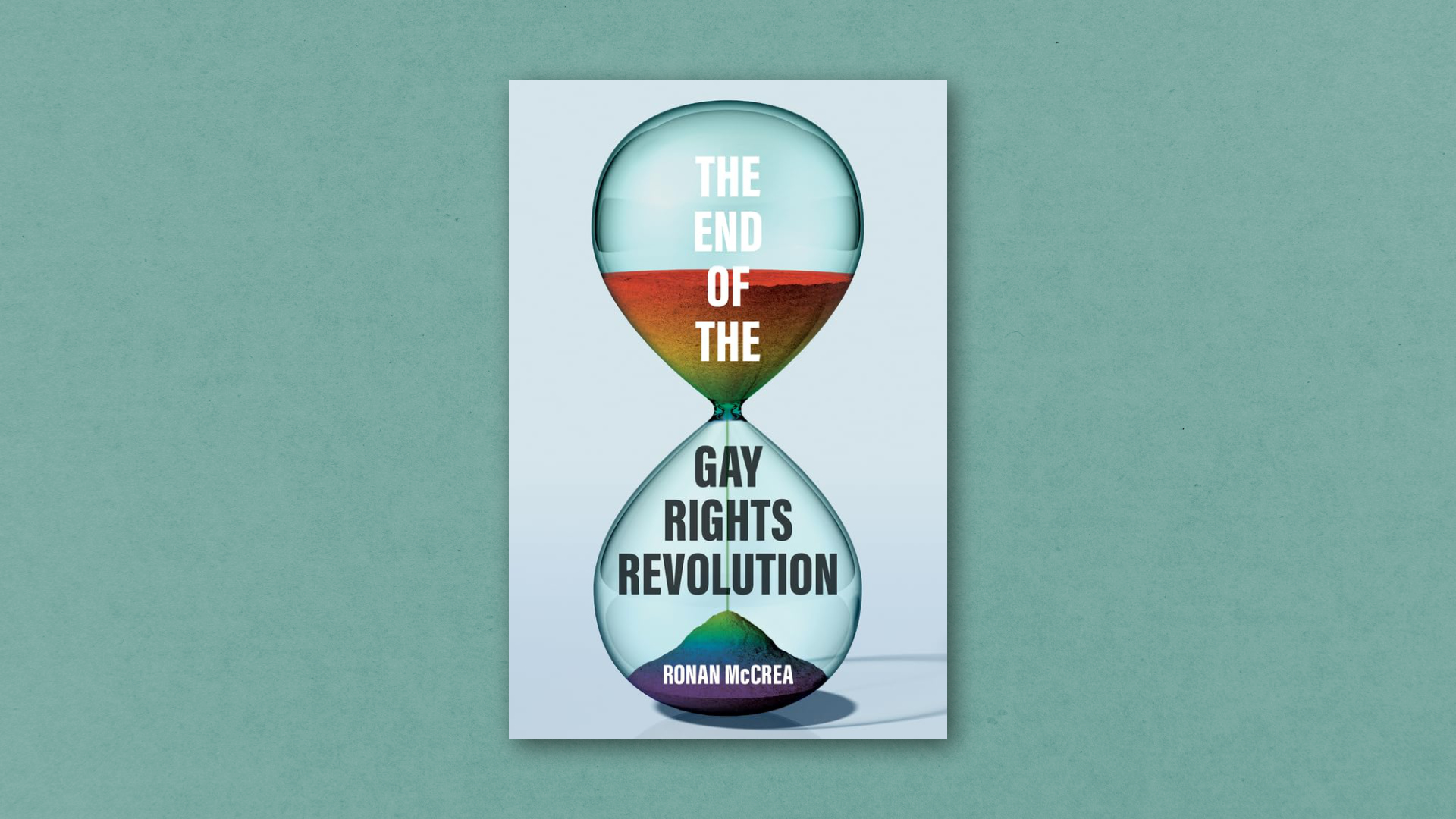
Dramatic shifts in our culture’s understanding of sexuality and identity have been promoted, despite their harms, as an unmitigated good. So it’s intriguing when a champion of the LGBTQ+ movement recognizes the damage the ideology has caused. That’s what makes Ronan McCrea’s book The End of the Gay Rights Revolution: How Hubris and Overreach Threaten Gay Freedom important.
According to McCrea, professor of constitutional and European law at University College London, “the Gay Rights Revolution” achieved a “comprehensive and decisive” triumph (5). While he celebrates that triumph, McCrea worries it’s imperiled. He’s especially concerned that the movement’s excesses will lead to its self-destruction. Yet he fails to recognize that what he sees as internal threats are the inescapable consequences of the sexual revolution.
Illiberalism and Intolerance
It’s no surprise McCrea sees anything that might encroach on sexual autonomy as a threat to the gay rights revolution. Thus, he argues, “Gay freedom will be particularly vulnerable to any broader cultural changes that move society in a more conservative direction” (37).
The sexual revolution’s steep costs—especially to young women—are leading to the loss of “fulfillment of people’s plans in terms of family and children” (76). While expressing some sympathy, McCrea explains away much of this dissatisfaction, claiming that “some people just prefer order and conformity to freedom and experimentation” (77).
While suspicion of conservatives is to be expected, one of McCrea’s concerns is intolerance coming from the LGBTQ+ movement. For example, he warns against the “increasing tendency to require active validation of homosexuality” (83). He notes that such demands “run counter to some of the liberal principles that gay-rights advocates relied on to get their movement off the ground” (84).
There’s internal conflict within McCrea’s perspective. For example, he considers any opposition to imposing sexual and gender ideology through curriculum in schools a “worrying sign” (64). The gay rights revolution claimed “the classical liberal claim of a right to be left alone” (83), yet the movement that had same-sex marriage as its ultimate goal could never accept a “live and let live” approach. McCrea advocates for space for peaceful coexistence, yet the terms of that coexistence seem tenuous.
Demolition of Sex Reality
McCrea also worries about the denial of male-female sex differences. Yet he fails to recognize that arguments for same-sex marriage result in the conclusion that sex differences don’t matter.
The demand for the recognition of same-sex marriage, which was at the heart of the gay rights movement, was empowered by the insistence that defining marriage as only a male-female union is morally defective. The majority opinion in the Obergefell v. Hodges case declares that defining marriage as the joining of a man and a woman is “demeaning” and “hurtful,” imposes “stigma and injury,” deprives gay and lesbian people of dignity, diminishes their personhood, and “works a grave and continuing harm” to them. Inherent to the arguments for same-sex marriage is eliminating from public acceptance those who don’t affirm it.
As activist and journalist Jonathan Rauch acknowledges, same-sex marriage is the ultimate assault on “the unity of sex, marriage, and procreation . . . the blow that completes the most destructive demolition work of the sexual revolution” (35). With same-sex marriage’s demolition of sexual difference, the malice attributed to the recognition of the male-female bond is extended to the categories of “male” and “female” themselves. The sex binary is considered an oppressive social construct to be liberated from, beginning at the youngest age.
Yet rejecting the reality of sex is a bridge too far for McCrea, who is troubled by the “transformation of the LGB movement to the LGBTQ+ movement” (91). He goes so far as to reject LGBTQ+ (let alone LGBTQIA+) as a meaningful category. McCrea warns his allies against demanding “fundamental changes to categories as basic as male and female” because accepting those demands “involves radical change to basic social structures” (96).
Though commendable, McCrea’s desire to uphold the reality of sex evades the substance and the logic of his own convictions. By decreeing the “equality” of same-sex marriage, Obergefell required male-female and same-sex relationships to be considered the same in every way. There’s no room for a sex binary within that worldview.
From its inception, same-sex marriage rejected our sexed bodies, with their definition and limitations. The goodness and beauty of male and female in God’s image, coming together in life-giving, one-flesh union, imaging the relationship between Christ and his church, had to be diminished and finally effaced.
Unconstrained Excess
At the heart of the gay rights revolution is the idea that “people should be able to do whatever they [want] with their bodies” (114). Yet McCrea is concerned about the effects of the excesses of male homosexuality and its attendant harms, including higher levels of STDs, loneliness, mental health struggles, and addictions. McCrea describes “sex among gay men” as “free-wheeling, anything goes,” with “venues such as saunas or ‘dark rooms’ in which men . . . engage in sex with large numbers of partners” (113, 115).
From its inception, same-sex marriage rejected our sexed bodies, with their definition and limitations.
It’s at this point of the argument that the internal conflicts of McCrea’s worldview are most apparent.
Despite such awfulness, McCrea insists there’s “nothing morally wrong with consenting adults engaging in whatever and however many sexual acts they want” (130). Nevertheless, he acknowledges that the ability to resist and order desires is “fundamental to a flourishing human life” (131). Furthermore, he realizes that “every society in the world has needed rules and guardrails to help us manage our chaotic sexual desires” (158).
Though he recognizes the need for change, the change he offers is merely the willingness to endure “at least some sexual frustration” since “sex is too powerful to be cost-free” (160). He proposes social disapproval of sexual overindulgence “not necessarily [as] immoral but low prestige behavior that is [not] good for you” (168). As it turns out, the social structures and boundaries that the sexual revolution tore down were needed for human flourishing.
Nevertheless, McCrea is unwilling to go where his insights regarding true freedom lead. He doesn’t seem to recognize that it is impossible to unravel the sexual revolution’s effects without beginning a new revolution that affirms God’s design for human sexuality.
Toward a New Beginning
The End of the Gay Rights Revolution is a heartfelt attempt by an insider to honestly assess the movement. Yet as he points toward sexual autonomy as an essential good, McCrea demonstrates why unfettered freedom can never be the lodestar for personal and societal well-being. He worries about external backlash, but the evidence shows that the problems come from within the movement itself.
Restraining desire is necessary for an ordered life. McCrea’s willingness to consider such restraint opens up possibilities for him and all. While he regards sexual desire for men as inviolable and definitive of identity and personhood, it’s not. It directly conflicts with personhood as a male image-bearer of God. Such is the nature of all sin in its degradation of our image-bearing humanity.
As it turns out, the social structures and boundaries that the sexual revolution tore down were needed for human flourishing.
That’s why sin cannot be tamed but instead must be renounced, regardless of duration or intensity. The young man whose experience opens this review embodies the hope and invitation extended to all: to be washed, sanctified, and “justified in the name of the Lord Jesus Christ and by the Spirit of our God” (1 Cor. 6:11).
When God spoke the world into existence, he wove a moral order into the created order. Thus, sex is good because it’s God’s gift to humanity, to be received and enjoyed within the covenantal marital union of man and woman. As McCrea unwittingly shows us, pursuing sexual satisfaction outside those boundaries leads to uncontainable chaos and destruction. The “end” of which McCrea writes is a dead one. The only way out is through the One who raises the dead.
In his death on the cross, Jesus Christ, the Son of God, bore our chaotic, self-indulgent, and destructive desires to raise us with him into the freedom of God’s children. And in obeying him, we know the truth, and the truth sets us free (John 8:31–32).








 New Posts (Home)
 ChatBox
 Popular Posts
  Game Zone
 Top PodCasts