www.upworthy.com
Harvard linguist shares the etymology of the word ‘girl’ and how it evolved into a gendered term
The word “girl” evokes the thought of a female child, while “boy” conjures the thought of a male child. This is true for most people, regardless of their country of origin. But according to Harvard University linguist Sunn m’Cheaux, the word “girl” was originally considered gender-neutral.
What sparked the revelation was a video showing a woman calling her male friend “girl” during a conversation. The short, seemingly amusing clip sparked a firestorm of comments from men who found the unintentional gaffe insulting. Some men viewed the term as emasculating, while women claimed it was gender-neutral.
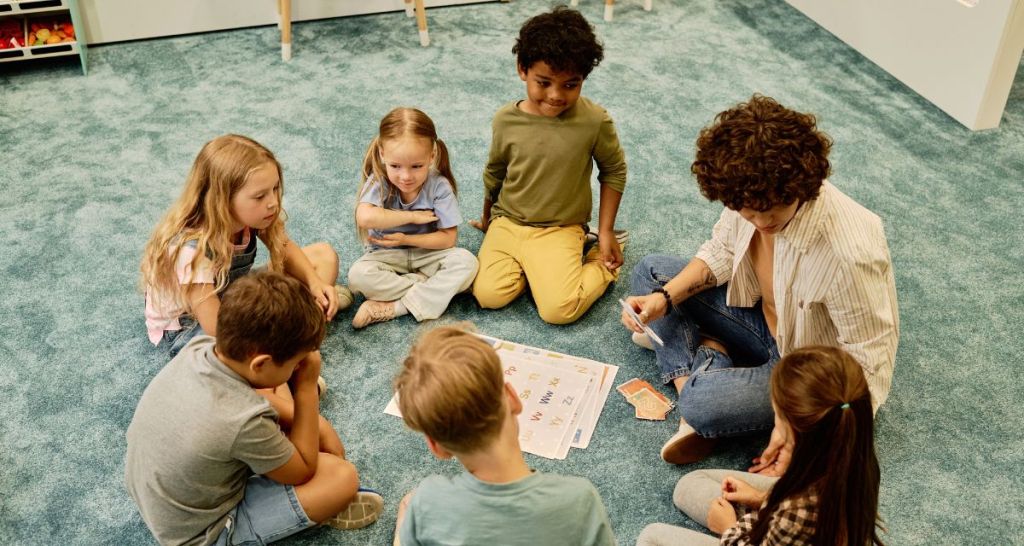
Children sitting with their teacher. Photo credit: Canva
Sunn m’Cheaux originally added his voice by pointing out that when women use the term with men, it reflects a closeness in the friendship.
“Quick FYI: If you’re in a conversation with a Black woman who inadvertently calls you ‘girl,’ do not get offended. She is not ‘emasculating you’—she’s comfortable with you,” the language expert says in a TikTok video, as women in the comments agree.
After seeing comments saying that women simply didn’t know the etymology of the word, m’Cheaux jumped back in to break things down. The confusion, he explains, is that the once gender-neutral term became gendered, losing its original meaning. In a follow-up video posted to his social media pages, he explains the etymology of “girl” for naysayers.
@sunnmcheaux Replying to @scope3944 IF YOUR BLACK HG SLIPS & CALLS YOU “GURL!” #education #linguistics #sociolinguistics #aave #weoutchea ♬ original sound – Sunn m’Cheaux
“The good news is, if you think that most of the women and girls who inadvertently call y’all ‘girl’ don’t actually know the etymology of the word ‘girl,’ you’re probably right,” the linguist says. “Most English speakers don’t know the etymology of the word ‘girl.’ But see, that’s where the bad news comes in for you. You see, the word ‘girl’ was originally gender-neutral. That’s right. For centuries, the word ‘girl’ simply meant a child of either sex.”
A mom plays with her baby. Photo credit: Canva
He further explains that male children were called “knave girls,” distinguishing them from female children. The word “boy,” on the other hand, originally meant servant. This gender-neutral usage didn’t stop with “girl”—he adds that “man” was also used for both sexes.
“To distinguish a human female from a human male, that would be a ‘wifman’ for a female,” m’Cheaux explains. “Later, the term ‘wife’ would mean the companion of a man, but you actually didn’t originally have to be the companion of a man to be a ‘wife.'”
View this post on Instagram
In the video, he also addresses the terms “midwife” and “gossip,” explaining how they became associated with women. He impressed viewers with the impromptu etymology lesson.
One person writes, “I feel like I just attended a really great lecture and I should probably rewatch and take notes! So much info!”
Another says, “Oh, how I love these etymology breakdowns!!! So much fun learning how words/language evolve! But I’ont think anybody does this as well as you do.”
Women laughing together. Photo credit: Canva
“You’ll have to start charging for these seminars. That was at least one credit’s worth of knowledge!” Someone else chimes in.
“I love this! May I use this in my class when we talk of pronouns and how they have evolved?” an eager professor shares. “Some of my future journalists are battling they/them conundrums outside our Emerson bubble. I’d love to add this to the conversation.”
“Sir, you make my brain hurt in the best possible way. Appreciate you,” another person notes.
The post Harvard linguist shares the etymology of the word ‘girl’ and how it evolved into a gendered term appeared first on Upworthy.








 New Posts (Home)
 ChatBox
 Popular Posts
  Game Zone
 Top PodCasts