www.dailywire.com
It’s Time For Schools To Get Out Of The Mental Health Business
This piece is part of MI x DW, a collaboration that brings Daily Wire readers exclusive commentary and research from the Manhattan Institute’s world-class team of scholars.
In this piece, Manhattan Institute Fellow Carolyn Gorman urges conservative education reformers to tackle school-based mental health programs. As Gorman explains, these initiatives have done little to improve students’ mental health, but have contributed to falling outcomes — and cost taxpayers a pretty penny. — Tim Rice
***
American public education is at a crossroads.
Conservative education reformers have made real gains in recent years, on school choice — now universal in 18 states — parental rights, ideology and bureaucracy. As a result, we’re barreling towards what the American Enterprise Institute’s Robert Pondiscio predicts will be an “unprecedented crack-up” of public education.
If the old education model is to enter its last days — if, as Pondiscio says, “we’ve hit and passed ‘peak public school’” — conservative reformers need to set their sights on their next goal. And that goal should be fighting school-based mental health treatment — another woke, wasteful, ineffective idea that’s reduced accountability in schools.
These programs date back to the early 20th century, when progressive reformers urged schools to promote mental health, train teachers to recognize signs of distress, and locate health clinics in schools. If schools could identify problems early and deliver treatment widely, reformers promised, mental illnesses could be prevented; academic and behavioral problems might improve, too.
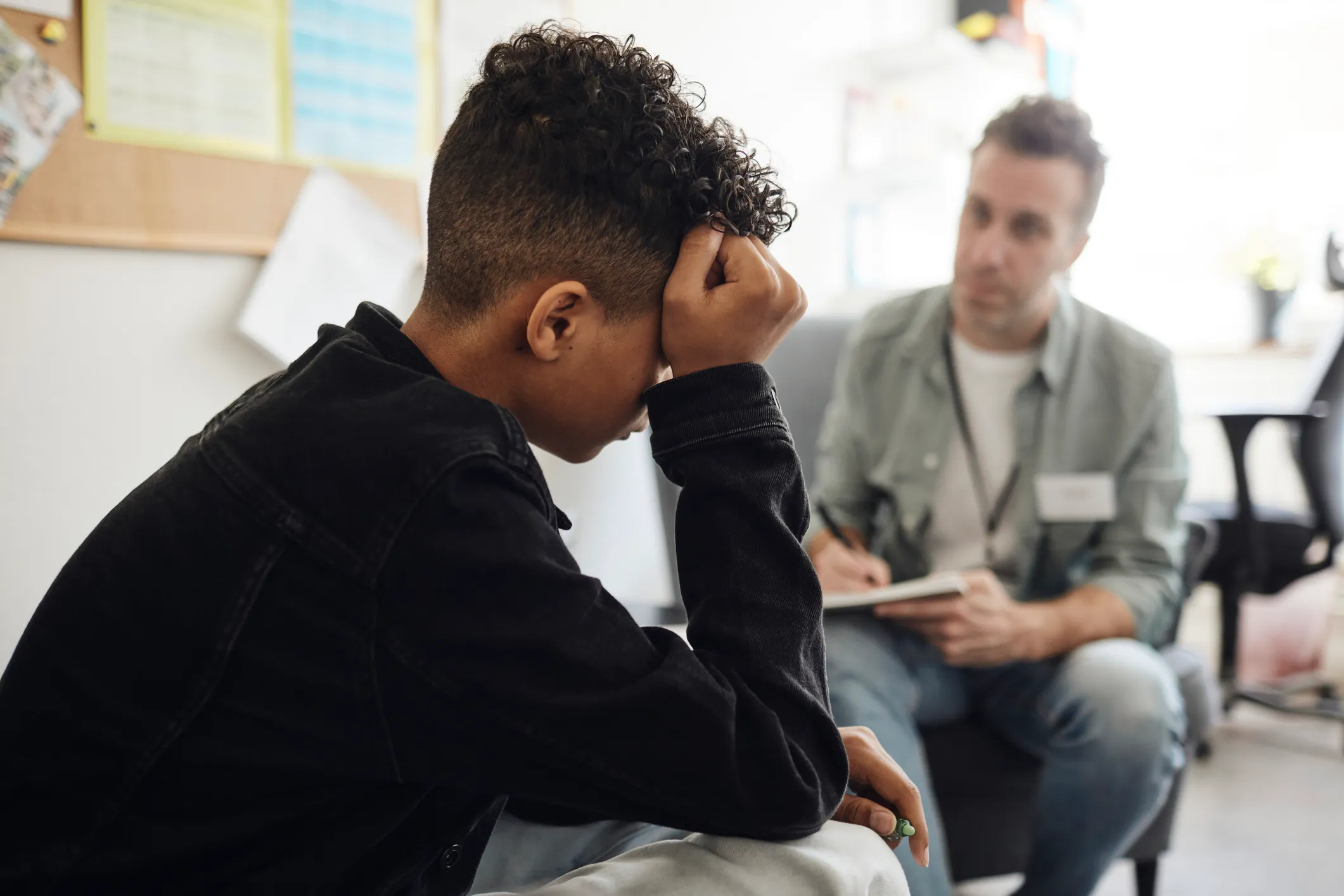
In the ensuing century, periodic proclamations of looming mental health crises, tragedies like school shootings, and expensive, bipartisan spending efforts have caused school mental health programs to explode. Today, nearly all public schools — 97 percent — offer some form of mental health services, like counseling and talk therapy, universal screening, wellness programming, referrals, or telehealth. The number of school counselors and school psychologists is more than four times the number of clinical psychologists and psychiatrists in a given community.
Over $130 billion in federal and state funding has gone to school mental health in the past decade or so alone. Medicaid pays $4 to 6 billion annually for school districts to provide physical, mental, and behavioral health services, and states can pay higher Medicaid rates for services in schools than in community healthcare settings.
None of this has produced results. Decades of evaluations show school-based mental health awareness training, mental health screening, universal and targeted prevention programs, and even school-based health centers have not improved outcomes relative to the absence of these services.
Click here for more Manhattan Institute content.
Aggregate youth mental health outcomes have declined as school-based mental health services have expanded. Between 2016 and 2023, the prevalence of adolescent-diagnosed mental or behavioral health conditions increased by 35%. In 2016, 4.1% of youth reportedly had ADD or ADHD and received treatment for it. That rate has grown nearly three times as high. At least some of this has been documented as overdiagnosis driven by schools. The youngest students in a given grade are disproportionately flagged by teachers and school staff as potentially having ADHD, then get diagnosed and medicated.
But school-based mental health has not simply had a poor return on investment. It also seriously undermines accountability for all parties. By confusing roles and responsibilities across the education and mental health systems, these programs give everyone involved — parents and teachers, students and school administrators — an excuse to point the finger elsewhere when grades, behavior, or student safety falls short of goals.
Schools are not meant to provide mental health services. They’re meant to educate kids. Some die-hard proponents will debate that, suggesting schools are well-positioned to address mental health because it’s where kids spend most of their time, but that’s a weak argument: adults spend most of their time at work, but no one expects offices to offer psychotherapy or prescription refills.
Just as workplaces are meant for working, class time is meant for learning. Yet students are routinely pulled from instruction for counseling or “emotional support.” When you consider that many school therapists think they can boost students’ mental health by talking about racism and colonialist oppression, it’s no wonder these efforts are failing while reading and math scores plummet.
The best way for schools to help students’ mental health is to simply be schools and be safe. Education has protective effects against poor mental health. Disorderly classrooms and violent hallways cause distress. Schools should clearly communicate and fairly enforce school discipline policies so that students know what behavior is expected and what happens when expectations aren’t met. Disruptive or violent students then learn consequences, and other students who’d otherwise be harmed know they’re protected.
When public schools aren’t doing what works, we know better than ever that there are alternatives to simply doubling down.
***
Carolyn D. Gorman is a fellow at the Manhattan Institute.
The views expressed in this piece are those of the author and do not necessarily represent those of The Daily Wire.








 New Posts (Home)
 ChatBox
 Popular Posts
  Game Zone
 Top PodCasts