www.dailysignal.com
Building Medical Preparedness for Armed Conflict in the Indo Pacific
Events in the Middle East have reverberated across the world including the Indo Pacific where people live with the continuous threat of armed conflict with China.
In Dr. Mike Cruz’s commentary “The Deluge, the Paper Cup and Washington’s Lack of Urgency on Guam,” published in War On the Rocks, the author highlights the need for hardening civilian infrastructure in addition to military assets on Guam in order to minimize infrastructure disruption.
Cruz, a surgeon, the former adjutant general of the Guam National Guard and former lieutenant governor of Guam knows how strategic the island is should there be armed conflict with China over Taiwan.
Guam, home to roughly 165,000 US citizens, is the U.S. military’s forward operation base in the Pacific, further west and more remote than the Hawaiian Islands. In 21 war game scenarios of a U.S. and China conventional weapons conflict each scenario ended with Guam decimated by missiles and HEMP attacks. That puts the people living on Guam and its Pacific neighbors highly vulnerable and at risk of becoming collateral damage while protecting the Continental U.S.
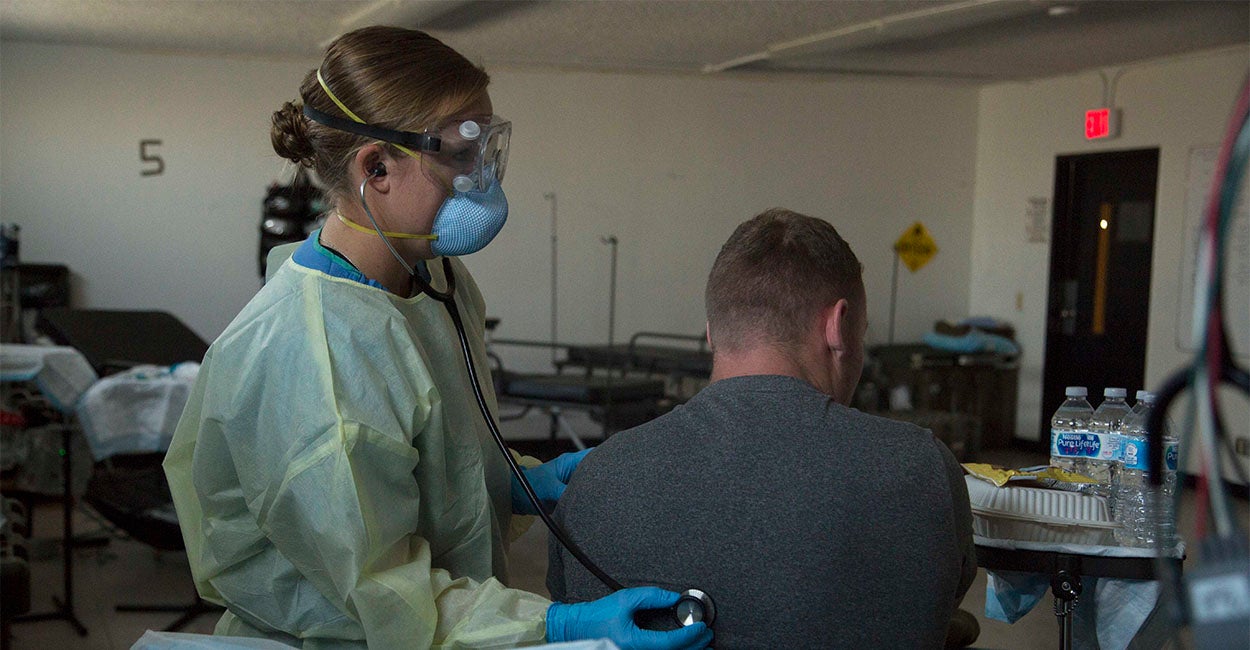
Our U.S. Affiliated Pacific Islands are not prepared for mass casualty events resulting from armed conflict. Urgently addressing their medical surge capacity and capability is needed on Guam, Saipan, Tinian, Palau, the Marshall Islands, the Federated States of Micronesia, and American Samoa.
Long range conventional ballistic missiles like China’s Guam Buster can inflict significant structural damage but can also result in immediate deaths, and injuries such as burns, penetrating shrapnel wounds as well as crush injuries and limb fractures.
In large numbers these types of injuries can easily overwhelm local medical systems both in the Pacific and in the continental U.S. where over 200 level 1 trauma centers exist.
There is only one level 1 trauma center in the Pacific, the Queens Medical Center in Honolulu.
While Tripler Army Medical Center and Balboa Naval Hospital in San Diego can receive critically injured military personnel, they are not trauma centers and would require medical evacuations across 3,800 to 6,200 miles.
Unprepared health systems leave the care of civilians as well as military warfighters with life threatening injuries at risk of compromising “the golden hour” within which timely trauma care optimizes survival.
Strengthening local civilian health systems can improve outcomes as it allows for immediate resuscitation and stabilization of the injured prior to evacuation to a higher level of care.
Faced with the increasing possibility of armed conflict, civilian health systems on Guam, Saipan, Tinian, Palau, and Yap, making up the second island chain, must be prioritized in order to expand their beds, care and coordination. They must also have the ability to add intensive care unit beds, expand operating theaters, and improve clinical skills and services in order to treat mass casualties.
Section 735 of the 2025 National Defense Authorization Act called for the establishment of an IndoPacific medical readiness program at strategic foreign medical facilities within the region. At present this does not include the Pacific territories of freely associated states. On Hawaii the Department of War and National Disaster Management System currently oversee a pilot hospital consortium that coordinates civilian and military surge capability. This type of program should be extended into the U.S. Affiliated Pacific Islands.
A committed trauma and critical care training partnership can pair the American College of Surgeons Committee on Trauma with local health jurisdictions throughout the U.S. Affiliated Pacific Islands. The ACS COT Mission Zero program along with the DOW Joint Trauma System currently coordinate keeping military surgeons’ trauma ready by embedding them in high volume mainland civilian trauma centers.
The goal in the Pacific would be to elevate trauma and critical care services and surge capacity through a Mission Zero type partnership that provides local training of doctors, nurses, technicians and key non-medical personnel at hospitals and clinics beginning with the Second Island Chain where currently there are 450 hospital beds available.
This type of training partnership would also identify health infrastructure that needs rapid upgrading such as blood banking, laboratory services, and adequate amounts of strategically placed medical supply chains.
With military, public, and private hospitals Guam is well situated to take the lead on overseeing trauma and critical care training within the region. By extending training out to the Marshall Islands, the Federated States of Micronesia, as well as American Samoa, an additional 738 evacuation and transfer beds can be supported through training and upgrades.
These rear echelon facilities can work in concert with Queens, Tripler, Balboa, and other U.S. mainland based medical centers that provide follow up treatment of the severely injured.
Following the bombing of Pearl Harbor, civilian surgeons and nurses immediately mobilized to assist military medical teams in treating thousands of injured personnel. Civilians on Oahu also organized to provide a medical transportation system.
By 1945 the Army had 29 hospitals with 15,000 beds in Hawaii.
These are lessons that point to the need for preparedness that includes civilian health systems.
As Cruz stated in his article the time to do this is today, not tomorrow. The deluge he speaks of requires a commitment from the Department of War, Health and Human Services, Department of Interior, local health jurisdictions, medical professional organizations, and private military partners like International SOS and the American College of Surgeons Committee. It can be done if it is prioritized and begins before the first missile is deployed.
We simply need to replace the paper cup with a reservoir.
We publish a variety of perspectives. Nothing written here is to be construed as representing the views of The Daily Signal.
The post Building Medical Preparedness for Armed Conflict in the Indo Pacific appeared first on The Daily Signal.








 New Posts (Home)
 ChatBox
 Popular Posts
  Game Zone
 Top PodCasts