reclaimthenet.org
Hong Kong Criminalizes Refusal to Unlock Phones for Police
If you're tired of censorship and dystopian threats against civil liberties, subscribe to Reclaim The Net.
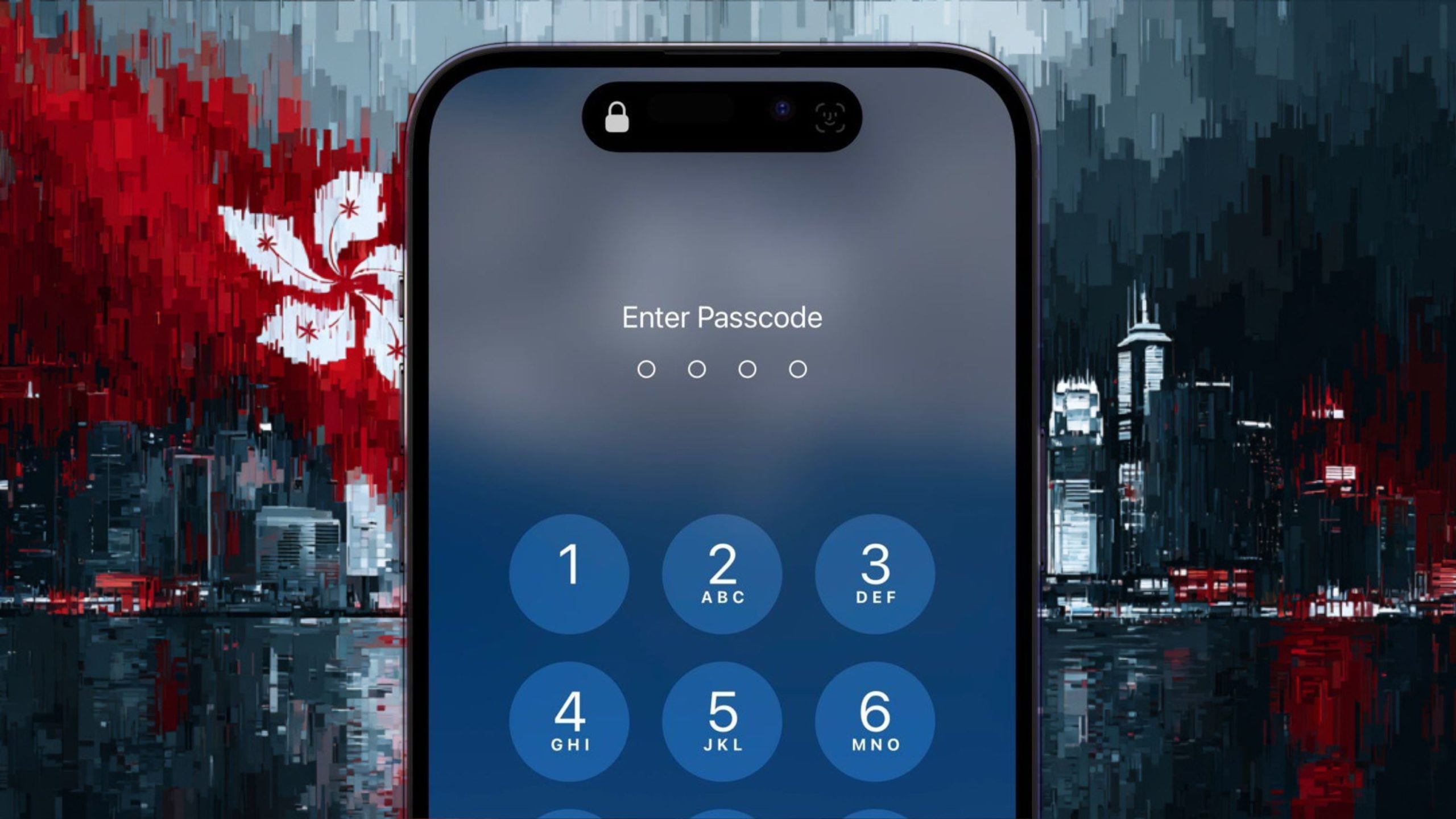
Hong Kong has criminalized refusing to hand over your phone password.
As of March 23, 2026, anyone in the territory, residents, visitors, or people waiting for a connecting flight at Hong Kong International Airport, can be compelled by police to unlock their personal electronic devices during national security investigations.
Refusing to comply could lead to up to one year’s imprisonment and a fine of up to 100,000 Hong Kong dollars ($12,768), while providing false or misleading information could bring up to three years’ imprisonment and a fine of up to 500,000 Hong Kong dollars ($63,840).
The amendments to the implementation rules of Beijing’s 2020 national security law were gazetted on Monday and took effect immediately, using powers to bypass Hong Kong’s legislature.
The new offense empowered police to require a person under investigation to provide any password or decryption method for electronic equipment, or to offer “any reasonable and necessary information or assistance.” That last phrase doesn’t define “reasonable” or “necessary.” It just requires you to help the state access your data, on the state’s terms.
The obligation extends well beyond suspects. It applies even if the individual has a “duty of confidentiality or any other restriction on the disclosure of information,” which means that doctors and lawyers may be forced to give up confidential patient and client data.
Professional privilege vanishes the moment the national security label gets attached.
The US Consulate General in Hong Kong issued a security alert on March 26 in unusually direct language. “It is now a criminal offense to refuse to give the Hong Kong police the passwords or decryption assistance to access all personal electronic devices, including cellphones and laptops,” it stated.
“This legal change applies to everyone, including US citizens, in Hong Kong, arriving or just transiting Hong Kong International Airport.”
You don’t have to leave the airport. Simply routing a flight through the city puts your device and everything on it within reach of the Hong Kong police.
The amendments also grant authorities power to seize items deemed to have “seditious intention,” regardless of whether any person has been arrested for a national security offence.
And police, with approval from the Secretary for Security, can now order the removal of electronic messages deemed likely to constitute or incite national security crimes, directing publishers, platform operators, and hosting services to comply within a specified timeframe.
Secretary for Security Chris Tang Ping-keung told lawmakers that the changes were procedural, not substantive. “These amendments have only improved some procedures and how we work; there are absolutely no newly added powers,” Tang said.
This is a remarkable claim about rules that, for the first time, make it a standalone criminal offense to refuse to unlock a phone. A government spokesperson added that “Law-abiding persons will not contravene the law inadvertently. The Amendment Rules will not affect the lives of the general public and the normal operation of institutions and organisations.”
That promise is worth exactly as much as the government’s definition of “national security,” which, since 2020, has been broad enough to cover protest organizing, candlelight vigils, and newspaper publishing.
If you're tired of censorship and dystopian threats against civil liberties, subscribe to Reclaim The Net.
The post Hong Kong Criminalizes Refusal to Unlock Phones for Police appeared first on Reclaim The Net.








 New Posts (Home)
 ChatBox
 Popular Posts
  Game Zone
 Top PodCasts