www.thegospelcoalition.org
How a Story About Iran Teaches Us to Listen to God
In his autobiographical story Everything Sad Is Untrue, Daniel Nayeri asked a provocative question about what we worship: “Would you rather a god who listens or a god who speaks?”
“Be careful with the answer,” he cautioned. “This is the kind of thing you live your whole life thinking about probably.”
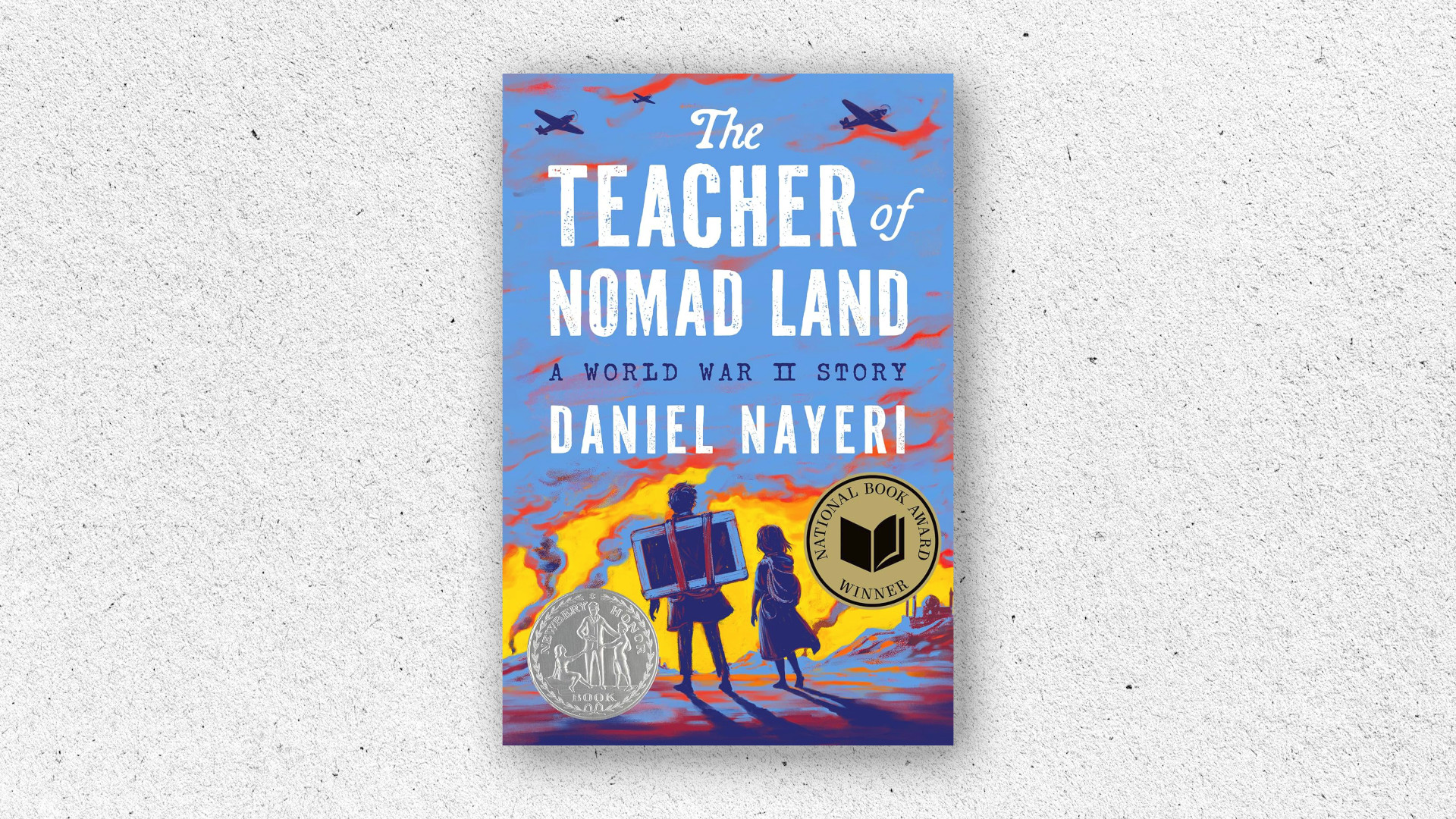
Nayeri dives back into explorations of God, speaking, and listening in The Teacher of Nomad Land: A World War II Story. This short historical novel won the 2025 National Book Award for Young People’s Literature. It reads as children’s fiction, but the story reflects Christian themes profound enough to challenge and inspire adult readers as well, with an emphasis on how it looks to both listen and speak with grace.
Listen
The Teacher of Nomad Land is set in Iran during a time, like today, when people from across the world met and mixed uncomfortably, even dangerously, at the crossroads of cultures and communication. A boy named Babak and his sister, Sana, are orphaned and have to find a way to care for themselves and stay together.
The story reflects Christian themes profound enough to challenge and inspire adult readers as well.
Babak’s father, his “Baba,” was a teacher, and Babak wants to follow in his footsteps. The boy carries a blackboard strapped to his back for most of the book so he can be ready to give lessons any time there’s an opportunity.
Babak meets a particularly frustrating boy who speaks a different language and doesn’t want to learn about anything beyond addressing his immediate needs. Babak observes how “Baba managed kids like this and somehow never screamed at them to take a breath and leave a single solitary second for someone else to speak,” and he wonders “for the love of all the angels in heaven, please . . . how does any teacher do it?” (117).
So Babak decides to try letting the other boy teach him. As Babak listens, something changes between them. The two boys find common ground in their languages and experiences, and they begin moving from annoyance to compassion, then slowly to friendship.
In an author’s note, Nayeri says that perhaps a lot of human history is actually “one giant misunderstanding after another in a cacophony of voices” (179). The book is filled with examples of characters moving toward understanding through taking time to hear each other.
As I’ve talked to kids who have read The Teacher of Nomad Land, they’ve remarked that the book reminded them that Scripture also emphasizes the importance of listening—to God (Deut. 6; 8:3; Rom. 10:17) and to the people around us, whether teachers (Prov. 12:15; 22:17) or fellow students (18:13; James 1:19). Faith comes from hearing, after all (Rom. 10:17).
Maybe the most astounding biblical truth about listening, though, is that God listens to us (Ps. 18:6). “The least of His consideration is immeasurable blessing,” as Teacher of Nomad Land says (49). The novel reminds readers that if the King of the Universe pays attention to our joys and cries, we can pause to listen as well.
Speak
In Nayeri’s books, listening and speaking are counterbalanced themes, two sides of one coin. Babak must not only listen but also speak courageously to teach the people around him and to save lives. Characters talk about their horrible war experiences and the hope that remains anyway. Part of the climax includes a scene where Babak has to step into a complex and dangerous situation to literally help people speak to each other. He slowly learns to live out his father’s lesson that “what we want others to know, we must teach them” (87).
Nayeri has spoken publicly about faith and what he learned during his years attending Redeemer Presbyterian in New York. During the National Book Awards broadcast presentation, Nayeri gave a brief acceptance speech and talked about Babak teaching Farsi to the other characters in the story. Nayeri said,
The first thing you learn if you are teaching the language of Farsi is . . . “Father gave water. Baba ab dad.” And the second sentence you learn is “Father gave bread. Baba nan dad.” Somewhere I think in the origin of that language is the idea that what we need most in this life has been . . . given to us freely.
Nayeri connects that concept directly to the gift of the gospel, a teaching on true grace from his fictional story.
Maybe the most astounding biblical truth about listening is that God listens to us.
One of the great miracles of humanity is that God has spoken to us. His voice sounds in his Son (“the Word made flesh”) and through the written Scriptures. Both repeatedly command God’s often silent people to speak as well—from Moses and Ezekiel to Paul and to us and the children and other fellow believers we disciple.
Christ’s followers should teach “all nations” (Matt. 28:19–20) and stay “prepared to make a defense to anyone who asks [us] for the reason for the hope that is in [us],” speaking “with gentleness and respect” (1 Pet. 3:15). Babak’s story—and Nayeri’s—provides a model for living these calls to speak boldly and to keep teaching.
God Speaks and Listens
When Nayeri asked in Everything Sad Is Untrue whether the reader would prefer a god who listens or a god who speaks, he clarified,
A god who listens is love.
A god who speaks is law. . . .
Oh, and in case it wasn’t obvious, the answer is both.
God should be both.
The Bible shows God both generously speaking and graciously listening, and it encourages us to do the same. “Because [God] has freely given these things I do not deserve, then I can freely share them with you,” a traveler tells Babak as they have a meal together (48).
The Teacher of Nomad Land was published before the recent headlines about Iran, but it offers captivating insight into a land where the church is growing rapidly as the gospel is shared in the face of persecution and conflict. It’s also a timely reminder for believers to pray for their brothers and sisters around the globe and to continue giving out of the abundance God has given: love and teaching, water and bread, patience to listen and willingness to speak.








 New Posts (Home)
 ChatBox
 Popular Posts
  Game Zone
 Top PodCasts