www.optimistdaily.com
Are fire-loving fungi mother nature’s first responders after wildfires?
BY THE OPTIMIST DAILY EDITORIAL TEAM
After a severe wildfire, the first visible signs of life returning are often flowers or birds. What you cannot see is what arrives even earlier.
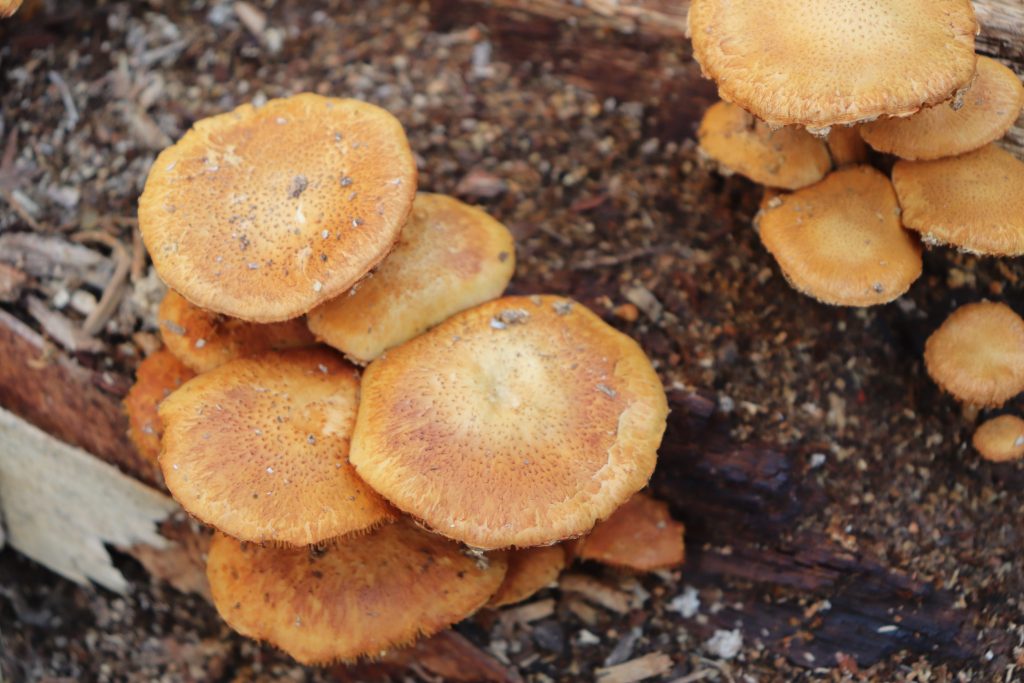
Within weeks of a blaze, tiny fungal fruiting bodies push through scorched soil and release spores, briefly carpeting otherwise-bare ground in splashes of ocher, mauve, pink, and orange. These are pyrophilous fungi, from the Greek for “fire-loving,” and researchers are beginning to understand what they are actually doing, and why it matters for everything that comes after.
“They really seem like the first responders,” says Monika Fischer, a mycologist at the University of British Columbia. “They’re the things that are growing the most rapidly first.”
What a severe wildfire does to soil
High-intensity wildfires can reach temperatures over 1,000 degrees Celsius (1,832 degrees Fahrenheit). At those temperatures, the top layer of soil and any organisms living in it essentially burn away, leaving behind what scientists call pyrolyzed organic material, a mix of soot and charcoal that is almost entirely carbon.
The problem is that the carbon atoms in this material form fused rings, creating dense, complicated clumps. “Very few microbes, or very few organisms, could just take that in to try to eat it,” says Matt Traxler, a microbiologist at the University of California, Berkeley. Pyrolyzed material also contains toxic compounds called polycyclic aromatic hydrocarbons.
On top of that, burned soil develops a water-resistant, waxy coating that prevents moisture from seeping into the ground, leaving the land prone to landslides and making the soil dry and crumbly, making it difficult for seeds to take hold.
How fire fungi solve the problem
Pyrophilous fungi appear to have evolved specifically to function in this inhospitable terrain. In laboratory experiments, Fischer and Traxler showed that one well-studied post-fire species, Pyronema domesticum, can grow even when burnt soil is the only available carbon source. When placed in pyrolyzed material, the fungus switches on genes that produce enzymes to break down the charred matter, converting it into a more accessible form that other organisms can use.
“They’re sort of jump-starting that nutrient cycling,” Fischer says. A recent study from the University of California, Riverside, found that other pyrophilous species also carry the key genes for digesting charcoal.
Beyond the chemistry, fire fungi appear to help repair the physical structure of the soil. Following the 2016 wildfires in Great Smoky Mountains National Park, mycologist Karen Hughes of the University of Tennessee, Knoxville, and her collaborators found networks of mycelial mats across the burned landscape, tangled webs of fine, root-like structures that fungi use to absorb water and nutrients. Those mats help stabilize soil that has been destabilized by fire. Similar formations have been observed after wildfires in the Pacific Northwest and in southeastern Australia.
Why this research is gaining urgency
As wildfires grow more severe and more frequent, the role of fire fungi is getting more attention. Fischer believes these organisms, and the mycelial mats they build, likely play a significant part in helping seeds germinate after a fire. Traxler says scientists are still working out how early differences in fungal communities shape the pace and diversity of long-term recovery.
There is a great deal still to learn. With an estimated five million species of fungi on Earth, Hughes acknowledges there is “a ton of stuff we don’t know.” But the current research is building toward something practical. Fischer says a better understanding of fire fungi could give ecologists and land managers a toolkit to actively support post-fire regeneration: not just waiting for recovery to happen, but knowing which organisms to encourage and when.
The work of ecological recovery begins long before the first wildflower appears. It starts underground, in the microscopic chemistry of charcoal being broken apart by organisms most people have never heard of. Small, colorful cups pushing through ash are easy to overlook. But researchers are now making the case that the plants and animals that eventually return are only able to do so because the fungi arrived first and made the soil ready for them.
Did this solution stand out? Share it with a friend or support our mission by becoming an Emissary.The post Are fire-loving fungi mother nature’s first responders after wildfires? first appeared on The Optimist Daily: Making Solutions the News.








 New Posts (Home)
 ChatBox
 Popular Posts
  Game Zone
 Top PodCasts