www.optimistdaily.com
The surprising science of sleep positions, explained by a sleep doctor
BY THE OPTIMIST DAILY EDITORIAL TEAM
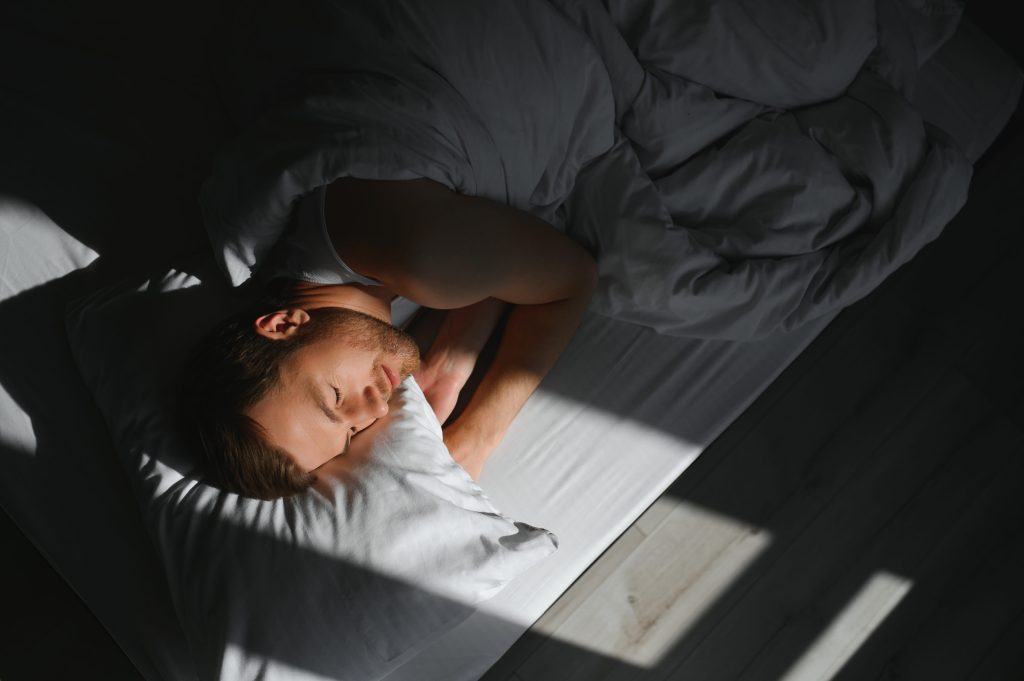
Most sleep advice is about duration or routine: go to bed at the same time, put the phone down, get eight hours. Much less attention goes to what your body is physically doing for those eight hours. Depending on how you sleep, your brain may be clearing waste products more or less efficiently, your heart may be working harder or easier, and your spine may be in a neutral position or slowly accumulating strain. The research is more specific than most people realize.
“Everyone has an idea of what a good sleep position may be, whether it’s sleeping on your left side, right side, back, belly, or even upside down,” says Dr. John Saito, a representative for the American Academy of Sleep Medicine. “But it all depends on the context.”
Back sleeping is good, with one significant exception
Back sleeping, with a pillow that keeps the neck and spine in a neutral position, lets the airway stay open and breathing stay easy. For most adults, it’s a reasonable starting point.
For people with sleep apnea, though, it can be actively harmful. Sleep apnea is a condition in which breathing repeatedly stops and starts during sleep, usually because the throat muscles relax and block the upper airway. “If the tongue falls to the back of your throat when you’re lying on your back, that’s bad,” Saito says. For babies, back sleeping works in the opposite direction: pediatricians recommend it specifically to reduce the risk of sudden infant death syndrome, which is why “back to sleep” became a major public health message starting in the 1990s.
Left side and right side do different things
Side sleeping is broadly well-supported, but left and right aren’t interchangeable.
“If you’re lying on your right side, it might be better for blood flow,” Saito says, along with lower pressure on the heart. This happens because the mediastinum, the compartment between the lungs that holds the heart in place, exerts less gravitational pull on the heart when you’re on your right.
Left-side sleeping has a different advantage: it appears to support the brain’s glymphatic system more effectively. The glymphatic system is the brain’s waste-clearance network, most active during sleep, that flushes out harmful metabolic byproducts, including proteins associated with Alzheimer’s disease. Research on how position influences that process is still developing, but early findings are promising. “If you’re lying on your left side, it may actually be better for clearing the waste product in our brain,” Saito says.
How you position your body on your side also matters. Sleeping with your body relatively straight helps keep the spine aligned. Curling into a fetal position can ease lower back pain, though going fully curled can compress the diaphragm and make breathing shallower.
How to figure out which position works for you
Rather than recommending one position for everyone, Saito uses the ABCs of respiratory therapy as a practical guide: airway, breathing, and circulation. The idea is to identify which factor is most relevant for you, then find the position that best supports it.
If you deal with sleep apnea, allergies, or chronic congestion, the priority is keeping the airway clear. “If you can’t breathe because you have sleep apnea or you have allergies and a stuffy nose, you want to find the best position that keeps your airway open,” Saito says. If back pain is the primary issue, the spine-alignment logic matters more than the airway logic. “Ask someone who’s dealing with back pain to sleep on their back and they’re going to curse you,” Saito says, “because even though they’re breathing better, their bones and joints are hurting terribly.”
Small adjustments that help any position
A few targeted changes make a difference regardless of preference. Side sleepers can place a pillow between their knees to bring the hips, neck, and head into better alignment. Back sleepers benefit from a pillow under the knees to reduce lower back strain. Stomach sleepers, who put the most stress on the neck and spine, can try a thin pillow under the hips to ease some of that pressure. Choosing a mattress that supports the natural curve of the spine ties everything together.
On movement: it’s normal. “There’s nobody that sleeps like a log and doesn’t move,” Saito says. Shifting through the night is natural repositioning, not a problem. The concern is excessive movement driven by discomfort. “Just like in anything, a little bit is OK, but too much means you’re outside of the spectrum of normal.”
“There’s no one best sleeping position,” Saito says. The goal is finding a position that keeps breathing easy, supports the spine, and lets the body stay asleep. For most people, that answer is shaped by their specific health picture, and the best place to start is with whichever position consistently delivers the most rest.
Did this solution stand out? Share it with a friend or support our mission by becoming an Emissary.The post The surprising science of sleep positions, explained by a sleep doctor first appeared on The Optimist Daily: Making Solutions the News.








 New Posts (Home)
 ChatBox
 Popular Posts
  Game Zone
 Top PodCasts