www.dailywire.com
Social Media Companies Harm Young People — Here’s The Evidence
Two weeks ago, on March 25, a jury in Los Angeles found Meta and Google liable in a landmark case. The jurors determined that the parent companies of Instagram and YouTube had acted with “malice, oppression, or fraud,” addicting and harming the young plaintiff, known as KGM.
Just one day prior, a jury in New Mexico found Meta liable for “misleading consumers about the safety of its platforms and endangering children.”
Many kinds of evidence were presented to the juries, from internal documents and research done by the companies themselves, to testimony from experts and former employees. The evidence revealed that the companies had intentionally designed their products in ways they knew would harm children.
The companies used a two-pronged defense strategy. First, they blamed others: It was KGM’s fault for opening accounts before she was 13. It was her parents’ fault that she got addicted and depressed. Whatever harm happened, we’re just a neutral platform! The jury did not respond well to this strategy.
Second, they claimed that there is no scientific evidence that their platforms cause harm to adolescent mental health. Mark Zuckerberg has repeatedly asserted that the academic evidence is merely correlational. He grants that heavy users are more depressed, but notes that correlational evidence cannot prove that social media caused their depression.
There are thousands of similar cases coming, and we can be confident that the companies will lean hard into the second strategy: denying any scientific evidence of causation. When making such claims, defenders of social media usually refer to an essay in Nature that made similar assertions. But as we showed in The Anxious Generation, and in our academic articles and many posts on After Babel, there is abundant scientific evidence of causation.
The editors of The World Happiness Report recently asked us to put all of the evidence together. The annual report shows how countries vary on measures of well-being. Each year, there is a special topic or focus, and for the 2026 report, the focus was on social media’s effects on well-being. We wrote the target essay laying out the case for harm, and other authors brought a variety of perspectives.
Knowing that thousands of jury trials were on the horizon, we laid out our argument like a hypothetical civil trial, asking our imagined jury this question: Are social media platforms dangerous consumer products whose design has led to a variety of harms to young people? We call this the Product Safety Question. We present seven lines of converging evidence showing that these platforms are causing harm.
At the end of our chapter, we show that the levels of harm uncovered while answering the Product Safety Question are so high that we can also answer a different, but related, question: Are social media platforms causing harm to entire populations? We call this the Population Harm Question, and it’s at the center of some of the states’ and school districts’ cases.
Taking The Companies To Trial
In our hypothetical case against the companies — particularly Instagram, TikTok, and Snapchat — we begin with the apparent victims, the people who allege harm: Gen Z, the cohort born roughly between 1996 and 2011. They were the first generation to go through puberty with social media in their pockets, accessible at all times through smartphones beginning in the early 2010s. They have the clearest view of what happened to them and their peers.
We then turn to those who spend the most time with young people — parents, educators, and clinicians. They also witnessed the effects of social media across many young people, over many years.
If we could call all of these groups to the stand, what would they say? We offer a brief synopsis of each line of evidence below. You will find far more detail in the WHR paper.
Line 1: What the Victims Say
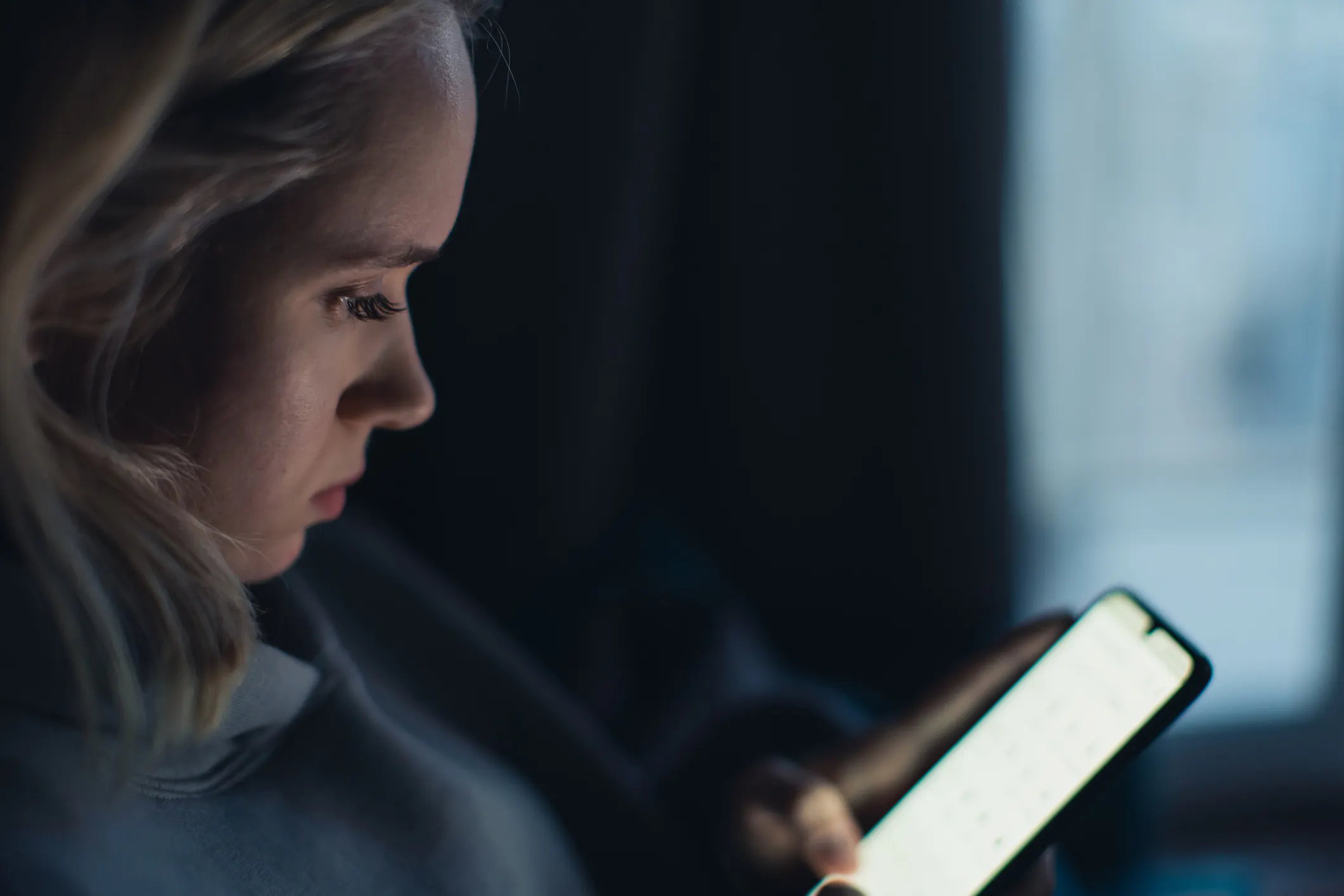
Across surveys in multiple countries, many young people report that social media has harmed them directly and indirectly. They describe widespread experiences of cyberbullying, sexual exploitation, sleep disruption, lower confidence, and worse mental health. They also express strikingly high levels of regret toward the major platforms they have used for years. In a Harris Poll survey of members of Gen Z, nearly half reported that they wish that TikTok, X (Twitter), and Snapchat were never invented — despite using those platforms for several hours a day.
Internal surveys conducted by Meta found similar results. In their own research, they found that “teens blame Instagram for increases in the rates of anxiety and depression among teens,” that one in three teen girls said Instagram made their body-image issues worse (20% said it made it better), and 13% of adolescents reported unwanted sexual advances on Instagram in the previous seven days.
In a courtroom, it is powerful when a victim points to the defendant and says, “he did it.” In survey after survey, and in open-ended interviews, Gen Z points to social media platforms as the culprit.
Of course, the victims in a court case could be mistaken or could be lying, so direct positive identification is strengthened when corroborated by eyewitness testimony. The same logic applies here, so let’s move to our second line of evidence and call a variety of witnesses to the stand.
Line 2: What the eyewitnesses say
We next turn to the adults who spend the most time with young people. Parents describe changes in their children’s mood, sleep, self-esteem, and friendships; teachers report worsening distraction, attention, and academic performance; and clinicians say social media is exacerbating anxiety, depression, and addiction-like behavior in their young clients.
A 2025 Pew survey of U.S. teens and their parents found that 44% of parents identified social media as the single most negative influence on teen mental health, ahead of “technology generally.” Similarly, the 2025 UK survey by More in Common asked parents to identify what most negatively affects their own children’s mental health. The top response was “social media use/excessive screen time,” followed by concerns closely linked to digital technology, including exposure to harmful online content, bullying, low self-esteem, and lack of sleep.
In our own Harris Poll survey, majorities of parents said that, when thinking about their own children, they wished the major social media platforms had never been invented. And according to findings disclosed in litigation, Meta’s own research found that large majorities of clinicians believed social media worsens anxiety and depression in adolescents.
Line 3. What company insiders say
The attorney for the plaintiff might then call the defendant to the stand and turn to the direct evidence. Suppose, for example, that the attorney had obtained through pre-trial discovery a series of text messages from the defendant describing what he was planning on doing, and then, afterward, talking about what he had done.
In our case against the social media companies, we have the equivalent of hundreds of such text messages in the form of internal company emails, messages, memos, documents, presentations, and more.
Here are just a few of the quotations from internal documents revealing what company insiders — employees as well as external consultants hired to offer advice — believed.
Oh my gosh yall IG is a drug […] We’re basically pushers […] We are causing Reward Deficit Disorder bc people are binging on IG so much they can’t feel reward anymore […] like their reward tolerance is so high […] I know Adam [Mosseri] doesn’t want to hear it — he freaked out when I talked about dopamine in my teen fundamentals leads review but its undeniable! Its biological and psychological […] the top down directives drive it all towards making sure people keep coming back for more. That would be fine if its productive but most of the time it isn’t […] the majority is just mindless scrolling and ads.
– A chat between two UX Meta researchers (Social media addiction litigation, p. 33)
“There are reasons to worry about self-control and use of our products” and presenting a “quick rundown of evidence” – including “[a]n experiment [which] found that a 1-month break from Facebook improved self-reported wellbeing.” In response, another senior data scientist at Meta (who also holds a PhD in neuroscience and taught a university course on addiction) warned: “It seems clear from what’s presented here that some of our users are addicted to our products. And I worry that driving sessions incentivizes us to make our product more addictive, without providing much more value. How to keep someone returning over and over to the same behavior each day? Intermittent rewards are most effective (think slot machines) reinforcing behaviors that become especially hard to extinguish – even when they provide little reward, or cease providing reward at all.”
– A member of Meta’s core data science team and a senior data scientist at Meta (Social media addiction litigation, p. 27)
[A]round 10,000 user reports of sextortion each month,” and “that 10k monthly reports likely represents a small fraction of this abuse as this is an embarrassing issue that is not easy to categorize in reporting.
– Snap Trust and Safety Team Member (State of New Mexico v. Snap Inc., para 132–134)
“Compulsive usage correlates with a slew of negative mental health effects like loss of analytical skills, memory formation, contextual thinking, conversational depth, empathy, and increased anxiety”, in addition to “interfer[ing] with essential personal responsibilities like sufficient sleep, work/school responsibilities, and connecting with loved ones.
– Report from TikTank, an internal TikTok research group (Commonwealth of Kentucky v. TikTok Inc., p. 82)
These quotes barely scratch the surface of what the internal documents reveal, and we cover more from this line of evidence in our WHR chapter. You can also find a large selection of disturbing quotations at TechOversight.org, and you can find our own compilation of 35 studies carried out by Meta at MetasInternalResearch.org.
The evidence is clear: The companies and their leaders knew from their own research that they were harming millions of children and adolescents. As former Facebook president Sean Parker said, they knew what they were doing, and they did it anyway.
These three lines of evidence should be enough, we believe, to demonstrate that these products are not safe for minors. Few parents who knew about these three lines would want their children to continue using these products. That may be why many tech executives do not let their children use their own products: they know. But there’s no need to stop here; the forensic evidence further strengthens our case.
The Forensic Evidence
In Lines 4 through 7 of the evidence, we focus on the heart of the academic debate over social media’s effects: whether heavy social media use (~5 or more hours per day) is causing internalizing disorders (such as anxiety and depression) among adolescents (especially girls). There is wide agreement among academic researchers that heavy users of social media are more likely to be depressed and anxious than light users, but does that mean that social media causes those outcomes, or is it merely correlated with them? The claim that it is mere correlation is at the heart of the social media companies’ legal defense strategy.
To address that question, we examine the four major bodies of academic research in turn: cross-sectional studies, longitudinal studies, randomized controlled trials of social media time reduction, and natural experiments.
At this point in our case, we are calling on the forensic experts to give their scientific analysis and opinions of the evidence, which can help connect the defendant to the alleged harm. In a criminal trial, this might be a ballistics or DNA expert; in our case, we’re calling the academic researchers to the stand. They’ve studied social media and internalizing disorders in teens for more than a decade, and though their access to data is more limited than what the companies have themselves, their expert analysis consistently links the defendants to the alleged harm.
Line 4. Cross-sectional studies
The largest body of academic evidence is cross-sectional, which means that data is collected at a single time (as with a survey), with no experimental manipulation. While these studies cannot establish causation on their own, they are an important starting point: they ask whether heavy users of social media are in worse mental health than light users or non-users. Across hundreds of studies, the answer is generally yes. The main point of contention, however, is not whether an association exists, but how seriously to take it.
In one of the most informative studies, Kelly et al. (2019) analyzed data from 10,904 14-year-olds in the UK Millennium Cohort Study and found that adolescents who spent five or more hours a day on social media were about twice more likely to meet criteria for depression as those who used it for less than one hour a day. Among girls, the relative risk was even higher at 2.65 — comparable to sleep deprivation and online harassment, and larger than the risk elevation associated with poverty.
Additional studies reinforce this conclusion. These elevated risk findings were central to the U.S. Surgeon General’s warnings in 2023 and 2024.
Even the studies that our critics cite as finding “no association” between social media use and internalizing disorders in teens look much more concerning when the data is analyzed more carefully, as we show in Exhibit J of our WHR essay. In many cases, researchers blend together variables — for example, different technologies (e.g., email and social media), different outcomes (e.g., general feelings of wellbeing and anxiety), or different populations (e.g., adults 18+ and teen girls) — in ways that dilute the relationship at the center of the debate: heavy social media use associated with internalizing disorders, especially among adolescent girls. Analyses that unblend these categories almost always reveal that heavy teen social media users — and especially girls — are at substantially elevated risk for depression and anxiety. (See Haidt & Rausch, preprint for a deeper examination of blending).
This is the first line of forensic evidence against the defendants: cross-sectional studies consistently show that heavy adolescent social media users are at substantially elevated risk for depression and anxiety. Next, we turn to the longitudinal studies, which help address the question of temporal order.
Line 5. Longitudinal Studies
The longitudinal literature on social media and mental health allows researchers to follow individuals over time and can help clarify whether social media use predicts subsequent changes in mental health, whether poor mental health predicts subsequent social media use, or some combination of the two. The available longitudinal studies present clear and consistent evidence that social media use predicts later depression.
The strongest evidence comes from recent large-scale studies. An analysis of a sample of 6,595 U.S. adolescents, ages 12–15, found that heavy social media use predicted later increases in internalizing symptoms. Another study, using the longitudinal Adolescent Brain Cognitive Development (ABCD) dataset, showed that increases in social media use predicted subsequent increases in depression. Meanwhile, other researchers using the ABCD dataset showed that earlier internalizing disorders failed to predict subsequent social media use.
Some studies also find bidirectional relationships (i.e., higher social media use today predicts worse mental health a year from now, and worse mental health today predicts higher social media use a year from now), and within those studies, the forward relationship from social media use to later depression remains robust.
In other words, this second line of forensic evidence shows that not only are heavy users of social media doing worse, at any given time (that’s the cross-sectional finding); it’s also the case that those who use more social media at one point in time are generally found to be worse off at later times.
Line 6. Randomized Control Trials of Time Reduction
The most powerful tool for measuring causation directly is an experiment that randomly assigns participants to either an intervention or to a control condition and then compares the outcomes. While researchers do not, for ethical reasons, ask kids to either start using social media at age 10 or stay off it until age 16, there are numerous experiments where young adult participants have been asked to either reduce their social media use (intervention) or continue their use as usual (control condition).
A recent meta-analysis by Burnell et al. (2025) of 32 such experiments has shown that reductions of social media use caused substantial declines in symptoms of internalizing disorders like depression and anxiety — even though most of these studies lasted only a week or two.
The experimental results are all the more remarkable given that these studies are not designed to measure impacts that could be produced by entire communities reducing their use of social media. For example, if all students in a given school district ceased to use social media, that would leave more overall time for in-person interactions with peers and therefore the beneficial impacts on mental health could be a lot stronger, even for students with low levels of social media use. Furthermore, kids who do not use social media would cease to be penalized for their inability to socialize with their peers on these platforms, which in turn might help improve their mental health.
Even Meta’s own internal research confirmed evidence of benefits caused by social media reductions. In a 2020 Facebook deactivation experiment, code-named Project Mercury, Meta found that users who stopped using Facebook or Instagram for just one week reported lower feelings of depression, anxiety, loneliness, and social comparison. One internal researcher warned that keeping such findings secret would resemble the refusal by tobacco companies to admit that their own research revealed severe harms of cigarette consumption.
This sixth line of evidence is arguably the most damning: experiments using random assignment provide consistent causal evidence that when users reduce the amount of time they spend on social media, their mental health improves. The defendants themselves found this in their own internal experiments, and they tried to bury it.
Line 7. Natural Experiments
Our final line of evidence comes from natural experiments: Because high-speed internet made social media much more appealing (photos and videos would load faster), if some regions of a country got broadband connections a year or two before other areas, researchers can compare: did the mental health of young people in those early adopter regions change before those of the later regions? These studies are especially valuable because they offer population-level evidence that is not available from short-term laboratory experiments.
Across the major natural experiments we review — in Germany, Italy, Spain, and the United States — the evidence indicates that the spread of high-speed internet worsened mental health, with the harms falling most heavily on young people, especially women and adolescent girls. Documented effects include declines in self-reported mental health, increases in hospital-diagnosed mental disorders, and rising suicide rates. Additional natural experiments point in the same direction.
This final line of forensic evidence may be the most policy-relevant of all, because it allows us to examine what happened as these technologies actually spread through entire populations. It comes closest to the ideal experiment of having one group of adolescents gain access to always-available social media while another does not. And the results are again clear: as high-speed internet spread — and with it, ever-present social media — mental health outcomes worsened, especially for young people and especially for girls.
Harm to Millions is Harm at the Population Level
Our seven lines of evidence make one thing clear: The answer to the Product Safety Question is No, social media platforms are not safe for young people. These consumer products were designed — intentionally — to maximize the number of children and adolescents who would be drawn to them and the amount of time that each would spend on them. The leaders and researchers at these companies know that heavy users of social media suffer many indirect harms (mental health problems, body image issues, addiction), and that even light users are often exposed to dangerous direct harms (such as sextortion, or death from purchasing fentanyl-laced drugs, or performing a dangerous challenge).
The Population Level Question is a different question. It is quite possible for a consumer product to be extremely dangerous and yet have no effect on the aggregate statistics of a nation. That would be the case for any product that is used by only a tiny portion of the population. But social media platforms are arguably the most widely used products among young people in the developed world, used regularly by a large majority of adolescents in the United States. In fact, a third of American adolescents say that they are on one of the major platforms “almost constantly.” So if several of the product safety concerns we have documented are affecting more than 20% of all users (as with self reports of sleep deprivation and mental health damage), that quickly adds up to a population-level effect.
When the documented direct and indirect harms are scaled to the number of young people actually using these products, the number of adolescents harmed each year likely reaches into the millions in the United States alone. Arturo Béjar’s internal Instagram research found that 13% of users ages 13–15 reported receiving unwanted sexual advances in the previous week — which, if the U.S. is similar to the global average, would imply about 5.7 million adolescents experience this in any given week. This same research also found that 10.8% of Instagram users ages 13–15 reported being cyber-bullied in the previous week. The number of adolescents experiencing direct harms from social media likely exceeds 10 million each year in the United States alone. (See the WHR sections, “direct harm to millions” and “indirect harm to millions” for more extensive examples and estimates).
In other words: the answer to the Population Harms Question is very likely to be “yes.”
Conclusion
The evidence we have presented does not prove that any particular plaintiff is correct, and it does not mean that there is no evidence on the other side. We have been engaged in a debate with other researchers for seven years now, and you should read their arguments to hear the other side. Scientific debates are never closed; there is always the possibility of new evidence or of discovering new complications and interactions.
But the next time you hear Mark Zuckerberg or anyone else say that there is “no evidence” of harm, or that the evidence is merely “correlational,” send them a link to this essay, or to our full WHR chapter. There is now a great deal of evidence, from many sources (including Meta’s internal research), using many methods.
Social media companies have been harming millions of children and adolescents for many years now. Until this year, they faced no liability for these harms, and they never faced a jury. But now the courtroom doors are finally open and the evidence is being seen — by juries and the world. As the punitive awards mount, there will be design changes to the platforms. And there will be justice.
***
Jonathan Haidt is a social psychologist at New York University’s Stern School of Business. He is the author of the New York Times #1 bestseller The Anxious Generation: How the Great Rewiring of Childhood is Causing an Epidemic of Mental Illness (2024) Zach Rausch is senior research scientist at New York University’s Stern School of Business, and is Jonathan Haidt’s chief researcher. They write and edit the Substack After Babel.








 New Posts (Home)
 ChatBox
 Popular Posts
  Game Zone
 Top PodCasts