www.optimistdaily.com
Why Western scientists are turning to Indigenous knowledge
BY THE OPTIMIST DAILY EDITORIAL TEAM
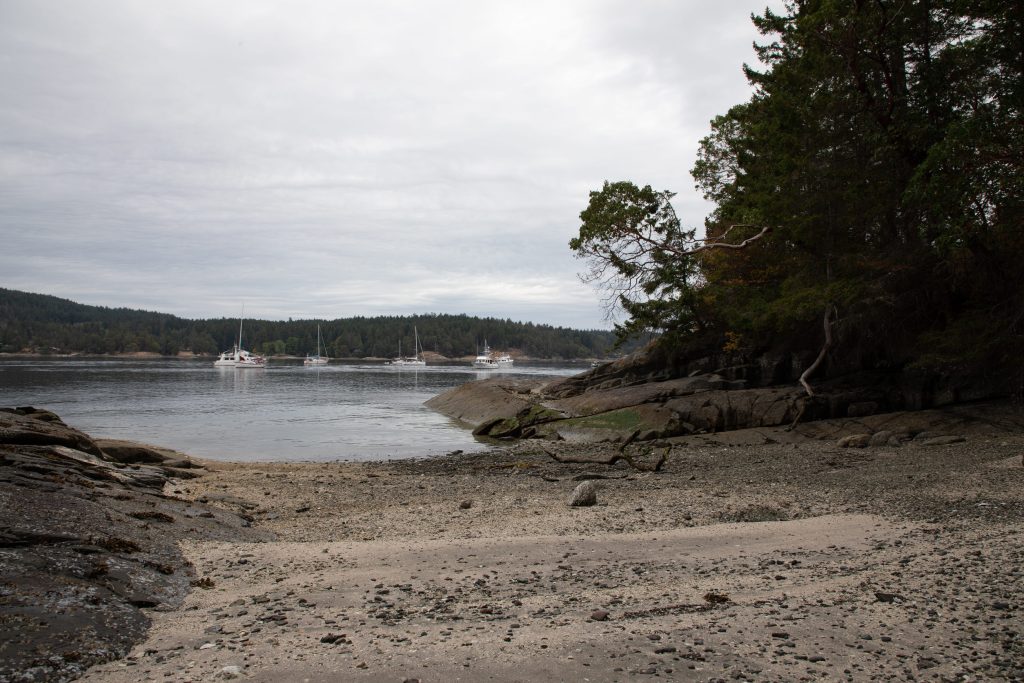
Marco Hatch describes his own work with characteristic dry humor: “I’m a glorified clam counter.” What he’s actually doing is more complicated. As a marine ecologist at Western Washington University and an enrolled member of the Samish Indian Nation, Hatch is collaborating with seven Indigenous communities to rebuild clam gardens in the Pacific Northwest: terraced, rock-walled beaches that their ancestors engineered at least 4,000 years ago. Butter clams, red rock crab, basket cockles, sea cucumbers, seaweed. His data helps these nations secure the permits they need to maintain or re-engineer the structures. It also helps them reclaim food sovereignty and access to places that colonization, land privatization, and forced boarding school confinements put out of reach.
Kyle Whyte, a professor of environmental justice at the University of Michigan and member of the Citizen Potawatomi Nation, calls this a “massive shift” in how Western scientists relate to Indigenous knowledge. Historically, Western researchers classified traditional Native thought as mythic, religious, or fabricated. The reckoning with that position has taken a long time.
Millions spent confirming what communities already knew
The cost of that dismissal is measurable. “Often in science, you see millions of dollars being invested in [one study] that, at the end of the day, might just produce a very simple result that Indigenous people have known for generations,” Whyte said. “It suggests that if there was more collaboration, we could not only save money, but we could stand on the shoulders of Indigenous people and start doing more advanced studies about the ecosystem.”
In British Columbia, researchers at Simon Fraser University found that when Indigenous groups tended forest gardens, they produced an impressive range of food plants, including crabapple, hazelnut, wild plum, wild rice, and cranberries, and improved overall forest health in the process. In Michigan, Whyte has worked with the Sault Ste Marie Tribe of Chippewa Indians to restore prescribed burns, which many Native nations historically used to support populations of sharp-tailed grouse, snowshoe hare, and deer. Those populations declined after the federal government banned burning in 1911. After more than 20 ecology surveys, the tribe made its case.
Kisha Supernant, who is Métis and Papaschase and directs the University of Alberta’s Institute of Prairie and Indigenous Archaeology, describes Indigenous knowledge as containing “a rich history of observation, experimentation and understanding that has its own systems of rigor.” That rigor comes from a fundamentally different way of organizing knowledge. Western science works in silos: ecology, biology, geology. Indigenous knowledge treats “the earth and the water and the air and the plants and the animals as deeply interdependent and interconnected; to understand one is to understand all. And that has a lot to teach Western science.”
The frustration of having to prove what you already know
The collaboration is growing, but it still carries a structural problem: Indigenous communities often have to validate their practices using Western scientific methods before they can act on them.
Suzanne Greenlaw, a citizen of the Houlton Band of Maliseet Indians and an ecologist at the Schoodic Institute, participated in a 2016 study on how sweet grass rebounds after harvesting, part of a Wabanaki effort to reclaim the right to gather it from Acadia National Park land in Maine. They had been cut off from those ancestral marshes for at least 100 years. Non-Indigenous researchers initially chose study plots with no connection to those once used by the community. The resulting comparison showed Wabanaki practitioners understood better than anyone how and where to harvest for the greatest ecological benefit. Harvest rights may be reclaimed later this year.
Greenlaw is now working on a restoration project in Acadia’s freshwater marshlands, using pollen from core samples to identify plants like cattails and groundnuts that Wabanaki communities once ate. The National Park Service data was scattered across spreadsheets “that didn’t tell a continuous story” of the landscape over time. “The question from Wabanaki people has been, ‘What is the land telling us? What is the story of the landscape? What is the story of plants that were here?” Greenlaw said. Whether the community will need separate permits for each food source or can be granted broader harvest rights over an entire freshwater habitat is still unresolved. “Wabanaki people have been here for seven generations, to caretake the landscape,” Greenlaw said. “The idea that we would harm [it] has not shown up in any examples we can give.”
Who sets the terms
For Supernant, the shape of the collaboration matters as much as the fact of it. “If the burden of proof remains on Indigenous communities to demonstrate, using Western scientific methods, that their knowledge is valid, I think we’re not at the place we need to be. It is difficult to braid two things together when they’re not given equal weight in the braid.” Greenlaw was more direct: “Western science can help, as long as Native people are still decision makers.”
Canada’s 2019 legislation requiring the consideration of Indigenous knowledge in fisheries regulatory decisions is one sign of progress. Federal funding since 2022 has supported research into how the two knowledge systems can work together while each remains distinct.
Whyte’s prescription for Western scientists is specific: approach potential Indigenous partners before research questions exist. “Let’s just get excited together about the topic, and plan from the beginning,” he said. “Indigenous people need to be involved at the earliest stages of research.”
On the beaches of the Pacific Northwest, Hatch has seen what that openness produces. When Indigenous knowledge holders and land managers meet around a shared goal of reconnecting to place, “a lot of relationships are strengthened, and those connections are sprouting into new areas,” he said. Memories surface in elders and are passed to younger generations. “The beach is a great place to connect.”
Did this solution stand out? Share it with a friend or support our mission by becoming an Emissary.The post Why Western scientists are turning to Indigenous knowledge first appeared on The Optimist Daily: Making Solutions the News.








 New Posts (Home)
 ChatBox
 Popular Posts
  Game Zone
 Top PodCasts