www.dailywire.com
Trump Cuts Wait For Breakthrough Mental Health Treatments For Veterans
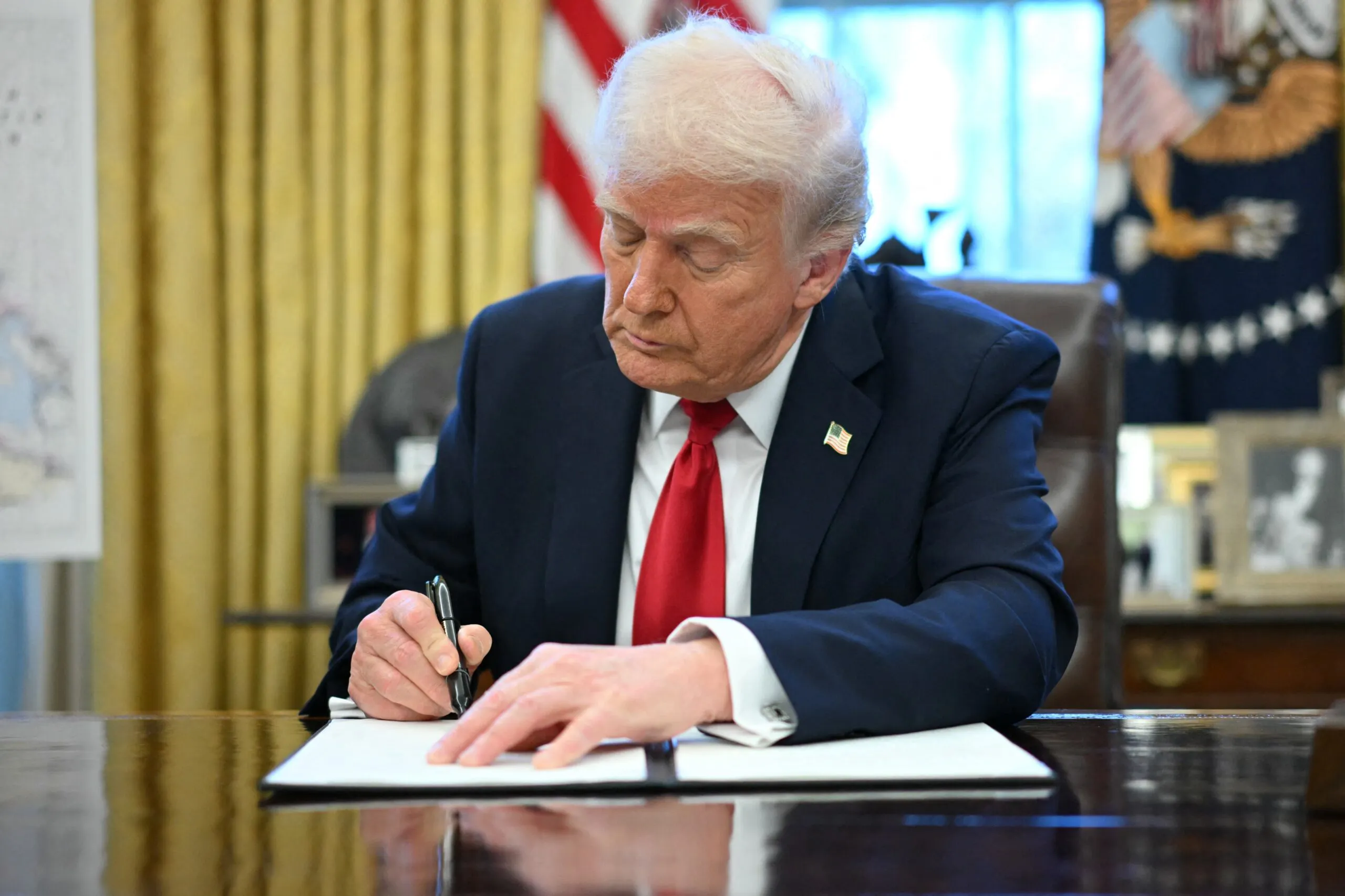
President Donald Trump on Saturday signed a sweeping executive order aimed at fast-tracking access to psychedelic-based treatments for veterans suffering from PTSD, depression, and other severe mental health conditions.
On paper, the order directs agencies like the Food and Drug Administration and the Department of Veterans Affairs to accelerate clinical trials, cut bureaucratic delays, and expand “right to try” access for patients who have exhausted traditional treatment options. But the real-world impact is far more immediate, and far more personal. For millions of Americans, this isn’t an abstract policy debate, it’s about whether treatments that show real promise are stuck in years of red tape while people continue to struggle, relapse, or fall through the cracks of a mental health system that often relies on trial-and-error prescriptions.
Trump framed the move as a long-overdue shift toward urgency.
“These treatments are currently in the advanced stages of clinical trials to ensure that they’re both safe and effective,” Trump said. “But usually with things like this, nothing ever happens … we’re changing that.”
The executive order builds on a growing body of research suggesting psychedelic therapies, particularly compounds like ibogaine, can deliver dramatic results where conventional treatments fail. Trump pointed to a Stanford study in which special operations veterans saw an 80 to 90 percent reduction in depression and anxiety symptoms within a month.
At the signing ceremony, one veteran put it more bluntly.
“This treatment saved my life,” he told the president. “Helped me get off opiates … sleep for the first time in over 10 years.”
“And you have no doubt?” Trump asked.
“Zero,” he answered.
“To me, that’s the best research of all,” Trump said.
More than 14 million Americans suffer from serious mental illness, according to the White House fact sheet accompanying the order, and for many, existing medications and therapies simply don’t work. Even when they do, they often come with significant side effects or require years of adjustments. Among veterans, the crisis is even more acute, with more than 6,000 suicides per year for over two decades, a statistic that has remained stubbornly high despite billions in federal spending.
The order attempts to break that cycle by not just funding research, but forcing the system to move faster. It directs the FDA to prioritize psychedelic drugs already designated as “breakthrough therapies,” a classification reserved for treatments that show substantial improvement over existing options. It also pushes regulators to shorten review timelines that can typically stretch close to a year, and in some cases, much longer.
At the same time, the administration is expanding access before full approval. By opening a clearer pathway under federal right-to-try laws, patients with treatment-resistant conditions may be able to access these therapies under medical supervision rather than waiting years for final regulatory clearance.
That shift could prove significant not just for veterans, but for civilians facing similar conditions; first responders, trauma survivors, and millions of Americans dealing with depression, addiction, and anxiety disorders.
Health agencies are also being pushed to coordinate more aggressively. The order mandates increased data sharing between federal departments, expanded clinical trial participation, and at least $50 million in federal support for state-level research efforts. States like Texas have already invested heavily in ibogaine research, and the federal government is now stepping in to match those efforts.
Even skeptics in the medical field say the evidence is becoming harder to ignore.
“One single administration can change behavior toward a therapeutic effect,” a researcher at the signing said. “We have a tool that could allow the body to heal itself, if we know how to properly use it.”
That’s the gamble behind the order: that accelerating access doesn’t just help veterans, but could reshape how the country approaches mental health treatment altogether, moving away from long-term symptom management and toward therapies that may offer more lasting change.
For everyday Americans, the implications are straightforward. If these treatments continue to show results, they won’t remain confined to niche trials; they could become part of mainstream medicine, available through doctors rather than years-long waitlists or costly alternatives abroad.
If these therapies work — and early data suggest they might — the question is no longer whether they should exist, but how quickly people can access them.
Trump’s answer, at least for now, is simple: faster.








 New Posts (Home)
 ChatBox
 Popular Posts
  Game Zone
 Top PodCasts