www.thegospelcoalition.org
When Evangelicals Forget Their Theology
On April 20, 1996, after several days of meetings at the Charles Hotel in Cambridge, Massachusetts, a group of pastors and theologians signed a declaration. The gathering’s location was symbolic, being in close proximity to Harvard University. Once a beacon of Puritan hopes for theological education, the institution has become a bastion of humanism. In light of that reality, the Cambridge Declaration called evangelicals back to their theological roots in an increasingly pragmatic age.
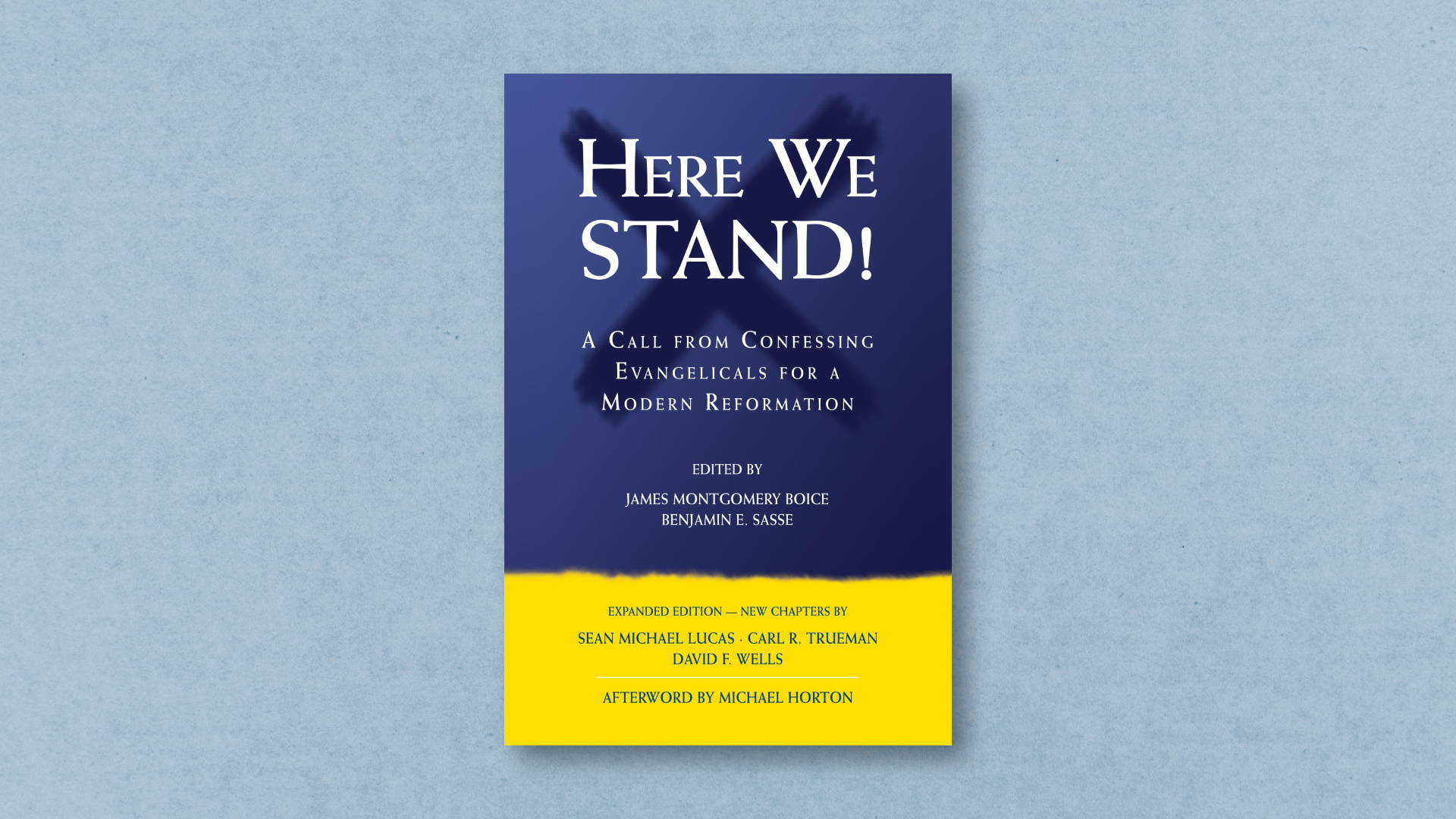
In addition to the Cambridge Declaration, the immediate fruit of that conference was a book, Here We Stand! A Call from Confessing Evangelicals for a Modern Reformation. The editors of that volume were James Montgomery Boice, a longtime pastor at Tenth Presbyterian Church in Philadelphia, and Benjamin Sasse, then the executive director for the Alliance of Confessing Evangelicals (ACE)—the organization responsible for the Cambridge Declaration. Only 24 at the time, Sasse is now better known for his service in the U.S. Senate and as president of the University of Florida.
Though much has changed in the past 30 years, an expanded edition of Here We Stand! offers evidence for the continued relevance of the Cambridge Declaration.
Theological Recovery
I was largely oblivious to the theological and cultural debates of the 1990s. My awareness of the church growth movement, exemplified by Rick Warren’s Saddleback and Bill Hybels’s Willow Creek movement, was scant. I was entirely ignorant of the Conservative Resurgence in the Southern Baptist Convention, the brewing controversy over open theism in the Evangelical Theological Society, the rising tide of the New Perspective on Paul among biblical scholars, or the debate about justification that resulted from the Evangelicals and Catholics Together statement.
Yet those are exactly the issues that the Cambridge Declaration and the ACE have helped address over the past 30 years. I’m thankful for those efforts.
The book’s title plays off of Martin Luther’s language at the Diet of Worms. Therefore, it’s no surprise that the emphasis of each of the essays is the dual need for theological reform and countercultural catechesis. The declaration’s opening words set the mood: “Evangelical churches today are increasingly dominated by the spirit of this age rather than the Spirit of Christ. As evangelicals, we call ourselves to repent of this sin and to recover the historic Christian faith” (9).
The emphasis of each of the essays is the dual need for theological reform and countercultural catechesis.
The Cambridge Declaration has only five theses, in contrast to Luther’s ninety-five, yet both documents begin with a call to repentance. Since a central plank of the ACE was recovering the Reformation’s theology, it’s not surprising that their five theses align with the five solas that summarize the key distinctions of the Protestant reformers.
The declaration’s signers weren’t calling evangelicals to do something new but to recover “Christian behavior and expectations [that are] markedly different from those in the culture” (15). The language of the declaration and the book is critical of evangelicalism, but consistently in the first-person plural, with a desire to call the broader movement back to its doctrinal roots and missionary focus.
Critical Relevance
David Wells was apparently unaware he was living in a neutral world when he observed that “the loss of moral vision threatens to undo culture” even as “escalating recourse to law” became the dominant means to “contain a society that is splitting its own seams” (35). Much of what Wells wrote echoes the concerns Aleksandr Solzhenitsyn highlighted in another Cambridge declaration, his 1978 Harvard address, “A World Split Apart.” The more the world changes, the more it remains the same.
The absence from the book of key terms from contemporary evangelical discourse is striking. The term “Moral Therapeutic Deism” didn’t enter our vocabulary until 2005, when Christian Smith and Melina Lundquist Denton published Soul Searching. Charles Taylor’s A Secular Age wouldn’t introduce the “immanent frame” and “buffered self” to evangelicals until 2007.
Nevertheless, the central concern in the volume mirrors ongoing evangelical debates, as Boice noted: “A therapeutic worldview has replaced classical categories such as sin and repentance, and many leaders have identified the gospel with such modern idols as a particular political philosophy, psychological views of man, and sociology” (5).
One benefit of reading a cultural commentary like Here We Stand! three decades after its original publication is the opportunity to reflect on what has changed and what hasn’t. The presenting cultural issues have changed, but there’s a timelessness in Michael Horton’s call to “distinguish things heavenly from things earthly” (108) and to “recover the sufficiency of Scripture [by challenging] the rampant individualism and enthusiastic claims of popular spiritual movements” (109). The need to focus on Christianity’s core doctrines rather than contemporary political battles stands out like a spruce tree among maples in December.
Enduring Fruit
Though many concerns from 1996 remain in 2026, it’s encouraging to see how much fruit the Cambridge Declaration has borne. The ACE has served as a catalyst for health in segments of evangelicalism by bringing together “over one hundred Christian leaders . . . from a wide variety of denominational backgrounds to make a common stand for truth in our time and place” (247).
That 1996 meeting brought together people like Albert Mohler, Don Carson, Alistair Begg, Sinclair Ferguson, Michael Horton, R. C. Sproul, John MacArthur, Gene Veith, Rosemary Jensen, and Ligon Duncan. The friendships they formed led to conferences like T4G and shaped a vision for theologically resourcing local churches through organizations like 9Marks, Sola Media, The Gospel Coalition, and others. As Michael Horton argues in his new afterword, “The coalition worked precisely because we were not confusing our mandate with that of the churches” (249).
Evangelical churches are healthiest when they’re more enthusiastic about doctrine than demographics.
Boice died of cancer in 2000. Sasse is dying of the same disease. Yet the book they coedited is more than a time capsule; it offers a needed reminder that evangelical churches are healthiest when they’re more enthusiastic about doctrine than demographics.
The book also raises questions about who will lead the next generation’s quest for evangelical theological renewal, especially as many of the original signatories retire from ministry, and what those efforts will entail in a rapidly evolving media ecology.
Above all, the expanded edition of Here We Stand! reminds us that though the times may change, the truth of the gospel never does.








 New Posts (Home)
 ChatBox
 Popular Posts
  Game Zone
 Top PodCasts