www.independentsentinel.com
Virginia Decides the House’s Fate: How Democrats Are Stealing an Edge on April 21 Referendum
As midterm elections approach in November 2026, when the GOP is expected to face hurdles with maintaining control of the House of Representatives, Virginia is witnessing one of the most cynical political battles of the year. At stake is a special statewide referendum scheduled for today, April 21, campaigned by Democrats as a “restoration of fairness.”
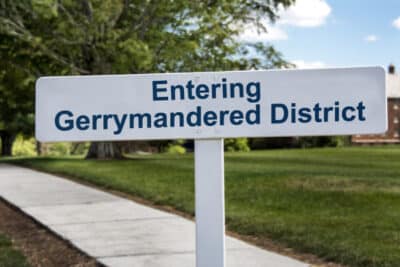
In reality, it’s a continuation of efforts to redraw district boundaries to their advantage, aiming to shift Virginia’s current 6-5 Democratic advantage into a 10-1 landslide. According to conservative analysts at Fox News and The Wall Street Journal, if the referendum succeeds, Democrats could gain up to four additional seats in Congress – exactly the kind of gains needed to wrest control of the House from Republicans.
Democrats, who hold both the Virginia General Assembly and the governor’s office (Abigail Spanberger), pushed through a constitutional amendment that temporarily – until 2030 – restores the power to redraw districts back to legislative lawmakers. The new map, already approved by Democrats, artificially concentrates GOP supporters into one “super district,” while granting Democrats a sustainable or near-equal edge in the remaining ten. Republicans, including former Governor Glenn Youngkin, have denounced the plan as “outright gerrymandering” and “theft of voters’ will.” As the pundits noted, this is a direct challenge to Virginia’s constitutional principles and the very idea of fair representation.
Shadow Financing and “Honest” Labels: How Democrats Hide Their Move
The referendum fight has become a pricey battle fueled by “dark money.” The group “Virginians for Fair Elections,” actively promoting the amendment, has poured nearly $65 million into the campaign. Sources cited by Fox News indicate contributions from entities linked to Nancy Pelosi, George Soros, and the national Democratic Party.
Their opponents, “Virginians for Fair Maps,” raised about $33 million with backing from Youngkin and Republican mega-donor Peter Thiel. The near-identical names aren’t a coincidence: this is a deliberate tactics to confuse moderates, who traditionally support “fairness” in elections.
Conservative outlets like National Review and Fox News emphasize the hypocrisy. Just a few years ago, Barack Obama and Abigail Spanberger openly condemned gerrymandering as a “threat to democracy.” Now, Obama has recorded videos endorsing the referendum, while Spanberger calls it “leveling the playing field”, a response to Republican redistricting in Texas and other states. Republicans point out: Democrats themselves have long practiced the most aggressive forms of partisan redistricting in Illinois, New York, and Maryland. “This isn’t about fairness,” declared a Virginia Republican congressman on Fox News. “This is about power at any cost.”
New Polls: Americans Are Tired of Gerrymandering, but Democrats Are Betting Everything
New polling paints a worrying picture for Democrats. A Washington Post/Schar School survey of Virginia voters (April 2026) showed only a slight edge in favor – 52% “for” versus 47% “against.” But Republicans and GOP-leaning independents showed much higher turnout intentions: 85% of Republicans say they’ll vote, compared to 77% of Democrats. More importantly: 57% of registered voters believe districts should reflect the actual political makeup of Virginia, not be “balanced” against other states. A staggering 48% directly labeled the 10-1 map as “unfair.”
Nationally, the backlash is even sharper. A YouGov poll (August 2025, still relevant in 2026) found that 76% of Americans see gerrymandering as a “serious problem” and “unfair,” and 69% believe it should be banned by law. Common Cause underscores: 64% of Republicans and independents oppose mid-cycle (mid-decade) redistricting.
These numbers explain Democrats’ desperate strategy. Despite holding a national “generic ballot” lead (averaging +5 to +6 points, per RealClearPolitics, Nate Silver, and Morning Consult as of April 2026), they recognize: without artificially inflating their margins in key battlegrounds like Virginia, holding the House is nearly impossible. Republicans counter that their redraws in “red” states were a response to years of Democratic manipulation and occurred within a normal 10-year census cycle.
Weaponization of Local Referendums: The New Reality of American Politics
Virginia represents a broader trend. Local referendums and judicial challenges have now become the primary tools for bypassing legislative processes and voter will. Campaign spending in the state alone has approached $100 million. For Democrats, this is an opportunity to offset Republican gains elsewhere, like in Texas. For Republicans, it’s a chance to defend the principle of “one person, one vote” and prevent Virginia from becoming a one-party state.
Pundits warn: if the amendment passes, it would signal Democrats’ willingness to disregard their own 2020 reforms for short-term gains. Republicans, backed by Youngkin, Thiel, and five Virginia congressional representatives, are urging voters to say “no” for blue-backed unfair maps, for an biased commission, and for absent accountability.
On April 21, Virginia won’t just vote on district lines. It will decide whether American democracy remains competitive or has become a tool of a single party. Republicans are confident: Americans, weary of partisan gamesmanship, will choose honesty. The outcome of this referendum will be decisive in determining who controls Congress after November 2026.
~~~
Mike Robertson is a U.S. domestic and foreign policy analyst and commentator, with more than 30 years of law enforcement experience in some of the toughest neighborhoods. You may follow him on X at @Mike_for_MAGA and Reddit.
The post Virginia Decides the House’s Fate: How Democrats Are Stealing an Edge on April 21 Referendum appeared first on www.independentsentinel.com.








 New Posts (Home)
 ChatBox
 Popular Posts
  Game Zone
 Top PodCasts