www.dailysignal.com
SCOTUS to Hear Immigration Case on Green Card Holders Charged With Crimes
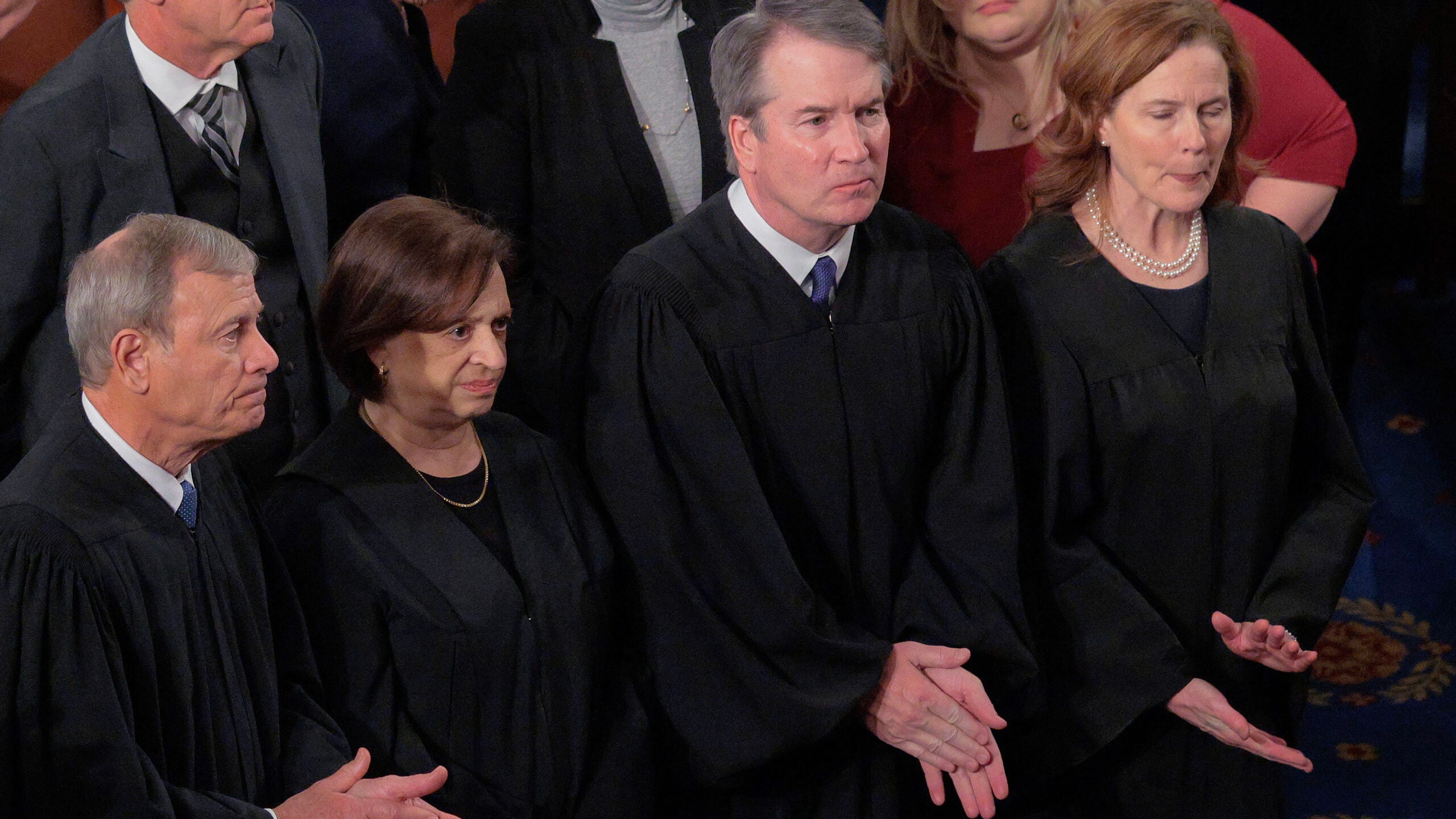
The Supreme Court will hear arguments Wednesday regarding removal proceedings against an immigrant legally in the United States charged with counterfeiting.
The case has the potential to affect the operations of Customs and Border Protection, Immigration and Customs Enforcement, and immigration courts, said Art Arthur, resident fellow in law and policy at the Center for Immigration Studies.
“If the Supreme Court affirms the 2nd Circuit, it will make it much more difficult for ICE and border agents to determine that a green card holder with a criminal offense coming back into the United States is inadmissible,” Arthur, a former immigration judge, told The Daily Signal. “This could potentially impact the capacity to keep terrorists out of the U.S.”
The case itself has an interesting backstory, as the plaintiff, Muk Choi Lau, a Chinese national, was charged with counterfeiting before leaving the country but was convicted after returning and being placed on parole.
The case is Blanche v. Lau, renamed for Acting Attorney General Todd Blanche after initially being Bondi v. Lau for former Attorney General Pam Bondi.
There are two key questions in the case, Arthur said.
“First, will immigration officers or immigration judges make a determination if a person is inadmissible?” Arthur said. “Second, the court will decide whether a parole decision is reviewable by the courts.”
Lau, a lawful permanent resident in the United States, was charged in May 2012 on New Jersey state charges for selling almost $300,000 worth of knockoff Coogi shorts, according to SCOTUSblog.
Before his trial, he left the country but returned June 12, when immigration officers at John F. Kennedy International Airport in New York stopped him.
The Immigration and Nationality Act says that green card holders who leave the country and re-enter are generally not regarded as seeking admission into the United States. However, an exception exists for “a crime involving moral turpitude,” which would include fraud or theft.
Immigration officers determined that Lau was subject to the “moral turpitude” exception and paroled him. That allowed him to stay temporarily to face prosecution but deferred his eligibility for admission.
A year later, he pleaded guilty to trademark counterfeiting and was sentenced to two years’ probation. In March 2014—during the Obama administration—the Department of Homeland Security began removal proceedings against Lau on the ground that he wasn’t eligible for admission.
Lau challenged the immigration officials’ decision to parole him rather than admit him into the country in June 2012. He contended he was improperly classified.
After an immigration judge and the Board of Immigration Appeals sided with the government, Lau appealed his case to the U.S. 2nd Circuit Court of Appeals. In March 2025, the 2nd Circuit sided with Lau, ruling he had been improperly classified by immigration officials at the New York airport and ordering the immigration court to terminate the removal proceedings.
This should be an easy case for the high court, said Lora Ries, director of the Border Security and Immigration Center at The Heritage Foundation.
“It is common for airport inspectors to parole you in deferring inspections. Think about the lines at airports,” Ries, a former lawyer with the Justice Department’s Board of Immigration Appeals, told the Daily Signal. “In this case, he had to have his counterfeit case resolved. He pleaded guilty, so he was convicted. And then, they pursued removal proceedings based on that.”
Riess said the 2nd Circuit shouldn’t have reviewed the case.
“Parole is discretionary, and there’s clear statutory language that says something discretionary for the [attorney general] or the Homeland Security Secretary is not subject to judicial review. So, a court, in this case, it was the 2nd circuit, shouldn’t even be reviewing parole,” she said.
In March, a coalition of immigration advocacy groups filed an amicus brief with the Supreme Court on behalf of Lau.
The brief argued, in part, that allowing the government to rely on charges or suspicion to commence removal proceedings would place millions of green card holders in jeopardy.
The government’s position would “hollow out the meaning of permanent residency,” said Razeen Zaman, immigrant rights director of the Asian American Legal Defense and Education Fund, in a public statement about the amicus brief.
“For Asian immigrants and immigrants across all communities, the freedom to travel abroad and return home is not optional—it is the basic dignity that permanent residency is supposed to protect. That should not be a gamble,” Zaman said. “No one should have their green card taken at the airport, be placed in detention, and face the threat of deportation because of an unproven allegation.”
The post SCOTUS to Hear Immigration Case on Green Card Holders Charged With Crimes appeared first on The Daily Signal.








 New Posts (Home)
 ChatBox
 Popular Posts
  Game Zone
 Top PodCasts