www.dailysignal.com
SPLC’s Hate Inflation Strategy
The Southern Poverty Law Center raises money by presenting itself as the expert on combating “hate,” and then exaggerating “hate” to scare donors into ponying up cash.
The problem? The SPLC’s inflated demand for “hate” has long outstripped the supply. Thousands of donors expect the SPLC to prove there’s enough “hate” to justify their donations, and that often leaves the center scrambling to keep up.
A jaw-dropping Justice Department indictment, filed Tuesday, appears to reveal yet another way the SPLC tried to meet this demand.
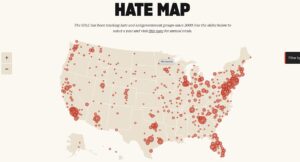
The SPLC has a clearinghouse for hate, a “hate map” that claims to reveal the “infrastructure of white supremacy.”
The SPLC map has included old shopkeepers in the South who still support the Confederacy, but most Americans know people like that are irrelevant.
The center’s more cunning strategy involves branding mainstream conservatives and Christians as “hate groups” and “anti-government extremists,” putting them on the map for the sin of disagreeing with the SPLC’s agenda.
That has the added bonus of delegitimizing the SPLC’s opponents—but it seems the center is running out of new groups to add. First, it was conservative Christians like the Family Research Council and Alliance Defending Freedom. Then, it was opponents of illegal immigration, like the Federation on American Immigration Reform. Now, it’s Moms for Liberty, PragerU, Focus on the Family, and Turning Point USA. They’re on the cusp of adding the entire conservative movement to the map.
So, what do you do if you can’t keep exaggerating hate? Well, you manufacture your own, of course!
If a white nationalist rally in Charlottesville isn’t quite big enough, you can just pay someone to transport more people to attend.
If your “extremist files” on homegrown Nazis are running a bit sparse, why not just throw a cool seventy grand at the problem?
If Americans are catching on that the Ku Klux Klan basically doesn’t exist anymore, why not bankroll a Klan member’s lawsuit to try to sponsor a highway?
I’m not clever enough to come up with those ideas—I took them from the Justice Department’s indictment. Of course, that’s not the only strategy the indictment revealed.
To call this hate inflation strategy a risk would be a vast understatement. If the SPLC ever did this, they’d have to work overtime to bury it, so it would never see the light of day.
As it happens, the SPLC seems to have a strategy for that, too. The Justice Department outlines how the SPLC allegedly set up shell companies to hide the funding.
That’s where the alleged illegality comes in: six counts of wire fraud, four counts of false statements to federally insured banks, and one count of conspiracy to conceal money laundering.
What does the SPLC have to say for itself?
Well, it claims that it hired “paid confidential informants” to “gather credible intelligence on extremely violent groups.” That might make sense in the 1980s, when Klansmen actually firebombed the SPLC’s headquarters, but it makes far less sense during the period covered by the indictment, 2014 to 2023.
Maybe the SPLC would need an informant to tip them off if a Klansman targeted a church, for example. Instead, it seems the SPLC was supervising a leader at the Unite the Right rally as he made racist posts.
The SPLC hasn’t just been calling out hate—it seems to have been investing in it.
And, judging by the center’s $739.4 million endowment, it’s been paying dividends.








 New Posts (Home)
 ChatBox
 Popular Posts
  Game Zone
 Top PodCasts