ridermagazine.com
2026 BMW R 1300 R Review
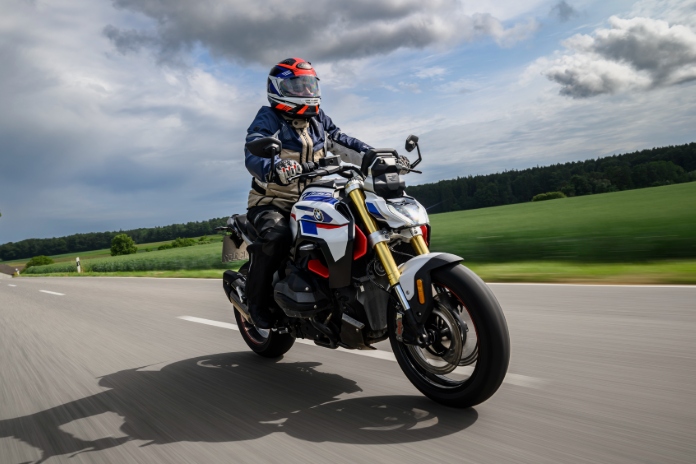
Th BMW R 1300 R roadster is upgraded with a more powerful engine, a better handling chassis, and electronic aids. (Photos courtesy BMW Motorrad)
There’s something deeply satisfying about threading a proper naked bike through Germany’s rolling landscape, with alpine-fresh air filling your helmet, a boxer’s mechanical concerto playing beneath you, and every bend seemingly custom-designed to make you a more confident pilot. BMW Motorrad’s R 1300 R was born and bred in the foothills of the Alps, and the latest iteration of Bavaria’s twin-cylinder roadster blends refinement, urgency, and a decidedly addictive character.
The R 1300 R is technological progress in tangible form. Its boxer engine configuration has been in BMW’s lineup since the R 32 debuted at the Berlin Motor Show in 1923. The R 32’s 494cc boxer made 8.5 hp, and the bike had a top speed of 60 mph. More than a century later, the R 1300 R’s boxer has more than twice the displacement and makes 17 times as much horsepower. It’s also equipped with ShiftCam variable valve timing, IMU-enabled performance and safety features, and radar-based adaptive cruise control and collision-warning systems. You can pair your smartphone via Bluetooth, adjust grip and seat heating, and monitor tire pressure on the full-color thin-film transistor instrument panel.
The Performance package includes Lightwhite paint with red and blue accents and other upgrades.
All well and good, but what matters most is the riding experience. Most of my time on the R 1300 R was spent hurling through time and space at a brisk pace, where even the most aerodynamic helmet becomes a surprisingly effective nose-flattening device. Cafe racing from village to village across the German countryside was perfect for exploring the bike’s capabilities.
All in the Family
After debuting on the R 1300 GS in 2024 (Rider’s Motorcycle of the Year), BMW’s new R-series platform migrated to other models. The R 1300 GS Adventure arrived in 2025, and the R 1300 RT luxury tourer, R 1300 RS sport-tourer, and R 1300 R roadster arrived for the 2026 model year.
The boxer engine powering the R 1300 R makes 9 more hp and 5 more lb-ft of torque compared to the outgoing R 1250 R.
We’ve tested most of these models in prior issues, so I’ll keep things brief. Compared to the previous generation R 1250 platform, the R 1300 has a totally overhauled version of the opposed-Twin engine with more displacement, higher compression, and more power and torque, pumping out 145 hp at 7,750 rpm and 110 lb-ft at 6,500 rpm. Throttle response is quintessentially German in its precision, and roll-on acceleration delivers one thrill after another. The R 1300 R will go from a dead stop to 62 mph (100 kph) in 3.4 seconds. Thanks to the ShiftCam wizardry, there’s generous grunt everywhere.
Holding everything in place is a new sheet-metal steel main frame and an aluminum subframe. Unlike other R models, the R 1300 R uses a conventional telescopic fork rather than BMW’s Telelever front suspension. It is, however, equipped with the new Evo Paralever rear suspension found on other R models.
The optional Sport titanium calipers are part of the Excellence package.
As the only naked bike in the family, the R 1300 R has the most muscular silhouette. With no bodywork to hide behind, the boxer is a more prominent focal point. The compact, angular headlight is narrower than the fork tubes, and the layered radiator shrouds look like the bulky shoulders of a bodybuilder.
The bike feels compact and solid, and the seat is firm. To create a more engaged riding experience, the ergonomics have been reconfigured. The handlebar is mounted lower and farther forward, the footpegs are farther back, and the seat is lower, putting the rider in a more aggressive sportbike stance. These changes are a step backward in terms of long-range comfort (if that’s top of your priority list, then an RS or RT makes more sense), but a step forward in handling because they put more of the rider’s weight over the front wheel. Handling is further improved by wheels that are 3 lb lighter, reducing unsprung weight.
A 6.5-inch TFT display allows smartphone connectivity.
Beyond the Basics
In standard trim, the R 1300 R comes with three ride modes (Road, Rain, and Eco), engine drag torque control, and cornering ABS and traction control. But a bone-stock R 1300 R is as rare as a hen’s tooth. Nearly all bikes sold at U.S. dealers will have options packages already installed.
Starting with a base price of $16,695, the R 1300 R that I tested was equipped with two option packages. The Performance package ($1,445) includes sport suspension (taller for more cornering clearance), sport tires (more grip), DTC-Shift (which links Dynamic Traction Control with the quickshifter), and styling upgrades (which look fast). For styling it gets the Lightwhite colorway with red and white accents, design option wheels and silencer, dark chrome headers, Sport passenger seat, engine spoiler, bar-end mirrors, and a few other goodies.
The R 1300 R is a bike you can live with day to day and still enjoy a thrilling twisty road on the weekend.
The Performance package is automatically paired with the Excellence package ($3,445), which adds a quickshifter, Dynamic Suspension Adjustment, Ride Modes Pro (adds Dynamic and Dynamic Pro modes), higher-spec Sport brakes, Headlight Pro, Riding Assistant radar features, heated grips and seat, tire-pressure monitoring, and luggage system prep (should you want to add side cases with a USB-C charging port and central locks, they’ll set you back $2,264.50). All in, the as-tested price of our R 1300 R is $22,480.
Enumerating the details about these option packages is necessary because they have a bearing on the riding experience. Dynamic Suspension Adjustment, for example, makes real-time adjustments based on conditions: not only front/rear damping but also spring rate. It also automatically adjusts rear preload when a passenger, luggage, or both are added. DSA minimizes fork dive, all but eliminates rear-end squat under acceleration, and keeps the chassis stable and the contact patches in contact with the pavement regardless of road conditions or rider inputs.
For 2026, the R 1300 R gets a new sheet metal frame that’s stiffer and offers a more compact package.
GEAR UP
Helmet: Arai Contour-X
Jacket: Rev’It Sand 5 H2O
Airbag Vest: Alpinestars Tech-Air 5 Plasma
Gloves: Rev’It Sand 5
Pants: Rev’It Sand 5 H2O
Boots: BMW Motorrad
Back home I ride an R 1200 GS, and on the same press launch where I tested the R 1300 R, I also tested the R 1300 RT. My GS and the RT are taller, cushier bikes that spoil the rider with wind protection, spacious cockpits, and supportive seats. The R 1300 R means business. It encourages the rider to stay focused, and lean into the wind.
While the R 1300 R may be more aggressive than other R-series models, it isn’t the tip of the roadster spear. There are plenty of other naked sportbikes that are lighter and more powerful. Elsewhere in BMW’s lineup you’ll find the S 1000 R, which is 95 lb lighter and makes 25 more horsepower. The higher-spec M 1000 R is lighter and more powerful still. But the R-series roadster has never been about top-dog bragging rights. It has always been a civilized machine, one you can live with day in and day out, a motorcycle that has the character of a BMW’s iconic boxer.
There’s no better place to enjoy fine German engineering than in the German countryside.
The Journey
Navigating some of southern Germany’s most scenic routes, I was in awe looking at the postcard-perfect villages nestled among the endless rolling green hills. My strongest impression of the R 1300 R was that of engagement, of feeling connected to the bike which felt connected to the road. All the fancy tech was there when I needed it, but it faded into the background as I focused on the pavement that unfolded before me, presenting me with one delight after another.
The throttle, brakes, and suspension worked together harmoniously, effortlessly, without requiring extra thought or direction from me. That sort of intuitiveness is an elusive quality that isn’t present on all motorcycles. The R 1300 R has it, which speaks to the steady evolution of the platform over successive generations.
2026 BMW R 1300 R
2026 BMW R 1300 R
Base Price: $16,695
Price as Tested: $22,480 (Performance & Excellence packages)
Website: BMWMotorcycles.com
Warranty: 3 yrs., 36,000 miles
Engine Type: Liquid‑cooled, longitudinal opposed‑Twin, DOHC w/ 4 valves per cyl. & ShiftCam
Displacement: 1,300cc
Bore x Stroke: 106.5 x 73.0mm
Horsepower: 145 @ 7,750 rpm (factory claim)
Torque: 110 lb-ft @ 6,500 rpm (factory claim)
Transmission: 6‑speed, hydraulically actuated slip/assist wet clutch
Final Drive: Shaft
Wheelbase: 59.5 in.
Rake/Trail: 27.5 degrees/5.0 in.
Seat Height: 30.9 in. (standard) / 31.9 in. (as tested)
Wet Weight: 527 lb (factory claim)
Fuel Capacity: 4.5 gal.
Ken Engelman is an industry veteran who has worked at Rider, RoadRUNNER, and the BMW MOA. He owns a BMW R 1200 GS and loves exploring the world on two wheels. When not working or riding, he works with community nonprofits and spends time with his family and dog.
The post 2026 BMW R 1300 R Review appeared first on Rider Magazine.








 New Posts (Home)
 ChatBox
 Popular Posts
  Game Zone
 Top PodCasts