www.thegospelcoalition.org
Redeem the Time: What Ben Sasse Teaches Us About Life, Death, and Politics
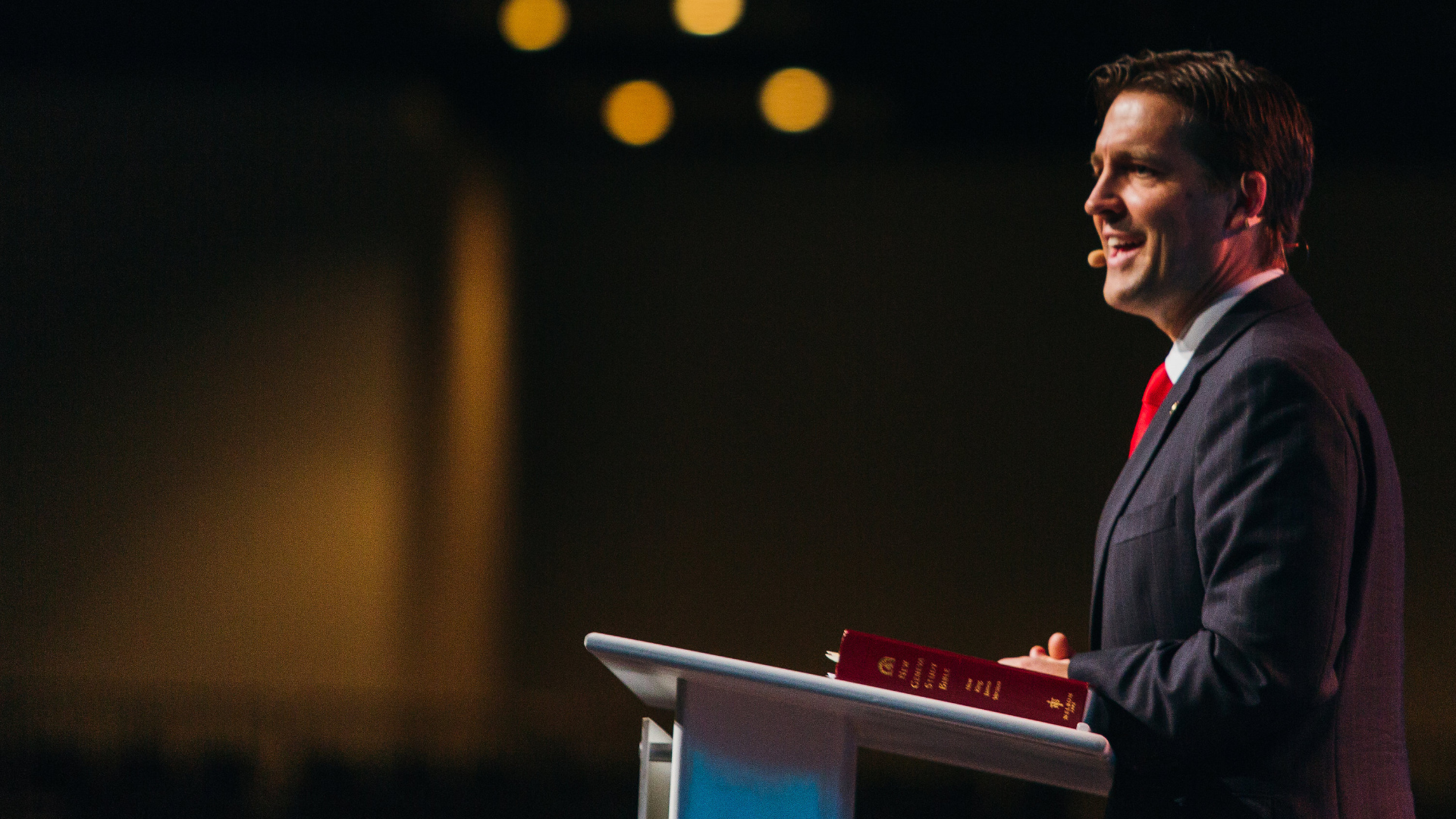
Ben Sasse is dying. In December, the former U.S. senator from Nebraska was diagnosed with stage IV metastasized pancreatic cancer—a death sentence. Clinical trials at MD Anderson Cancer Center in Houston have thankfully extended his remaining time with his wife and three children, but only temporarily.
Remarkably, Sasse has chosen to walk through the valley of the shadow of death in the public eye: speaking to journalists, going on podcasts, and even starting his own podcast, Not Dead Yet.
Through a string of public appearances, he hasn’t only borne witness to the hope we have in Christ in the face of death and suffering but has also clearly and intentionally sought—despite obvious pain and the cloud of morphine—to share honest reflections on a life spent in the worlds of business, academia, and politics. And his reflections leave believers with a framework for engaging what matters most.
Redeem the Time
For Sasse, these conversations are an attempt to follow the old Puritan precept, based on the apostle Paul’s admonition in Ephesians 5:16, to “redeem the time.” As he put it in a conversation with Peter Robinson on the Uncommon Knowledge podcast, “‘Redeem the time’ in my theology means it is a great blessing to be able to live a life of gratitude to God by doing stuff that tries to benefit your neighbor.”
For Sasse, that includes “trying to figure out what the important things are, . . . the eternal questions you need to wrestle through,” like “the relationship between sin and death and a broken world.” Redeeming the time also includes “the chance to hug on my wife this morning and to love my kids and to reflect on some important questions with my friend Peter.”
‘Redeem the time’ in my theology means it is a great blessing to be able to live a life of gratitude to God by doing stuff that tries to benefit your neighbor.
Whatever one thinks of Sasse’s politics during his eight years in the U.S. Senate—and there is much to be admired—there’s no questioning his thoughtfulness or credentials. Sasse is best known as a senator, but before his election in 2014, he was the executive director for the Alliance of Confessing Evangelicals (which produced the Cambridge Declaration), served in multiple roles in the George W. Bush administration, was an assistant professor at the University of Texas, and was president of Midland University in Nebraska. He holds degrees from Harvard, St. John’s, and Yale, including a PhD in American history.
I commend all Sasse’s interviews to you, including his recent 60 Minutes interview with Scott Pelley. This is a cultural moment for end-of-life faithfulness that we should be discussing with family, friends, neighbors, and coworkers.
Sasse’s Interesting Times interview with New York Times columnist Ross Douthat has already sparked meaningful conversations about life, faith, and mortality among my law-firm colleagues. Where else will one see and hear a man staring death in the face—his own face bleeding from aggressive cancer treatments—proclaim to a secular audience,
I got my diagnosis in mid-December, . . . I was incredibly blessed to be quickly at peace. I kept hearing the Pauline phrase, “To live is Christ, to die is gain.”
Death is terrible. We should never sugarcoat it. It is not how things are meant to be. But it is great that death can be called the final enemy. It’s an enemy, but it’s a final enemy, and there will then be no more tears.
I believe in the Resurrection, and I believe in a restoration of this world. . . .
I don’t feel ready. But to whom would I go? . . .
[Jesus] says: You can’t keep the children from me. And we’re told that we get to approach the Almighty, we get to approach the divine and call him Daddy, Abba, Father? That’s pretty glorious. And I know that that’s what I need.
These are words worthy of our time and reflection.
Serve the World
Sasse doesn’t, however, limit himself to commentary on death or eternity. He wants to spark conversations about the here and now, too, to serve the people, the nation, and the world he’ll soon leave behind. Given his experience and transparency as a believer who has walked the halls of power, it’s worth reflecting specifically on what this brother in Christ has to say about the challenges of our current political moment.
What can we as believers learn about the proper role of politics from a dying former U.S. senator? Consider four of Sasse’s observations.
1. Politics is important, but it’s not everything.
As Christians, we should care about politics. I think this is part of what Sasse is getting at when he says, “Let’s have one or two cheers for politics, neither zero nor three.” To have zero cheers for politics means “pretending the world isn’t broken,” while three “pretends power and coercion could be the center of your worldview.” Either approach is an error for the believer.
Rightly understood, politics is simply the way people order and do life together in a society, which means politics is one primary means by which we love our neighbor. As believers, we cannot be indifferent to politics, because it touches every aspect of our lives, our families, our businesses, our churches, and our communities on issues ranging from education, housing, taxation, and criminal justice to immigration, religious liberty, military action, and beyond.
At the same time, politics isn’t everything. We engage in politics to love our neighbor and advance the gospel, while recognizing that this world is not our home and that our hope is in Christ, not policies, politicians, or parties. In that sense, a believer’s posture toward politics is one expression of our posture toward the world in general.
In 1 Peter 2:11, Peter calls us “sojourners and exiles.” In 2 Corinthians 5:20, Paul describes us as “ambassadors for Christ.” Our words and actions, the manner in which we engage and advocate in the public square, represent the kingdom of God to the world.
Sasse’s observation here is a simple diagnostic for our hearts: What elicits our enthusiasm, and to what degree? Have we turned our backs on politics, fed up with the current climate—a zero-cheers approach? Or have we allowed it to supplant our true source of hope and become all-consuming—a three-cheers approach?
2. The digital landscape misrepresents reality.
One of the easiest ways our political engagement gets distorted is when we equate politics with online debates and social media “flame wars”. This digital landscape misrepresents reality. According to a 2020 Pew Research study, fewer than a quarter of U.S. adults were on Twitter (now X). Just 10 percent of those users—a little more than 2 percent of adults—created more than 90 percent of the content.
Politics isn’t everything. This world is not our home, and our hope is in Christ, not policies, politicians, or parties.
Many of those voices are loud and angry. Some are trolls or bad-faith actors, trying to sow discord and division. As Sasse puts it, “We don’t know how to have a conversation right now because we give all the voice to the loudest, angriest people.” People are “screaming all the time on the internet, and we pretend they’re representative.” But here’s the key thing to remember: “Most people aren’t that angry.”
This is true on both sides of the aisle. The loudest and most extreme voices on the political left and the political right don’t reflect how the majority of people on the “other side” think. And most people are far more combative and unreasonable behind a digital screen, performing for their tribe, than they’d ever be in real life. These distortions lead us to assume the worst and sabotage real conversation.
3. We need to jealously guard our affections.
The zero-sum game of politics tends to focus our attention on power and on what happens in Washington, DC, away from our immediate neighbors, local communities, and what Edmund Burke called the “little platoons.” Or to use Sasse’s words, “The places where you raise your kids and the places where you’re breaking bread every night and where you worship and where you work . . . [are] the most important places.”
Some of us may be called to active service on the national political stage, but for most believers, our calling (and opportunity for greatest influence) is to love and serve the communities where God has planted us. In these contexts, we’re most likely to identify problems we truly understand and can actually do something about—problems with solutions that often cut across the hyperpartisan divides of DC politics.
To give one example, I had the opportunity a few years back to use my legal training on behalf of my neighbors in a hearing before our local liquor-licensing board. We were seeking to address a series of disturbances from a new bar that left the surrounding streets littered with beer bottles, burned rubber, and bullet casings. Most of my neighbors have different political and faith backgrounds from my family and me, but it turned out those differences didn’t matter when people were drunkenly firing guns outside our homes at 2:30 a.m.
“Power isn’t the main thing; our loves are the main thing,” Sasse says. Those loves are best cultivated in thick community that grounds us in reality and helps bind us to our neighbors. Unhealthy forms of political engagement and media consumption can hijack that process. Over time, our habits in this area can shape and twist our souls.
Power isn’t the main thing; our loves are the main thing.
This is the lesson of Proverbs 13:20: “Whoever walks with the wise becomes wise, but the companion of fools will suffer harm.” We become like our companions. We grow to love what they love.
Most of us tend not to think of the podcasts we listen to, the YouTube videos we watch, the articles we read, or the endless social media posts we scroll through as “companions” influencing us to become wise or to grow more foolish. Yet we often spend far more time each week with these companions than we spend at church, studying Scripture, or in fellowship with wise believers.
As followers of Christ, who (and what) are we allowing to influence our affections?
4. Politics is just a symptom.
It’s easy to say that our politics and national discourse are broken, but as a historian, Sasse says there are bigger trends afoot: “50 or 75 or 100 years from now, when you look back at our moment, we’re mostly not going to talk about our politics. We’re going to believe we were living through a technological revolution that created economic and cultural revolutions that way downstream from that had political consequences.”
Sasse is referring to the digital revolution, encompassing everything from the internet to social media to artificial intelligence. If he’s right, meeting this moment as faithful believers isn’t about winning at the ballot box. Instead, it’s about learning how to navigate this technological and cultural revolution without allowing our souls to be deformed. How can the church be the church, “a city set on a hill” (Matt. 5:14), noticeably apart and distinct from the surrounding darkness in a period of such upheaval?
There are no easy answers to these questions, but it’s a credit to Ben Sasse and his dogged commitment to redeem the time that he’s challenging all of us to ask them. Sasse has a lot of hard-earned wisdom to impart, including some that only comes when facing a terminal diagnosis. Like the wise companion of Proverbs 13, he’s inviting us to walk with him through that dark valley.
Let’s not pass up this opportunity.








 New Posts (Home)
 ChatBox
 Popular Posts
  Game Zone
 Top PodCasts