www.dailywire.com
Iran Targets U.S. Warships In First Major Escalation Since Ceasefire
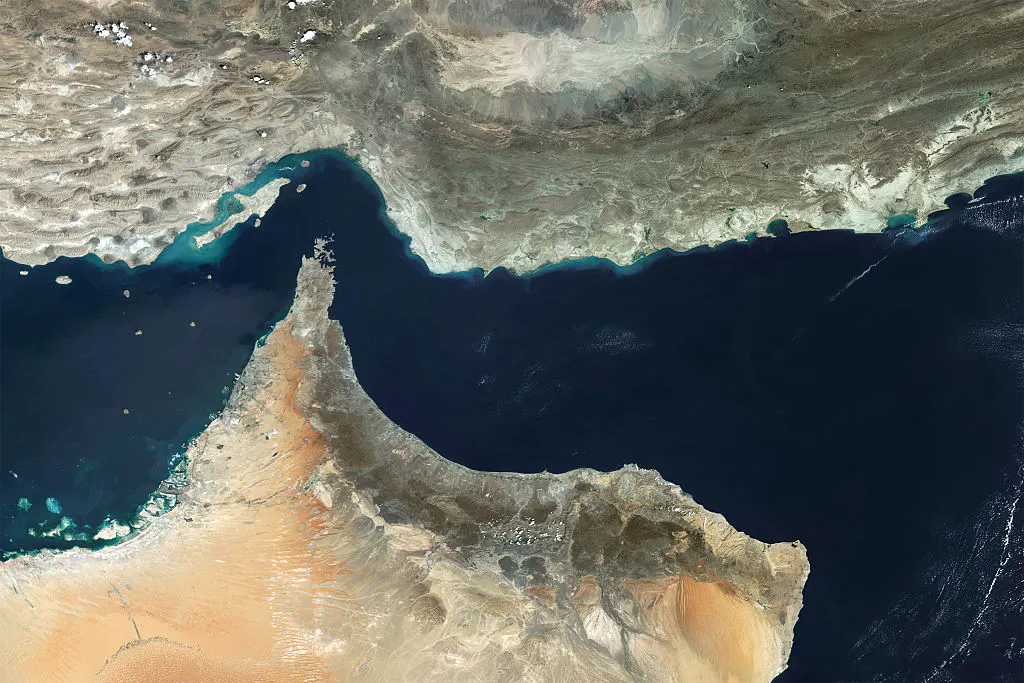
Iranian forces launched cruise missiles at U.S. Navy ships and commercial vessels under American protection in the Strait of Hormuz, marking the first significant escalation since the implementation of the ceasefire last month.
U.S. Central Command Commander Adm. Brad Cooper described the actions by Iranian forces as “Iran initiating aggressive behavior” on a call with journalists Monday.
“The cruise missiles were going after both U.S. Navy ships, but mostly after commercial shipping,” Cooper said. “We’ve defended both ourselves and, consistent with our commitment, we defended all the commercial ships.”
Cooper declined to comment if Iran’s actions violated the ceasefire agreement. The White House did not immediately respond to a request for comment.
No U.S. Navy ships or commercial ships have been hit by Iran’s efforts which began about 12 hours ago, according to Cooper.
He added that Iranian forces also used drones and small boats to attack commercial ships. Cooper said six of those boats were destroyed by Apache and Seahawk helicopters.
“You typically see between 20 and 40 small boats in a pack coming out,” he said. “Today we saw six and eliminated them quickly. I think this is an example of the degradation of their capability. That doesn’t mean it’s all gone, but it’s highly degraded.”
The attacks come as President Donald Trump has intensified pressure on Tehran through “Project Freedom,” an operation designed to restore the flow of global commerce through the narrow waterway after escalating Iranian threats.
Trump said Iran had already targeted vessels not related to the operation, including a South Korean cargo ship.
“Perhaps it’s time for South Korea to come and join the mission!” he added.
Cooper said the U.S. military is carrying out two simultaneous operations in two different bodies of water — one aimed at isolating Iran economically, the other at reopening maritime transit.
“We’re enforcing the blockade in the Gulf of Oman. There is no commerce going into and out of Iran and we will be sustaining this effort. Second, we’ve now opened a passage through the Strait of Hormuz to allow for the free flow of commerce to proceed,” he said adding that the blockade has so far been 100% effective.
He said that the pathway, which was used by two merchant vessels flying U.S. flags earlier today, has received “great enthusiasm” by over 87 countries represented by the vessels “held hostage” in the Arabian Gulf by Iran’s threats in the Strait of Hormuz.
While the U.S. Navy is not personally escorting the vessels, it is protecting a corridor for them to pass through with large amounts of U.S. military assets.
“We are employing U.S. ballistic missile defense capable destroyers, over 100 land and sea-based aircraft, multi-domain unmanned platforms—meaning under the sea, on the sea, and from the air—and then 15,000 service members to extend this defensive umbrella across the Strait of Hormuz to protect our forces and also, as committed, to defend commercial shipping,” Cooper said.
Aircraft, vessels, and personnel being used in the efforts include A-10s, F-15s, F-16s, F/A-18s, F-35s, EA-18 Growlers, RC-135, KC-46s, and KC-135 fixed-wing aircraft and numerous U.S. warships including destroyers, two carrier strike groups, and amphibious readiness groups and the Marine Expeditionary Units.
As the operations continue, Cooper says U.S. commanders on the scene “have all the authorities necessary to defend their units and to defend commercial shipping.”
“Iranian forces are strongly advised to remain well clear of U.S. assets and personnel operating in international waters in and near the Strait of Hormuz,” Cooper said.








 New Posts (Home)
 ChatBox
 Popular Posts
  Game Zone
 Top PodCasts