reclaimthenet.org
Britain Decides Viral Protest Clips Need Prosecutors
If you're tired of censorship and dystopian threats against civil liberties, subscribe to Reclaim The Net.
The Crown Prosecution Service has found the time and the ambition to publish brand new guidance telling prosecutors to consider the “likely impact” of protest chants and banners on…people scrolling through their phones.
It was published on May 15 and the timing was about as subtle as a brick through a greenhouse.
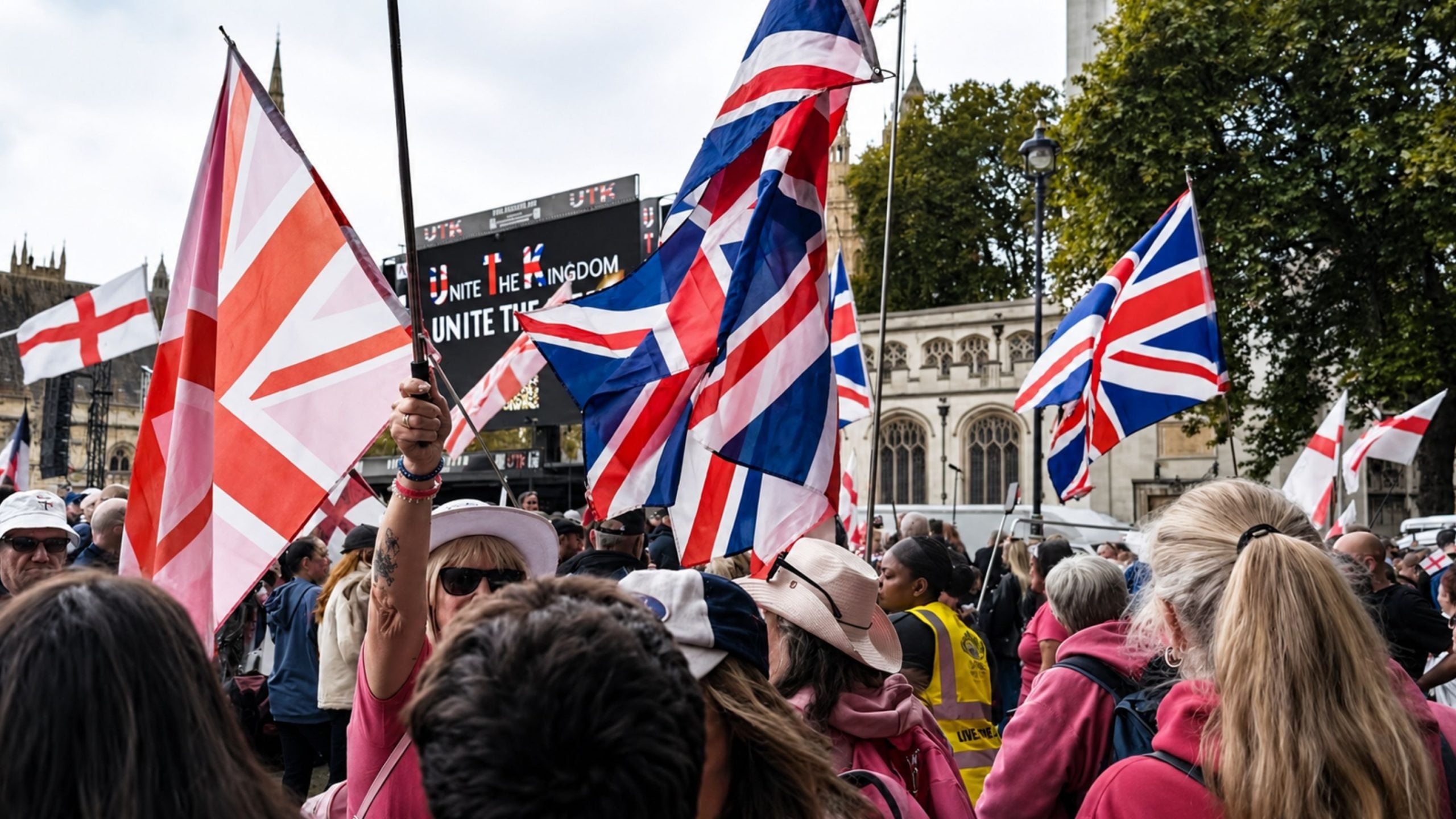
The CPS dropped this guidance precisely two days before London was set to host two enormous marches, the “Unite the Kingdom” rally and the “Nakba Day” protest, with a combined estimated turnout of 80,000 people and 4,000 police officers and helicopters and drones and, for the first time at a protest in this country, live facial recognition cameras pointed at people exercising what we used to quaintly call their democratic rights.
CPS lawyers were embedded with the Met Police to offer “real time charging advice,” which is the sort of phrase that should make every hair on the back of your neck stand up.
The guidance targets “the use of offensive banners, slogans, chants or symbols.” And the key innovation is this: prosecutors must now weigh “the likely impact on those present and any wider audience, including online dissemination.”
Your chant at a march is no longer assessed by the effect it has on the people standing around you. It is now assessed by how some stranger might feel when they see a shaky 12-second clip of it on X three weeks later, completely stripped of context, probably sandwiched between a cat video and someone’s vacation photos.
How did we get here?
The legal machinery behind this sits under Part 3 of the Public Order Act 1986, a piece of legislation that was passed when the internet was roughly as influential as a particularly obscure fanzine. The Act covers offenses of “stirring up racial hatred,” defined as “hatred against a group of persons…defined by reference to colour, race, nationality (including citizenship) or ethnic or national origins.”
Conviction carries up to seven years in prison. You could burgle fifteen houses in the UK and get less.
The CPS now tells prosecutors to consider the “meaning and intent” of protest speech, its “context,” and “the timing, particularly where tensions are heightened by national or international events.” They should examine suspects’ phones and social media accounts. They should ask whether “the suspect’s actions at the protest were reaching a wider audience beyond those physically present,” whether the suspect played “an active role in coverage of their actions being shared more widely,” and whether “the suspect aware that their actions were likely to be captured and shared more widely.”
I want to dwell on that last one, because it is genuinely astonishing. Were you aware that your actions were likely to be captured and shared? At a march in London in 2026, with police body cameras filming, media crews filming, every bystander’s phone filming, drones overhead filming, and facial recognition cameras drinking in your features? Yes. Obviously yes.
Everyone at a large public event in 2026 is aware they’re being filmed. You’d have to have arrived from the year 1340 on horseback not to know this. And yet the CPS has decided that this universal, inescapable awareness of modern technology is now a factor in whether you get charged with a criminal offense. Knowing that cameras exist has become evidence.
The Man From the CPS Says It’s Fine
Director of Public Prosecutions Stephen Parkinson delivered the obligatory “don’t worry, we love free speech” preamble: “Everyone has the right to protest and to express their views freely. That right is a cornerstone of our democracy.”
And then, as reliably ever, came the “but:” “However, it does not extend to using words, images or symbols to spread hatred, incite violence or cause fear and intimidation within our communities.”
And finally the sentence that every bureaucrat with new censorship powers has uttered since the invention of bureaucrats: “This is not about restricting free speech. It is about preventing hate crime and protecting the public, particularly at a time of heightened tensions. Where the line into criminality is crossed, we will not hesitate to prosecute.”
“This is not about restricting free speech” has become such a reliable indicator that free speech is about to be restricted that you could set your watch by it. The moment someone feels the need to assure you that a thing isn’t happening, that thing is absolutely happening.
The same banner can be fine at one march and a prosecutable offense at another, depending on which international crisis has “heightened tensions” that week.
The CPS has built a system where the rules change based on the weather of the global news cycle, and they’ve handed the thermostat to prosecutors.
The Friday Afternoon Trick
Here’s the thing about the timing. The CPS published this on a Friday afternoon, the traditional dumping ground for news that governments and institutions would rather not have scrutinized too carefully. Two days before the marches. You don’t need to be Sherlock Holmes to see what this achieves. You announce new prosecution criteria just before 80,000 people take to the streets. The coverage is immediate. Everyone heading to a march reads the headlines. And the calculation changes.
Some people decide their banner might be a bit much. Some organizers soften their slogans. Some people who were going to attend decide, actually, maybe they’ll give it a miss. They’ve got things to do. The weather might turn. You know how it is.
That’s the chilling effect and it is the most efficient form of censorship ever devised because you don’t have to prosecute anyone. You don’t have to go to court, present evidence, or risk a judge telling you you’ve overreached. You just publish some guidance, get it on the news, and let anxiety do the work. The speech that disappears was never spoken, so nobody can point to it and say: that’s what you silenced. It’s invisible. It’s elegant. And it’s deeply sinister.
No judge will ever rule on the protest signs that were left in the cupboard, the chants that were swallowed, the marches that lost half their crowd because people read a headline on Friday afternoon and thought: not worth the risk.
If you're tired of censorship and dystopian threats against civil liberties, subscribe to Reclaim The Net.
The post Britain Decides Viral Protest Clips Need Prosecutors appeared first on Reclaim The Net.








 New Posts (Home)
 ChatBox
 Popular Posts
  Game Zone
 Top PodCasts