reclaimthenet.org
TikTok Removes Reform UK Campaign Video Using Online Safety Act “Hate” Censorship Rules
If you're tired of censorship and dystopian threats against civil liberties, subscribe to Reclaim The Net.
The UK’s Online Safety Act has been in force for less than a year and it is again being used to censor political speech during an election.
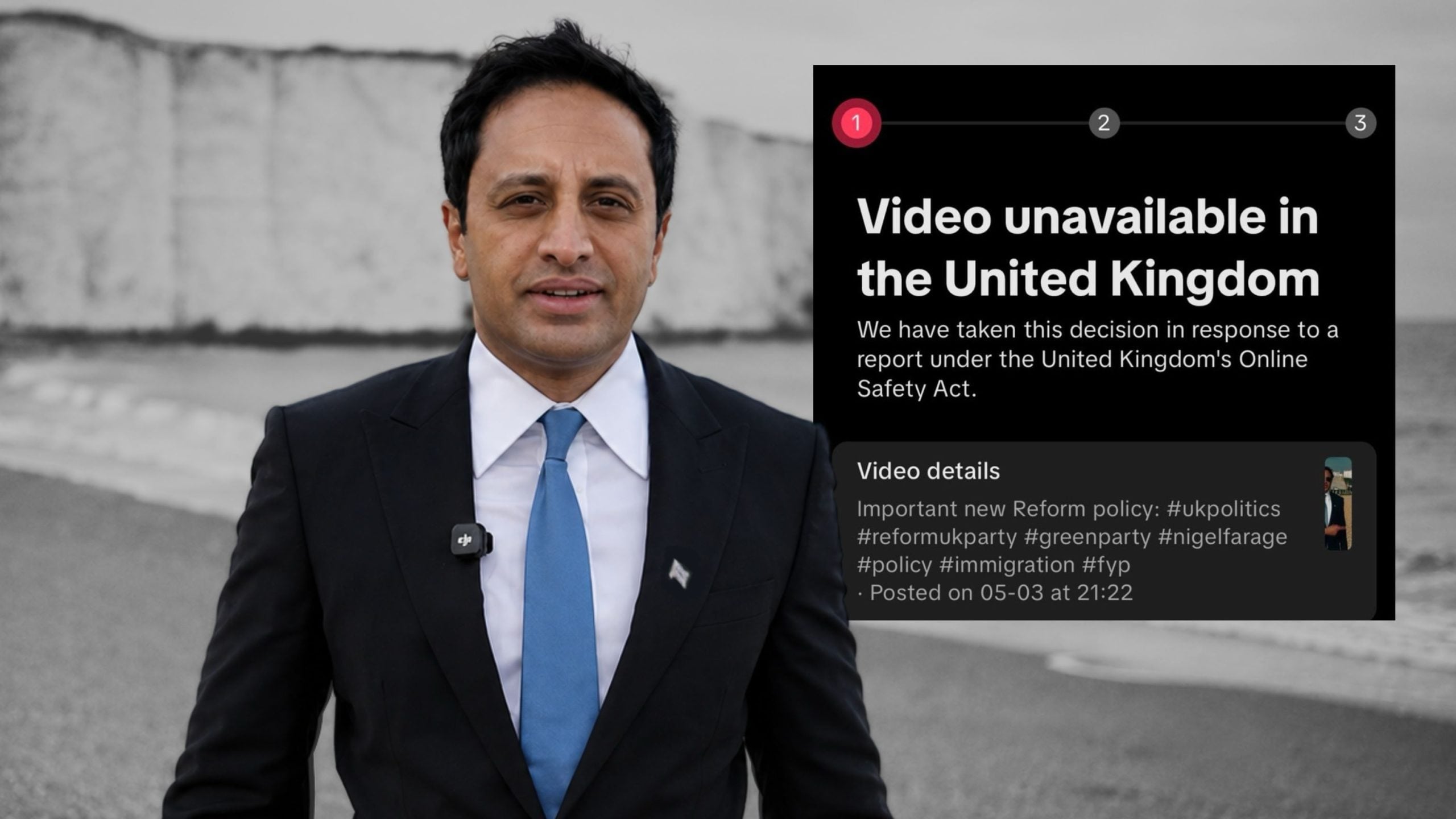
TikTok blocked and then deleted a campaign video by Reform UK’s Spokesperson for Home Affairs, Zia Yusuf, after someone reported it under the OSA’s content reporting mechanism.
The video was about immigration policy and takes place during a period of campaigning for a by-election.
TikTok cited its “Hate Speech and Hateful Behavior” rules. The law that gave the complainant the reporting tool and that gives TikTok every financial reason to comply without asking too many questions, is the Online Safety Act.
The OSA was sold to the British public as child protection. The actual legislation requires platforms to police all content against UK law, including broadly defined “hate speech” provisions.
Companies that fail to comply face fines of up to £18 million ($24m) or 10% of their qualifying worldwide revenue, whichever is greater. For a platform the size of TikTok, that penalty could run into billions. The rational response to that kind of liability is to delete first and never think about it again.
Under the OSA, platforms must provide UK users with tools to report content they believe is illegal under British law.
TikTok confirmed this is what triggered the action against Yusuf’s video. The notification he received stated: “We have detected this policy violation based on a report that the content violated our Community Guidelines.”
TikTok did not say it independently concluded the video was hateful. Someone filed a report through the OSA’s mechanism and the platform treated that report as reason enough to act. There is no requirement that reports be made in good faith, no penalty for filing frivolous ones, and no transparency about who complained or why.
This is a system built for political abuse. If you want a political opponent’s video deleted during an election, you file a report. The platform, facing enormous financial penalties for under-enforcement, does the rest.
TikTok also warned Yusuf that further violations could result in a permanent ban, which he called “all the more staggering given TikTok happily hosts hundreds of videos of people calling for the assassination of [Reform Party Leader] Nigel Farage.”
Yusuf accused Labour of “using the ‘Online Safety Act’ to silence political opponents” and called the deletion “a chilling attempt to silence one of the biggest and fastest-growing UK political accounts on the platform. TikTok is engaging in direct political interference in the midst of the most pivotal elections in our country’s history. All under the auspice of the ‘Online Safety Act’ that the Tories and Labour claimed to be about protecting children. It is, and always will be about silencing voices the open-borders political establishment don’t like.”
Nigel Farage called it “unacceptable political interference from a big tech company.”
Yusuf has been warning about this exact scenario since the OSA’s provisions started taking effect last year. He told GB News the law would “create an incentive structure for social media companies to over censor, because that’s the rational thing to do if you’re trying to protect shareholder value.”
The Conservative Party drafted the OSA and the current governing Labour Party, led by Keir Starmer, backed it. Both parties now face a political insurgency from Reform UK and the law they built together hands platforms the tools and the financial incentive to suppress Reform’s message during an election.
If elected, the Reform Party has said it will repeal the OSA.
The OSA’s defenders will say this is a platform decision, not a government one. That distinction doesn’t survive contact with the law’s actual structure. The government wrote the rules, set the penalties, and required the reporting tools.
A Department for Science, Innovation and Technology spokesman told GB News: “The decision to remove content is made by the platforms independently. The Online Safety Act is designed to keep children safe online – protecting them from harmful content – and not to censor political debate. It doesn’t enable platforms to arbitrarily remove content, and tech firms have a duty to uphold freedom of expression.”
The government is telling platforms to uphold freedom of expression while simultaneously threatening them with fines that could run into billions if they fail to police categories of speech as subjective as “hate” and “harm.”
Those two instructions cannot coexist. When a platform has to choose between leaving up a borderline political video and risking a penalty sized to a percentage of its global revenue, it will delete the video every single time.
That is the system functioning exactly as the incentives dictate. You cannot write a law that forces platforms to make judgment calls about what counts as hateful, punish them catastrophically for getting it wrong in one direction, and then act surprised when they over-censor in the other.
The government knows this. The “duty to uphold freedom of expression” line is there so ministers can point to it when the inevitable censorship happens and say it wasn’t their fault. The threat of fines ensure it keeps happening anyway.
If you're tired of censorship and dystopian threats against civil liberties, subscribe to Reclaim The Net.
The post TikTok Removes Reform UK Campaign Video Using Online Safety Act “Hate” Censorship Rules appeared first on Reclaim The Net.








 New Posts (Home)
 ChatBox
 Popular Posts
  Game Zone
 Top PodCasts