www.upworthy.com
Thimbles, sapphires, and other things that served as engagement rings long before the diamond reigned supreme
Many of us know that diamonds weren’t always considered the go-to stone for engagement rings. In the grand scheme of things, they haven’t even held the title that long. It was only thanks to a certain clever marketing ploy in 1948 that convinced us diamonds were “forever” that they became the standard in the first place.
Before that, engagement rings have come in many different shapes, sizes, and materials throughout history…some interesting, some inspiring, and others a bit more baffling when viewed through a modern lens.
No stones, no problem
Ancient Egyptians, for example, exchanged braided hemp or reed rings, believing the circle symbolized eternity. Romans adapted this by giving iron or copper betrothal rings often featuring tiny keys, symbolizing that the wife was her husband’s property. Perhaps some rituals are best left in the past.
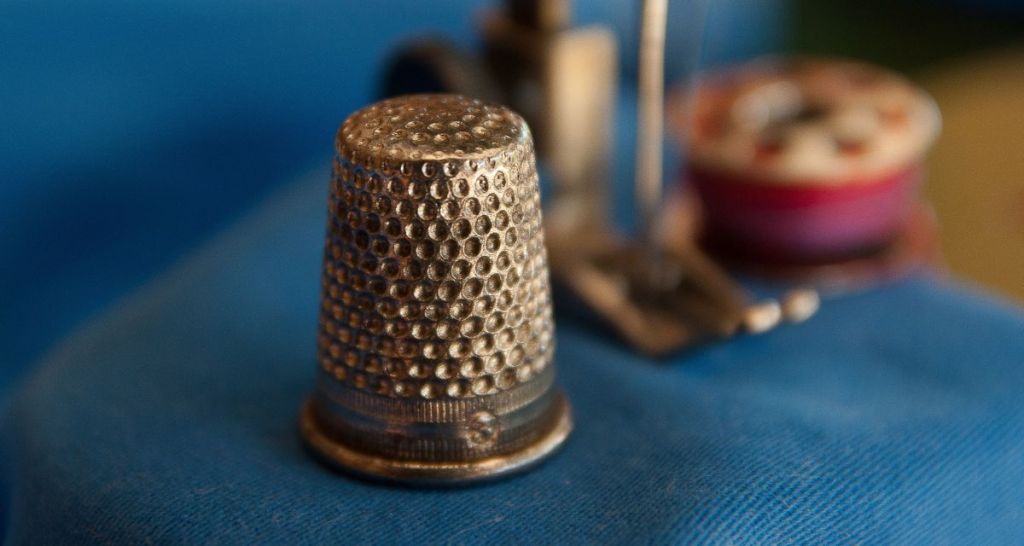
Puritans in the 1600s, on the other hand, gave engagement thimbles, which wives would use to sew their own wedding dress. While not the most romantic upon first glance, that thimble would then be cut into a ring. All in all, a pretty clever way to serve both practical and sentimental purposes…which sounds very on brand for Puritans.
A thimble in front of a sewing machine, Canva
When rings delivered tiny poems
Meanwhile, in Medieval Times all the way through the Renaissance, brides-to-be were given gold-banded posy rings (derived from the French word “poesy,” meaning poetry) featuring short, intimate inscriptions engraved on the inner or outer surface. These could be romantic promises, religious sentiments, or even secret messages.
According to jewelry site Berganza.com, it’s likely that goldsmiths of the day had a book of stock phrases from which the customer would pick, two of the most popular being “A true friend’s gift” and “a loving wife during life.”
Two engraved gold bands, Canva
In some ways, these rings feel ahead of their time, considering personal messages engraved inside jewelry are still a popular choice today.
The vibrant era before diamonds took over
When it comes to stones specifically, colorful, meaningful gems like sapphires, rubies, and emeralds were among the most popular. Sapphires were particularly favored for their durability and symbolic meanings—representing love, commitment, and royalty. Sapphire engagement rings date back to Egypt, Greece, and Rome. Even today, they remain a top diamond alternative, celebrated for their rich, distinctive hues.
More than one way to symbolize commitment
For all the cultural power diamonds hold today, history suggests that engagement traditions have always been quite flexible. Across different countries and time periods, people attached meaning to whatever felt valuable within their own communities, be it from rarity, usefulness, or how it told the story of a relationship.
If you yourself are not convinced diamonds are your best friend when it comes to an engagement ring, take comfort in the fact that there are countless other alternatives.
By the way, jeweler Mason Mignanelli, who made the video above going through some alternative wedding rings throughout history, has a pretty fascinating e-book delving even further into this topic, which you can read for free here.
The post Thimbles, sapphires, and other things that served as engagement rings long before the diamond reigned supreme appeared first on Upworthy.








 New Posts (Home)
 ChatBox
 Popular Posts
  Game Zone
 Top PodCasts