reclaimthenet.org
US Court Summons Pro-Censorship Brazil Judge Moraes in Rumble Lawsuit
If you're tired of censorship and dystopian threats against civil liberties, subscribe to Reclaim The Net.
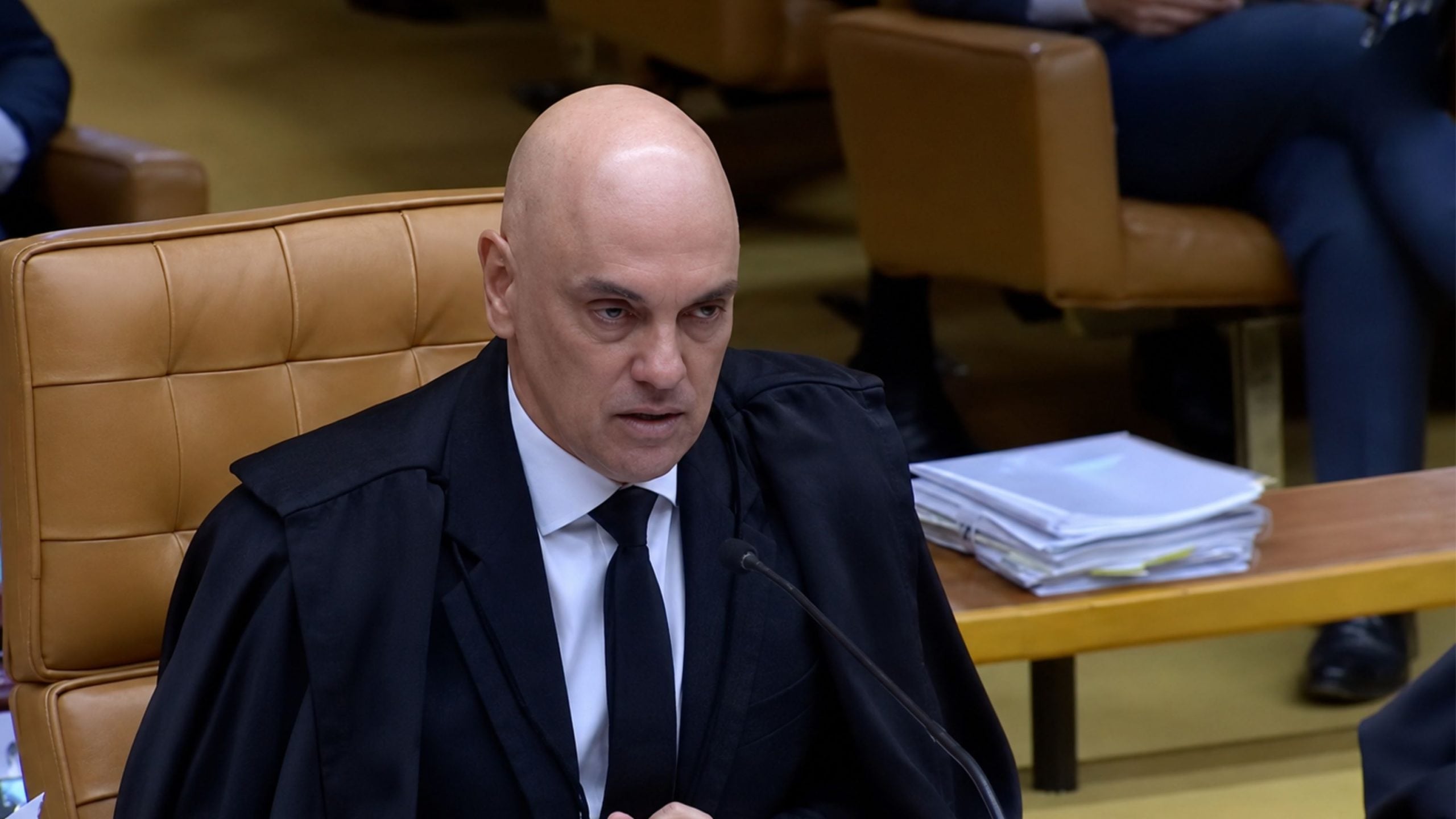
A Florida federal court has summoned Brazilian Supreme Court Justice Alexandre de Moraes to respond to an anti-censorship lawsuit filed by Rumble and Trump Media & Technology Group (TMTG), the parent company of Truth Social.
Moraes has 21 days to mount a defense. If he doesn’t, the case moves forward without him and a default judgment becomes a real possibility.
The summons was served by email on May 24, 2026, after the court authorized that method two days earlier.
The email went to two addresses tied to Brazil’s Supreme Federal Tribunal (STF), one of which had previously been used in communications with Rumble.
Martin De Luca, the Boies Schiller Flexner partner representing both companies, posted the summons document on X, writing: “Today, pursuant to an order from a U.S. federal court, Rumble and Trump Media served Brazilian Supreme Court Justice Alexandre de Moraes by email. Summons attached.”
Getting to this point took over a year.
Rumble and TMTG first sued Moraes in February 2025, in the US District Court for the Middle District of Florida, arguing that his censorship orders violated the First Amendment and were unenforceable on American soil. Neither company has any entities, operations, employees, or bank accounts in Brazil. They sought a declaration that a foreign judge cannot unilaterally dictate what speech is allowed on American platforms.
The lawsuit targeted Moraes’s orders demanding that Rumble suspend accounts belonging to US-based Brazilian dissidents and hand over their personal data.
The original complaint identified one target as “Political Dissident A,” later publicly confirmed as Allan dos Santos, a journalist and former priest who fled Brazil for the United States in 2021 after
Moraes charged him with various crimes for publishing information the justice labeled “disinformation.”
Moraes also sought dos Santos’s extradition; the US rejected that request in March 2024. The justice kept issuing censorship orders anyway.
Moraes responded to the lawsuit not by engaging with the legal process but by ordering Rumble shut down entirely in Brazil.
On February 22, 2025, he directed Brazilian telecommunications companies to block the platform and imposed a daily fine of roughly $8,700 on the US-based company for refusing to comply with his demands. Rumble CEO Chris Pavlovski faced threats of criminal charges. The ban remains in effect. Truth Social, which relies on Rumble’s streaming infrastructure, was also affected.
The early result was a win for the platforms. On February 25, 2025, US District Judge Mary Scriven ruled that Moraes’s censorship orders had no legal force in the United States.
They had never been served through the Hague Convention, the US-Brazil Mutual Legal Assistance Treaty (MLAT), or any other valid mechanism. Rumble and TMTG didn’t need a temporary restraining order because there was nothing valid to restrain.
As the companies’ counsel put it: “The court’s decision today denied the TRO for being unnecessary because it determined that Moraes’s orders are invalid and unenforceable in the United States. Therefore, there is no need to restrain invalid orders. Of course, if Moraes takes any steps to try to enforce his illegal orders on US soil, we can return to the judge to grant a TRO.”
That ruling didn’t end the conflict. Moraes continued issuing new censorship orders from Brasilia.
By July 2025, he had demanded Rumble block a second US-based political commentator, identified as “Political Dissident B,” threatening daily fines of 100,000 reais (about $20,000) if the platform refused.
Rumble and TMTG filed an amended complaint. A House Judiciary Committee report published in April 2026, built on nonpublic documents, mapped the full scope of Moraes’s operation.
His first documented global takedown order dates to July 2020, when he ordered Meta to delete 16 Facebook profiles worldwide to stop what he called “continued dissemination of fraudulent news (fake news), slanderous accusations, threats, and offenses imbued with animus…that affect the honor and safety of the FEDERAL SUPREME COURT.” The speech he wanted erased was a criticism of his own court.
Since 2022, Moraes has ordered nearly 150 social media accounts suspended, targeting journalists, opposition legislators, satirists, jurists, and even musicians who criticized Brazil’s current government.
Florida-based podcaster Bruno Aiub, known as “Monark,” saw roughly 40 accounts ordered deleted across 24 platforms in June 2024, with daily fines of about $18,500.
Moraes also issued secret orders to Spotify between 2023 and 2024 demanding the removal of Aiub’s podcast.
Brazil’s censorship apparatus, the CIEDDE, flagged posts about US presidents for deletion.
One April 2025 post was targeted because it said Trump was “going to expose that bandit dressed as a judge [Justice Moraes] here in Brazil, as well as the interference/fraud in the 2022 elections.” X refused to comply with those orders.
The US government briefly took notice. In July 2025, the State Department sanctioned Moraes under the Global Magnitsky Act, stating that he “abused his authority by engaging in a targeted and politically motivated effort designed to silence political critics through the issuance of secret orders compelling online platforms, including U.S. social media companies, to ban the accounts of individuals for posting protected speech.”
Those sanctions were lifted in December 2025 as part of a broader diplomatic thaw between Washington and Brasilia, a move that drew criticism from those who saw it as trading away accountability for trade concessions.
The lawsuit, meanwhile, sat frozen for over a year because the companies couldn’t formally serve Moraes. They spent months attempting service through the Hague Convention, the formal treaty process for notifying a defendant in another country.
De Luca said in a post on X that rather than allowing the notification to proceed, Brazilian authorities had effectively turned the Hague process into a political shield for Moraes. The attorneys for Rumble and TMTG argued to the Florida court that the formal channels had been “blocked” and that the delays were jeopardizing the case. In February 2026, they petitioned for permission to serve by email.
The Florida court granted that request on May 22, 2026, finding that the companies had spent “several months” trying formal service and that the process in Brazil had become, as the court noted, “politicized and effectively unavailable.” The ruling drew on a recent Florida Supreme Court decision allowing email service of process on defendants located abroad.
Moraes now faces a choice. He can engage with the American legal process, which would require him to defend his censorship orders in a jurisdiction that treats speech suppression as constitutionally suspect.
The is about more than Brazil. If a single foreign judge can order the worldwide deletion of posts that criticize him and platforms comply to preserve market access, then every government with a large enough consumer base holds veto power over speech in the United States.
The Florida court has now given Moraes a deadline to explain why that shouldn’t trouble anyone. The STF, as of this writing, has not publicly responded to the US court’s authorization of email service.
If you're tired of censorship and dystopian threats against civil liberties, subscribe to Reclaim The Net.
The post US Court Summons Pro-Censorship Brazil Judge Moraes in Rumble Lawsuit appeared first on Reclaim The Net.








 New Posts (Home)
 ChatBox
 Popular Posts
  Game Zone
 Top PodCasts