www.upworthy.com
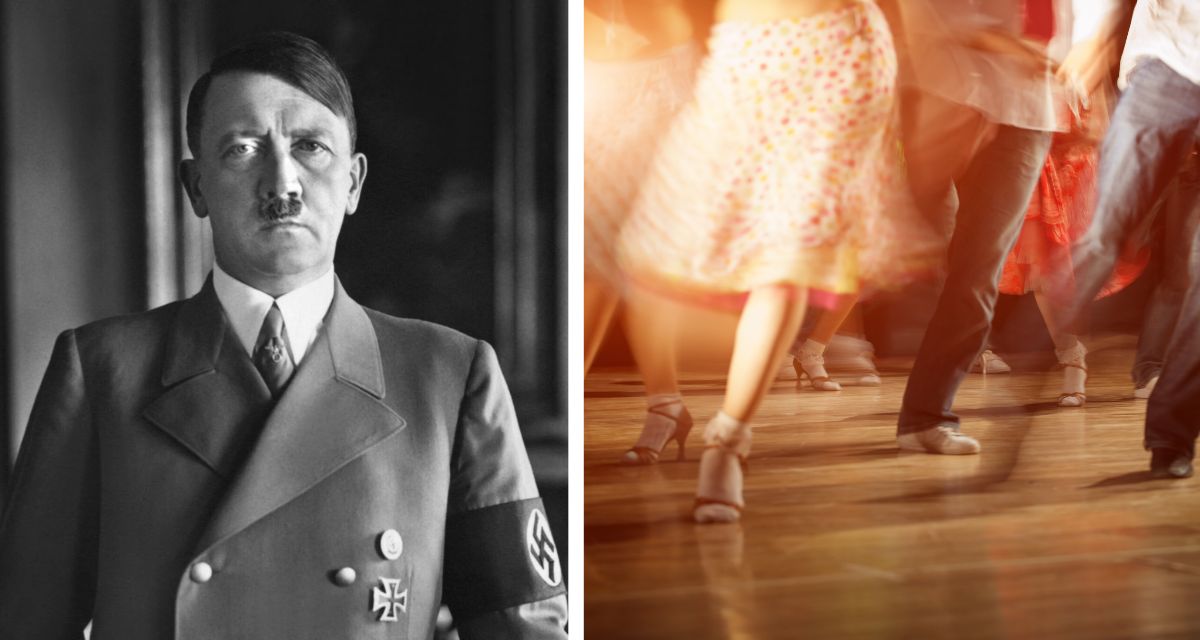
How Germans took a stand against Nazis by dancing to ‘degenerate’ swing music
Jazz became a worldwide sensation throughout the 1920s, and Germany was no exception. However, as the political climate grew darker in the 1930s, jazz music also became a way for young people to rebel against a fascist regime.
Under Nazi ideology, jazz was labeled as “degenerate music” (“entartete Musik“) for its obvious roots in Black culture, not to mention that many musicians who played jazz were Jewish.
Restrictions gradually manifested: first, broadcasting of jazz was prohibited, then individual artists were banned, followed by listening to any non-German radio station, which did play propaganda-filled “Aryanized” jazz music.
A youth culture emerged outside Nazi ideals
But as groups like the Hitler Youth and League of German Girls began forming, another clique of German teens emerged: those who still listened to swing music (a specific subset of jazz) and rebuked Nazi culture.
These kids, originally dubbed “schlurfs,” would meet in secret in clubs or cafes, often greeting each other with a tongue-in-cheek “Swing Heil!” before busting out moves like the Lindy Hop, Balboa, and Charleston. All of which their Nazi counterparts would find obscene, to say the least.
Even “schlurf” fashion, heavily influenced by American trends, was rebellious in nature. Rather than the rigid, militaristic styles of the Hitler Youth, boys sported oversized coats and wide-brim hats while girls wore their hair loose and donned makeup.
They were just there for vibes, but accidentally started a movement
In truth, these teens were initially unaware of the political statement they were making. Most came from fairly privileged backgrounds and were simply acting on both a love for the counterculture and a distaste for the current status quo. If anything, it was a fun escape from the harsher world surrounding them.
However, over the years, there would be Gestapo raids, arrests, forced entry into the Hitler Youth, and, in some cases, being sent to concentration camps. Even for those detained, jazz remained a tool of resistance. Some reportedly sang and danced to Louis Armstrong’s “Jeepers Creepers” while being held prisoner. Erich Pechmann, who was held in a French concentration camp, was said to have sung the blues song and even used his voice to imitate jazz instrument.
Wait…have I seen this movie? (Probably)
The “shlurf” phenomenon was the basis of a ’90s film titled Swing Kids, starring Christian Bale, Robert Sean Leonard, and Frank Whaley. While the film wasn’t a huge box office hit, it did kick off a whole new love for swing dance during the ’90s and early 2000s.
This all goes to show that music, fashion, language, and art are simultaneously means to escape from a world full of injustices, and tools to speak out against it. They are, after all, expressions of our values. Who’s to say when swing will make it next big comeback, and what cultural shift it will set off in its wake?
The post How Germans took a stand against Nazis by dancing to ‘degenerate’ swing music appeared first on Upworthy.








 New Posts (Home)
 ChatBox
 Popular Posts
  Game Zone
 Top PodCasts