www.optimistdaily.com
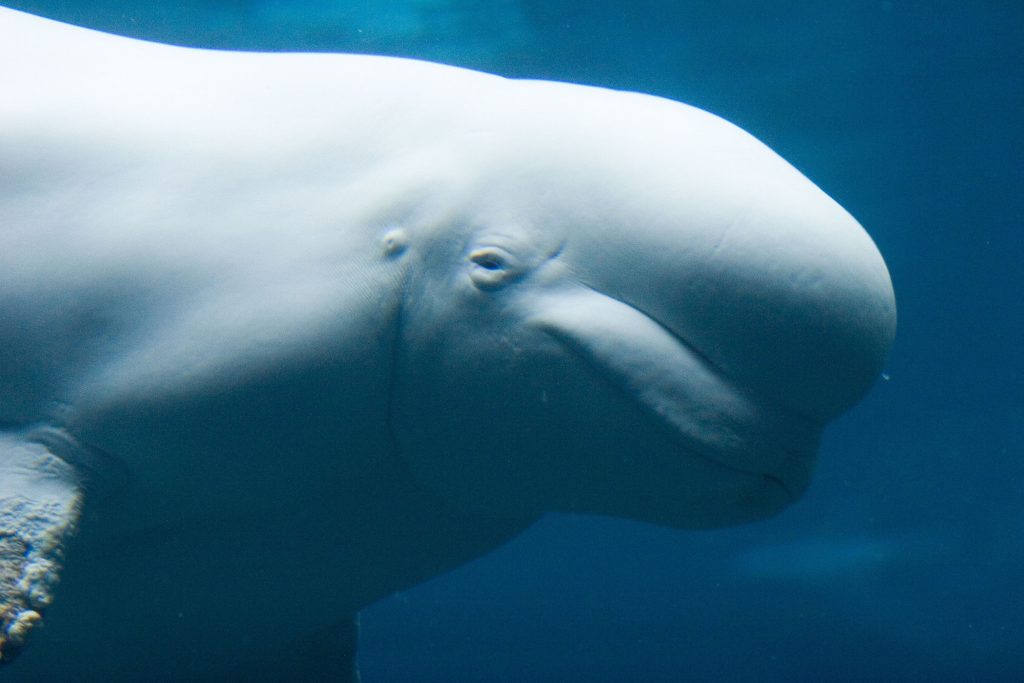
Belugas join the short list of animals who know they’re looking at themselves
There’s a short list of animals who, when placed in front of a mirror, eventually figure out they’re looking at themselves. Chimpanzees. Bottlenose dolphins. Asian elephants. A magpie or two. A small reef fish called the cleaner wrasse, which upended some assumptions about brain size when it passed the test in 2023. And now, belugas.
New findings in PLOS One document two beluga whales at the New York Aquarium doing exactly what animals on that list tend to do: testing whether the reflection responds to them, then using the mirror to examine themselves. One of the whales, Natasha, went on to pass what researchers call the mark test, where a mark is drawn somewhere on the animal’s body that it can’t see without a mirror. The footage was shot in 2001 yet by some twist of fate, it took until now to be published.
The footage that almost wasn’t
Diana Reiss, a marine mammal scientist at Hunter College, had already documented mirror self-recognition in bottlenose dolphins and Asian elephants. In 2001, she set up the same test for four captive belugas: three adult females and a seven-year-old named Maris. A mirror was affixed to a window in the whales’ shared pool for two-hour sessions. The team filmed the results and also filmed the whales’ responses to clear plexiglass placed in the same spot, as a control.
Then life moved on. “We kind of let it go,” Reiss says. The footage sat for nearly two decades.
In 2020, Alexander Mildener enrolled in Reiss’s program. He had grown up visiting the New York Aquarium and described being “completely transfixed” by those exact belugas as a child. With the pandemic limiting field research, he needed a thesis project. Reiss pulled out the tapes. Mildener spent lockdown carefully watching videos of his old friends, “the very whales that inspired me to be in this field in the first place,” he says.
What Natasha and Maris did
Animals that go on to recognize themselves in mirrors tend to follow a recognizable sequence. First, a reaction to the mirror as a new object or a potential peer. Then contingency testing: repetitive movements designed to check whether the image is responding to them. Reiss compares this to how people behave near security monitors in a store. When you think you see yourself on the screen, “you might move your head or raise your hand: ‘Is that me?’” For animals who pass, “that seems to be where the light bulb goes on.”
Natasha and Maris went through the full sequence. In their first session, both clapped their jaws at their own reflections, a behavior belugas use for intimidation with each other. Then they started testing: Natasha nodded at the mirror, while Maris waggled her head in multiple directions. By their second session, both were using the mirror to watch themselves barrel-roll and look inside their own mouths. Maris reared up and flapped her pectoral fins at the glass in a move researchers named a “pec shimmy.” Both whales blew bubbles and then bit them, behaviors that don’t appear when the mirror isn’t present. “It was just really beautiful to watch,” Mildener says.
Natasha passed the mark test. Maris did not, which is consistent with patterns seen across many mirror-recognition studies, where some individuals within the same species pass while others don’t.
Why the list keeps growing
Each addition to the mirror self-recognition list chips away at a prior assumption. “We have this list of the things that only humans do,” Reiss says, “and over time we’ve been checking them off.” The cleaner wrasse finding in 2023 was particularly disruptive: it suggested that large, sophisticated brains aren’t necessarily the threshold researchers assumed they were. What does seem consistent is that species who pass tend to be highly social and capable of recognising individuals of their own kind.
The stakes aren’t only scientific. When humpback whale behavioral research expanded in the 1970s, it helped build public support for the Endangered Species Act and the Marine Mammal Protection Act. Reiss sees the same potential in this kind of work. “Finding these shared capabilities and shared levels of consciousness and self-awareness in other species seem to engender more empathy for them,” she says.
Mildener and Reiss hope to run similar tests with other beluga populations. For Mildener, who spent lockdown watching the animals that had first drawn him to marine science, the project carried a particular weight. The whales that set him on his path were also the ones who gave him his first major finding.
Source study: PLOS One- Evidence for mirror self-recognition in beluga whales (Delphinapterus leucas)The post Belugas join the short list of animals who know they’re looking at themselves first appeared on The Optimist Daily: Making Solutions the News.








 New Posts (Home)
 ChatBox
 Popular Posts
  Game Zone
 Top PodCasts