www.theconservativebrief.com
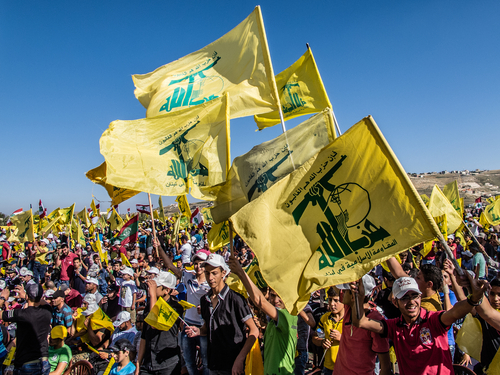
Ceasefire Clock Ticks—Hezbollah Stays Mum
Trump says Israel and Hezbollah agreed to pause hostilities for three weeks, raising hopes of de-escalation while critics question whether the deal is formal and enforceable.
Story Snapshot
Trump announced a three-week extension of an Israel–Lebanon ceasefire, describing “no more firing.” [1]
White House framing presents a concrete pause intended to support longer-term talks. [1][2]
Regional reporting notes ambiguity from Hezbollah and continued risk of flare-ups. [3]
De-escalation, if durable, advances U.S. security interests without new wars or blank checks. [1][3]
Trump Announces Three-Week Extension To Halt Cross-Border Fire
President Donald Trump said Israel and Lebanon agreed to extend a ceasefire for three weeks, characterizing it as “no more firing” while parties work toward a longer-term deal. The remarks, delivered at the White House, emphasized an immediate practical outcome: a defined, short-term pause in hostilities to cool the Israel–Hezbollah front and create space for negotiations. Trump framed the development as an extension of an existing ceasefire arrangement rather than a brand-new pact, highlighting continuity and immediate de-escalation. [1]
In follow-on comments and coverage, Trump reiterated that Israeli leadership was on board with dialing back operations and using the time window to explore broader stability. Parallel reporting described the extension as part of a push to reduce cross-border exchanges that had threatened to widen into a larger war. The message from the administration signaled restraint, deterrence, and diplomacy in tandem—aimed at protecting civilians, preventing regional spillover, and bolstering U.S. leverage without committing American forces. [2][3]
Questions About Formality, Enforcement, And Hezbollah’s Stance
Trump’s wording acknowledged a provisional character—an “additional three weeks” of not firing—rather than describing a signed bilateral document with enforcement provisions. Regional outlets reported ambiguity from Hezbollah-linked channels, reflecting a common pattern where nonstate actors avoid immediate public validation of pauses. That asymmetry raises enforcement questions if rocket fire or retaliatory strikes resume, underscoring the need for verification, rapid deconfliction lines, and consequences for violators to keep a tenuous calm from collapsing. [1][3]
Analysts tracking announcement-driven ceasefires warn that early claims can outrun ground realities when one side withholds matching statements. Still, a defined clock on a pause can concentrate diplomatic pressure, especially when the United States ties future steps to compliance. The risk is that sporadic incidents—whether deliberate or miscalculated—could test the ceasefire and invite tit-for-tat escalation. That makes clear rules of engagement and rapid incident resolution mechanisms critical over the next twenty-one days. [3]
What A Real De-Escalation Delivers For U.S. Interests And Allies
For American conservatives focused on strength without endless wars, a verified halt that lowers rocket fire near Israeli communities, limits militia opportunism, and reduces refugee displacement is a practical win. A narrow, time-bound pause preserves deterrence while testing whether adversaries respond to pressure. If quiet holds, Israel gains breathing room to fortify border defenses and plan operations with fewer civilian risks, and the United States demonstrates that leverage—not nation-building or blank checks—can check Iranian proxies and stabilize energy-sensitive corridors. [1][3]
The First Order Consequence: President Donald Trump announced that Hezbollah and Israel agreed not to attack each other, signaling a short-term de-escalation intended to reduce immediate harm and stabilize conditions for personal and civic decision-making among affected… https://t.co/KIP8g60JVo
— U.S.A.I. (@researchUSAI) June 1, 2026
If violations occur, the administration must respond with clarity: name the violator, coordinate with Jerusalem on proportionate consequences, and reset terms swiftly. Transparent metrics—no launches, no raids, no cross-border strikes—can help the public judge success. This approach aligns with limited government and strong borders at home: keep America out of open-ended commitments, back allies who fight terrorists, and refuse diplomatic fog that masks aggression. A ceasefire is a tool, not a trophy; performance over the next three weeks will decide its value. [1][3]
Sources:
[1] Web – Trump Says Israel and Hezbollah Have Agreed to Dial Back Fighting
[2] YouTube – Trump Says Israel-Lebanon Ceasefire Extended Three Weeks
[3] YouTube – Trump says Lebanon and Israel agree to extend Israel-Hezbollah …








 New Posts (Home)
 ChatBox
 Popular Posts
  Game Zone
 Top PodCasts