www.dailywire.com
Is Trump Working On A ‘Liberation Day’ Part Two?
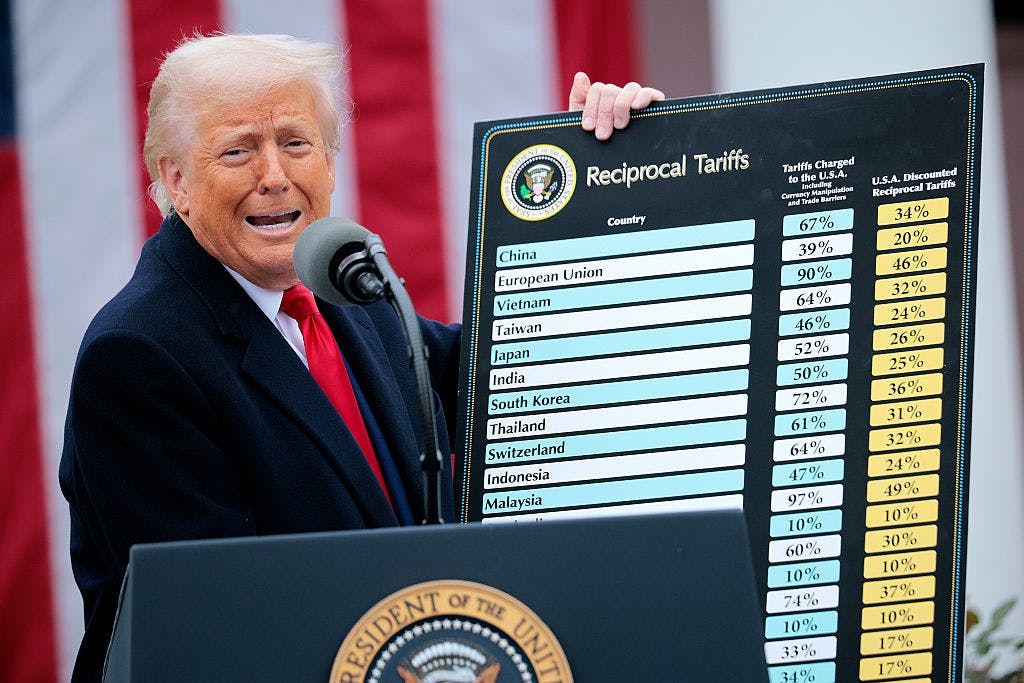
While President Donald Trump lost his sweeping tariffs after the Supreme Court ruled against his use of the International Emergency Economic Powers Act (IEEPA), United States Trade Representative Jamieson Greer said on Tuesday that tariffs are far from over.
“What we are doing now is we have investigations ongoing in my office and we are investigating specific unfair trading practices,” Greer told CNBC. “You will see over the next few weeks, we will be releasing our findings. We are covering a lot of countries, over 70 countries. If we find unfair trading practices — structural excess capacity, forced labor, things like this — we will put out proposals on how we think we should fix it and that may be proposed tariffs.”
Trump initially relied on IEEPA because it allowed him to impose broad tariffs quickly without the lengthy investigative processes required under traditional trade laws.
“When the president used his emergency authority he was able to move very quickly to get at this issue, get a lot of leverage, and impose tariffs,” Greer explained.
After the Supreme Court blocked Trump’s use of IEEPA earlier this year, the administration turned to Section 122 and implemented a temporary 10% tariff on February 24. But unlike the tariffs announced on “Liberation Day” in April 2025, Section 122 tariffs are temporary by law and were later struck down by the U.S. Court of International Trade.
With those options curtailed, the administration has shifted its focus to Sections 301 and 232: the two principal trade authorities that require the involvement of Greer and Commerce Secretary Howard Lutnick.
Greer said the results of his Section 301 investigations would be released in the coming weeks, which could introduce new tariffs across the world. Under Section 301, the Office of the United States Trade Representative investigates whether foreign countries are engaging in unfair trade practices, gathers evidence, solicits public comments, and holds hearings before recommending tariffs or other trade restrictions.
That is the same authority Trump used to impose tariffs on China during his first term. Those tariffs survived legal challenges, but investigations typically take between three and nine months to complete, making them slower and less useful as an immediate negotiating tool than emergency tariff authorities.
Lutnick, like Greer, can also launch investigations, not into unfair trade practices, but into industries that are crucial to national security. Unlike Greer’s Section 301 investigations, which focus on unfair trade practices, Lutnick’s Section 232 investigations examine whether imports threaten industries deemed critical to national security. Those investigations allowed Trump to impose tariffs if the Commerce Department determines that a strategic industry is vulnerable because of import dependence.
The department began launching Section 232 investigations just weeks after Trump returned to office. Global Trade Alert observed that Section 232 “had never stopped expanding” and noted that the administration had launched, relaunched, or expanded roughly 20 actions from the section before the Supreme Court ruled against Trump’s IEEPA tariffs, suggesting the White House was already building alternative pathways for trade restrictions.
The pathway no longer available is Trump’s ability to wield tariffs during negotiations.
In January, he threatened to impose tariffs on countries that do business with Iran, citing the country’s repression of protesters, support for proxy terrorist groups, and continued pursuit of nuclear capabilities. In negotiations with China, Trump warned that tariffs would increase if China continued withholding rare earth minerals from the United States. Rare earth minerals are vital for products ranging from household appliances and automobiles to semiconductors for artificial intelligence chips.
The delay in collecting additional tariff revenue could raise budget concerns, with Trump repeatedly claiming that tariffs would help fund the extension of his 2017 tax cuts in the “Big Beautiful Bill.”








 New Posts (Home)
 ChatBox
 Popular Posts
  Game Zone
 Top PodCasts