www.dailywire.com
Don’t Overlook The Heat Source Behind California’s Red Wave
The political climate in California is changing. The Golden State is seemingly on the cusp of a red wave in the Los Angeles mayoral and statewide gubernatorial races. Californians’ deep concern about the prevalence of high-intensity wildfires plaguing their state is a major reason why.
I previously argued that Governor Gavin Newsom treated California as a policy laboratory for all kinds of radical regulatory experimentation and that the results were overwhelmingly negative. Now there are signs of a state-wide reckoning.
Polling indicates that California residents could put an end to the toxic mix of harmful policies crafted or enforced by Los Angeles Mayor Karen Bass and Governor Newsom.
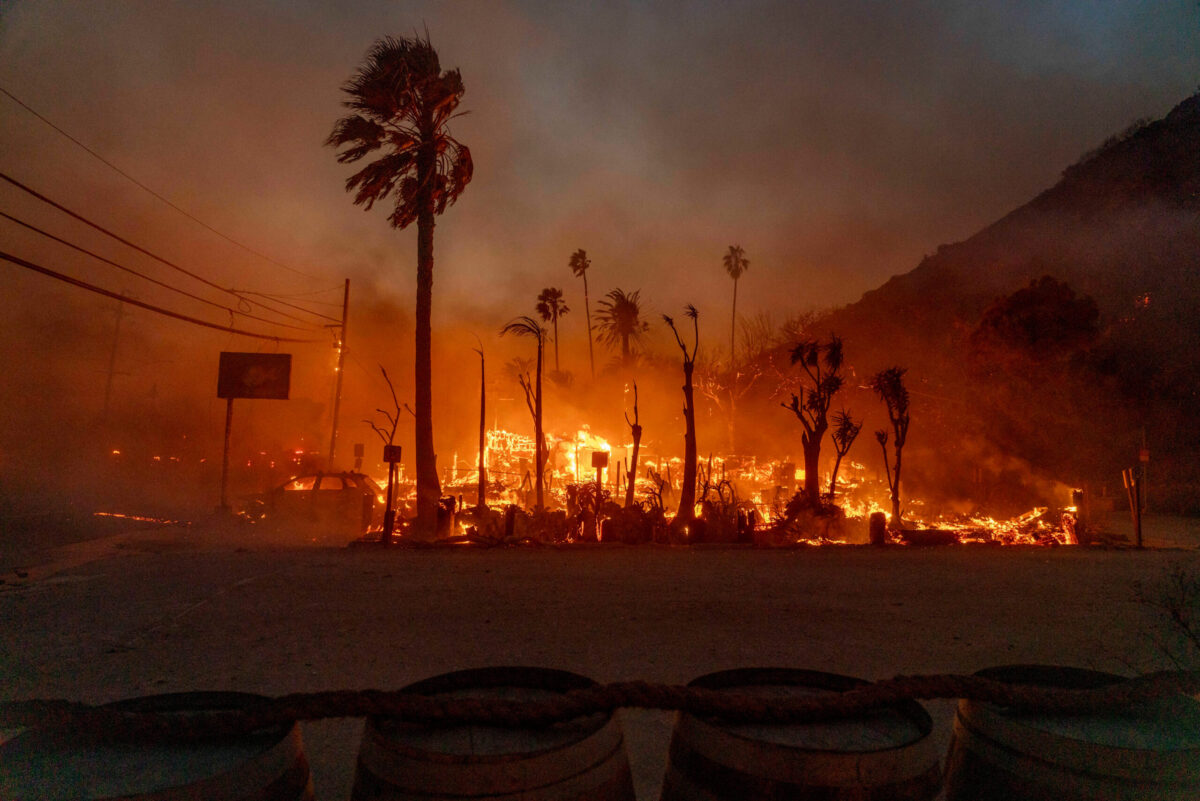
The L.A. mayoral race has put this dynamic on full display. Former reality TV star and political outsider Spencer Pratt has made the Palisades Fire, which occurred under Bass’s watch, a central issue in the race. That fire, started by a deranged arsonist, caused damages estimated at over $28 billion and killed dozens of people. Bass’s team oversaw a response that policy experts have criticized as inadequate. At the time, the Washington Post editorial board argued that Bass’s city government “badly mishandled” the response, and, perhaps worse, that Bass tried to sweep evidence of her bungled response under the rug.
Though it happened over a year ago, Spencer Pratt is not letting Bass off the hook for her role in the fire, which affected him personally. “If they didn’t burn my house down, I wouldn’t be running for mayor,” Pratt has said. That strategy is working for Pratt. While still slightly trailing Bass in recent polls, Pratt is slated to face Bass in a runoff election in November.
Bass blamed climate change for the fires, which is no excuse for negligence. In fact, if Bass believes climate change is exacerbating wildfire risk, that arguably casts her in a worse light. If she believed that fires are now more likely to occur, due to climate change or any other reason, her decision to drastically reduce the L.A. Fire Department budget by $17 million before the fire was especially inexcusable.
Bass not only refused to accept accountability but also attempted a cover-up. Bass reportedly altered an after-action report to downplay the role of poor political decisions in the fire’s impact. The original report, much of which Bass reportedly quashed, may have discussed the reservoir drained ahead of the fire that could have supplied 117 million gallons of water, and the insufficient availability of firefighters.
Solely focusing on Bass, though, misses the larger point: In California, ideologically driven leftist policies have prioritized environmental regulations over brush-clearing measures. Faster vegetation growth translates to higher fire risk.
Californians know this, but they have long faced an uphill battle in clearing brush from public land. As a general rule, California doesn’t clear brush from public lands for environmental reasons, and residents must apply for a permit to do so — a lengthy and cumbersome process.
This is what happened in the Palisades Fire. Having not been cleared from public lands abutting residential areas, brush plants, which are evolutionarily engineered to burn, contributed to the fire’s rapid spread.
Californians know that politicians are at least partly to blame for mismanagement and poor policymaking that cost over 20,000 of them their homes in the most recent major bout of wildfires in early 2025.
That is why Democrats are at risk of losing their grip on power in California at the gubernatorial level, too. Republican candidate Steve Hilton is surging in polls among Californians and could be the first Republican elected governor of California in two decades.
Hilton is not tiptoeing around challenging fire prevention issues. To the contrary, he is leaning in with ambitious proposals to use remote sensing technology and drones to detect and stop fires before they spread out of control.
At the same time, Hilton has condemned California officials for putting ideology before people. Hilton has noted, “the California Coastal Commission also blocked fire prevention and mitigation measures in the exact hills that just burned, in order to protect a few thousand specimens of the Braunton’s milkvetch shrub.” He also got Californians’ attention, with his claim that the L.A. wildfires were “not a natural disaster” but rather “a man-made disaster.” Thanks to common sense axioms like these, he is currently the frontrunner in the race, much to the chagrin and surprise of California’s Democratic establishment.
California is a solid blue state and has been for many years. A red wave there would mean a red wave could be possible anywhere. And apocalyptic scenes of wildfires, the most salient and striking example of policy failure in that state, are getting voters’ attention like never before.
***
Sydney Rodman is a visiting fellow with the Independent Women’s Center for Energy and Conservation.








 New Posts (Home)
 ChatBox
 Popular Posts
  Game Zone
 Top PodCasts