www.newsbusters.org
Graham Platner Accuser Torches New York Times, Claims She Was 'Set Up'
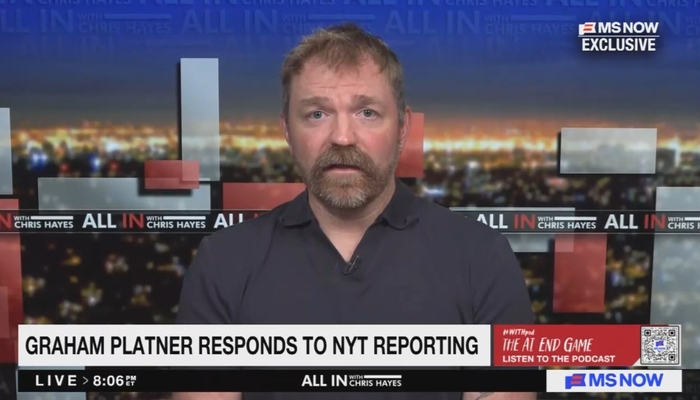
Late on Thursday, the New York Times came out with a story by Katie Glueck and Lisa Lerer that featured GOP operative Lyndsey Fifield making accusations against progressive darling and Maine Senate candidate Graham Platner, including how “she said he regularly grabbed her by the shoulders — sometimes hard enough to leave marks — and, on one occasion, yanked her out of a cab by her wrist after an argument when she wanted to stay in the car.” However, on Friday, Fifield torched The Times in a series of X posts for what was not in the story, including more evidence for her accusations that she was “set up” because The Times did not include other women who were going to accuse Platner of sexual assault despite telling Fifield they were going to.
The Times also wrote, “Mr. Platner ‘strongly disputes’ any claims of physical intimidation or altercations, his campaign said. The Times could not independently corroborate Ms. Fifield’s account of the altercations.’”
The next morning, Fifield posted on X, “But then in early April the New York Times came to me. I asked how they got my number. I said I was not interested in sharing my story. They said but wait—there are other women. Women terrified to tell their stories, too, and you need to band together. WE will help you. We will protect you. Men can’t keep getting away with this.”
I bucked all advice from my friends (and resisted my conservative bias) and decided to fully trust the Times journalists.
As they left my home they asked that I not talk to any other outlets and I insisted then and repeatedly over the following weeks that I would keep my word…
— Lyndsey Fifield (@lyndseyfifield) June 5, 2026
She then added:
I let them take pictures of my diary pages. I sent them screenshots of messages and gave them phone numbers and contacts. It was excruciating. I was surprised by what details I remembered, and as I poured through old messages I was horrified by how much I had forgotten.
I explained very clearly that, like many women abused by their partners, I had not told anyone about his violence at the time—I had covered for and defended it. I accepted his earnest apologies. They said that’s fine because the diary entries and my on the record story was enough.
They connected me to two of the other victims so we wouldn’t feel so alone. I insisted to each of them that I trusted the NYT journalists and that we were doing the right thing despite their (sadly very accurate) sense that something was wrong.
One of the victims and I realized our relationships with Graham overlapped completely - he had been cheating on both of us the entire time we were together.
In a second post, Fifield regretted having, “bucked all advice from my friends (and resisted my conservative bias) and decided to fully trust the Times journalists.”
She soon realized something was off:
But then the weeks dragged on. They kept coming back to us saying the editors needed more. I needed to go on the record (okay). We need more screenshots (okay). I met every bench mark they set, eager to provide more sources or evidence as needed.
After the story went up I began to ask them … wait, where are the stories from the other women? Where are their accusations of sexual assault? Why am I the focus? Why are there 11 paragraphs dedicated to detailing my work history (more than has been published about Graham’s by far)?
Why does it say “nobody could corroborate” when I offered them sources that COULD corroborate?
Over at The Daily Caller, senior politics editor Will Upton pointed out that has had consequences, “The goal was to create enough doubt and ambiguity regarding Platner’s disgusting behavior to let my friend, Lyndsey Fifield, be smeared by Democrat Party operatives like Emma Vigeland and partisan media hacks like Krystal Ball. And that’s exactly what they did.”
He also elaborated, “Prior to publication, I’m told that the Times spoke to two women who had credibly accused Platner of sexual assault. This detail was revealed to Fifield — likely in an effort to encourage her to divulge more of her story. Those women’s allegations never made it into the story. They were effectively ‘killed’ by the Times’s editors and by Platner’s attorneys, I’m told.”
As for Fifield, she also recalled wondering:
Where were the screenshots they’d said they would use? Or the mention that I’d supported local democrats and that most of my family (and husband) are liberal?
The editors said it was too much, they explained.
The Times also failed to include any mention that I DID confide in multiple friends through the years that Graham had been abusive — long before he was running for office. Those friends confirm they told the Times so.
It dawned on me that this really was a set up all along. The journalists I trusted who convinced me to share a story I never wanted to tell methodically delayed and twisted this into a gift to the Platner campaign. Violating the trust of his victims. Shattering the trust I placed in them with the most vulnerable story of my life.
It was not even a month ago that The New York Times ran physiologically impossible allegations of Israel using dogs to rape Palestinian prisoners, but now that control of the Senate is on the line with a candidate who, even if you were to remove his personal baggage, is still a left-wing radical, The Times appears to be deferring to the alleged abuser.








 New Posts (Home)
 ChatBox
 Popular Posts
  Game Zone
 Top PodCasts