www.dailywire.com
Woke Fashion Brand Discovers Its Fans Can’t Handle The American Flag
This article is part of Upstream, The Daily Wire’s new home for culture and lifestyle. Real human insight and human stories — from our featured writers to you.
***
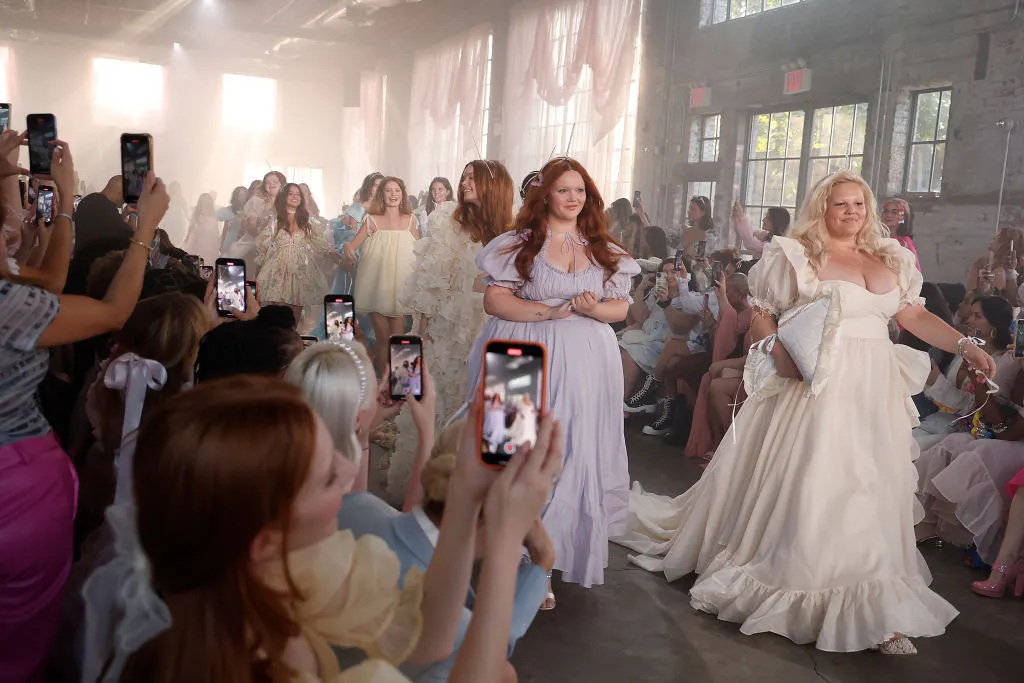
Luxe inclusive it-brand Selkie — known for the “Bridgerton”-esque “puff dress” it popularized on TikTok — is taking major heat from its fanbase. The label’s new patriotic capsule didn’t land with fashion-hungry feminists who are taking a hard pass on reclaiming their own American story.
Despite giving “sexy Colonial woman,” not even starry-blue corsets or flouncy red-and-white striped skirts could convince Selkie devotees that a $799 petticoat meant they’d be fighting the patriarchy. Even worse for the woman-owned, LGBT-friendly brand, the announcement dropped on Instagram in tandem with the arrival of “Pride Month.” The comment section promptly frothed with rage.
View this post on Instagram
A post shared by Selkie ™ (@selkie)
“Could have been a Pride collection. Instead it’s… this,” a she/her licensed trauma therapist posted. “Releasing literally nothing would have been better.”
Fronted by U.K.-born WILDFOX co-founder Kimberley Gordon, who spent much of her life in Santa Barbara, California, Selkie attempted to sell the concept with a rallying message.
“America has been in the background of our lives and stories … At a time when women’s rights are threatened, immigrant women are torn from their communities, guns are rampant in our schools and [sic] violence against women, minorities and the LGBTQ communities … We refuse to surrender the symbols of this country to those who would use them against us … What’s your American story?”
Instead of sharing heartwarming anecdotes, followers went for the jugular. “If I saw someone wearing this collection, I would think them an unsafe person to be around,” someone posted. Others called the line “colonial chic” and tone-deaf, with one person suggesting, “If someone wears any of this I would immediately assume they’re MAGA.”
This post followed a vintage carousel of 1900s women advocating for equality. Instead of seeing the user-dubbed “Suffragette Core” as retail motivation, one former fan posted, “WTF. Just bought my first Selkie dress last month now I won’t EVER buy from you again.”
A subsequent post promoting queer American flag chic did nothing to tame the outrage. “I dunno if now is the right time to be celebrating America when everything has collapsed into a facist [sic] oligarchy and we have literal concentration camps everywhere,” a critic warned, seemingly oblivious to this comments suppressive efforts.
As the internet’s No. 1 triggering motif, the American flag boasts three representative colors for the nation: red for valor and bravery, white to signify purity and innocence, and blue to symbolize vigilance, perseverance, and justice. “One nation, indivisible, with liberty and justice for all,” the Pledge of Allegiance goes. The “for all” part still stands, even if no one says it anymore.
Launched after Kimberley Gordon was pushed out of the WILDFOX brand she founded and grew over a decade, Selkie was meant to empower female expression through sumptuous style. As Gordon described it, “I had this dream of this dress … like a piece of bubblegum. I wanted to make my first ever princess-y dress that was like a dessert — like a confection come to life for your body.”
The brand gets its name from the mythological mermaid creature found in Scottish and Irish folklore. Half seal and half human, the enchanting selkie is vulnerable to a restrictive life on land if its aquatic “seal” skin is lost or stolen. Selkie (the brand) aimed to protect its wearer’s soul.
Breaking from the industry norms of her previous label, Gordon demanded inclusive XXS to 6X sizing for women of all types. Runway shows featured models rolling down the catwalk in wheelchairs and being carried by strapping men like “Anne of Green Gables” romantasy.
Many of the cupcake-like gowns have rightly been described as wearable paintings. After debuting in 2018, the line found a home with national retailers like Revolve, Anthropologie, Free People, and Bloomingdale’s and earned the celebrity set’s stamp of approval.
But even a deeply diverse bench of multicolored muses with voluminous curves, splotchy freckles, kinky hair, vitiligo, and full beards couldn’t satisfy the gluttonous fantasies of the solipsistic masses. If we’re naval gazing, it’s certainly not at a star-spangled belly button ring.
Progressives shall not abide American patriotism, even if it’s upcycled similarly t o the way Amber Rose rebranded “sl*t,” Lizzo reclaimed “b*tch,” and K-Pop stans campified the c-word on social media. Nothing can shift the “stars and stripes = bad” fallout from what some perceive as a full-fledged co-opt by a certain administration of our country’s national emblem.
On a Reddit post asking if those outside the U.S. would ever wear America’s patriotic finest — specifically, a Brandy Melville sweater stitched with a standard American flag — one person summed up an outsider’s view of “Americore” as fashion:
“I think it is weird if you are an American haha, it gives patriotism. But if you are a foreigner (like me who lives in a third world country where everyone’s dream is being American) it goes with the ‘lana del rey americana’ aesthetic of the 2010s.”
Selkie appears to have pivoted toward a fundraising effort for its new collection, promising to dedicate 100% net profit ($40,000 minimum) to the Immigrant Legal Resource Center and UN Women.
“As a white woman, the idea that we get to decide this symbol can simply be reclaimed feels deeply uncomfortable to me,” plus-size model Tess Holliday commented. Others piled on.
But Kimberly Gordon remains unapologetic.
“This collection is, in part, about the pressure to conform under public scrutiny and the way online outrage can sometimes shut down meaningful dialogue,” she responded. “To apologize simply because there is criticism would undermine the very conversation the work is intended to spark.”
Gordon maintains her right to creative liberty over her vision of modern Americana.
“It was the symbol of the world I was moving to from the UK, it was the symbol of my new life and friends and the kindness of my California peers. It’s a pattern I’ve played with my whole career in fashion,” Gordon wrote of the U.S. flag. “The thing about choices is that I have them, these collections are my American story.”








 New Posts (Home)
 ChatBox
 Popular Posts
  Game Zone
 Top PodCasts