www.dailysignal.com
How California’s Election Procedures Turn Early Leads Into Late Losses
Delayed vote tallies in Calfornia are attributable to the vote-by-mail system and weeklong deadlines for receiving ballots, which undermines confidence in results, election experts say.
Tuesday is the deadline for the last of California’s ballots to arrive, where about 80% vote by mail and about 40% of ballots arrive after Election Day in the nation’s most populous state. These are among the factors that contribute to repeatedly delayed results.
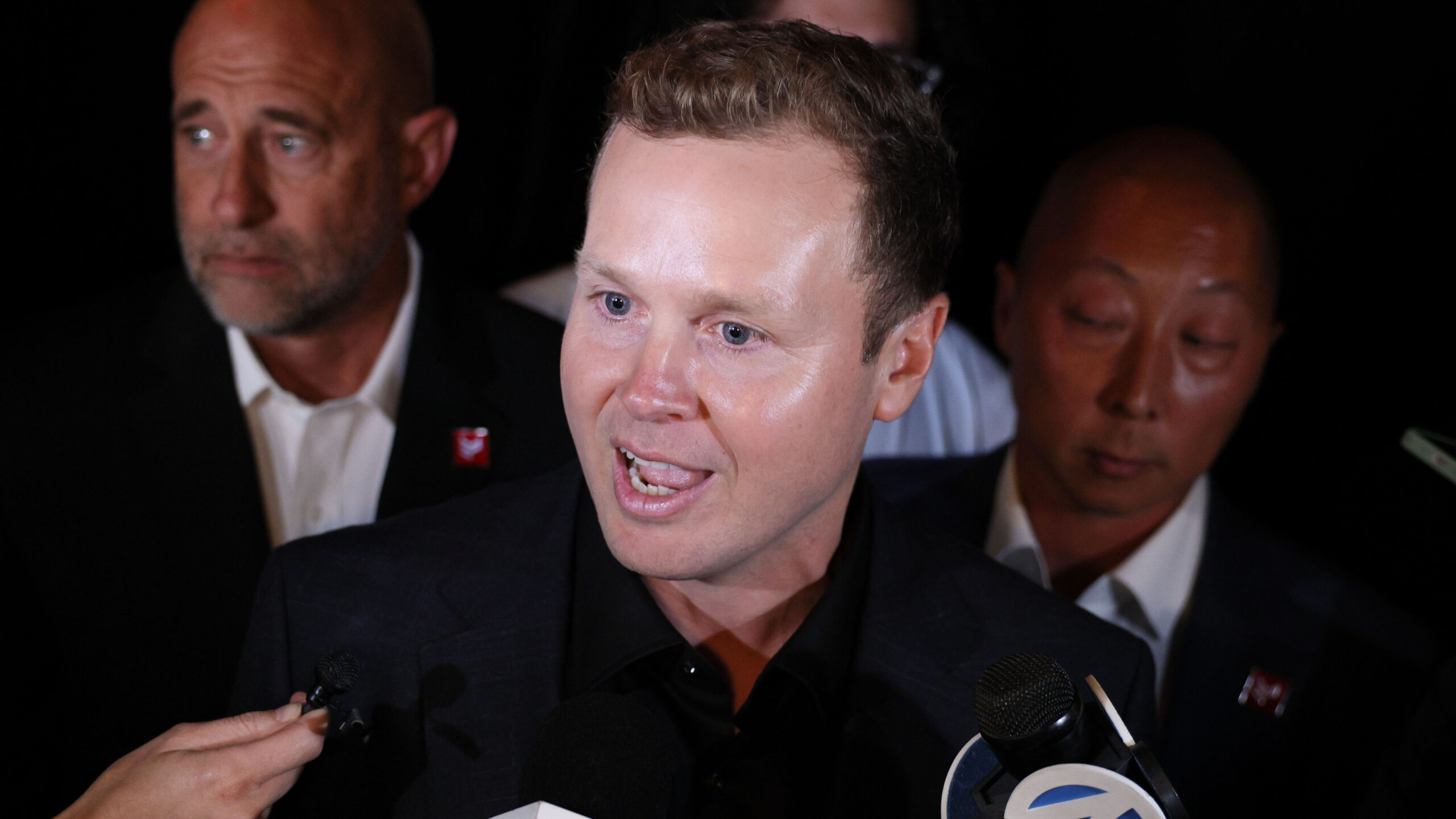
On Sunday, it appeared that Republican mayoral candidate Spencer Pratt would fall out of contention for the general election after several days of appearing in the top two vote recipients along with L.A. Mayor Karen Bass, a Democrat. Another Democratic candidate, Nithya Raman, appeared to overtake Pratt for second place to face Bass in the general election. The state’s primaries allow the top two vote-getters, rather than party nominees, to advance to the general election.
California also doesn’t allow local jurisdictions to require voter ID, and allows 22 days for “curing” ballots. Curing is when a voter’s ballot needs to be corrected or clarified to count, such as fixing illegible marks on the ballot or inserting a missing signature on the ballot envelope.
“There are a lot of consequential House races in the general election. We are likely going to have a similar conversation in November,” Andrew Behl, a law team staff writer for Ballotpedia, which monitors election procedures, told the Daily Signal.
Similar apparent flips have occured in previous elections in the state, including in races for the U.S. House of Representatives. On election night in 2024, Republican incumbent Rep. Michelle Steel was leading, but that lead turned into a loss days later as Democrat Derek Tran won the seat 22 days after the election.
In 2024, 80.8 percent of voters used mail-in voting in California. This figure does not include early in-person voting, according to a Ballotpedia report that contrasted California’s election procedures with Florida’s.
Both states have large voter populations. Among the biggest differences between them is that Florida has strict timelines for tabulating and reporting results, Behl said. Florida also allows election officials to count, but not report, early in-person and mail votes before Election Day, in contrast to California, which requires tabulation to wait until after the Election Day polls close.
California became an all-mail voting state during the COVID-19 pandemic in 2020, and the state Legislature codified all-mail elections in 2021. After this act, every registered voter in the state automatically received a ballot.
As long as ballots are postmarked by Election Day, they can arrive up to seven days after the election.
“About 23 million ballots were sent to California voters and only about 7 million came back,” Jason Snead, executive director of the Honest Elections Project, told the Daily Signal.
“California has created a system that is at every stage as insecure as possible,” Snead, executive director of the Honest Elections Project, told the Daily Signal.
He added that California has no laws against ballot harvesting or against third parties delivering or picking up ballots in large quantities.
“The desire to get election results on election night cuts across every party,” Snead added. “When people repeatedly see results change, or one candidate concedes and then becomes a victor, it opens the door for speculation.”
Over the weekend, President Donald Trump did far more than speculate, effectively declaring the California elections “crooked.”
“Thousands of homeless may be fueling Nithya Raman’s impossible late surge in LA. Voter fraud was just busted on Skid Row,” Trump posted on Truth Social. “This is why nobody trusts their elections anymore.”
BREAKING: Thousands of homeless may be fueling Nithya Raman’s impossible late surge in LAVoter fraud was just busted on Skid RowCA refuses to clean its voter rolls & no voter IDThis is why nobody trusts their elections anymoreHT @EricLDaugh pic.twitter.com/F5iMEsGW9g— Commentary Donald J. Trump Posts From Truth Social (@TrumpDailyPosts) June 8, 2026
During an interview on NBC’s Meet the Press, Trump said: “Look at what’s happening in California. Do you think it’s appropriate that they have an election and five days later they’re nowhere close to picking a winner?”
California Secretary of State Shirley Weber’s office did not respond to an inquiry from the Daily Signal by publication time. Also, the Los Angeles County clerk’s office did not respond to an inquiry for this story by publication time.
Weber posted on X Monday that elections in California are secure, asserting there is “rigorous testing of machines,” strict chain of custody,” and “all signatures are verified.”
To learn more about California’s safeguards and security, visit https://t.co/yHFXynNBpY#CATrustedInfo2026 #VoteCalifornia pic.twitter.com/bEyl52wo9A— California Secretary of State (@CASOSVote) June 8, 2026
There is no evidence of impropriety, but the procedures negatively impact voter confidence, said Don Palmer, a former chairman of the U.S. Election Assistance Commission, now a senior legal fellow at The Heritage Foundation.
“California needs to reform its system because it is not designed for voter confidence,” Palmer, a former director of Florida elections, told the Daily Signal. “After the 2024 election, the California Legislature was forced to make some slight modifications after the long counts. But the system is designed for California Democrats, not California voters.”
The problem has affected several U.S. House races in California, including Tran’s late-breaking victory in 2024.
In 2020, Republican Young Kim was declared the winner over Democratic incumbent Rep. Gil Cisneros 10 days after the election.
In 2018, it took nine days for Democrat Katie Porter to officially win the election over Republican incumbent Rep. Mimi Walters. For nearly a full week after election night, Walters led Porter in the vote count.








 New Posts (Home)
 ChatBox
 Popular Posts
  Game Zone
 Top PodCasts