www.dailywire.com
How ‘Scary Movie’ Got Stuck Between Funny And Safe
This article is part of Upstream, The Daily Wire’s new home for culture and lifestyle. Real human insight and human stories — from our featured writers to you.
***
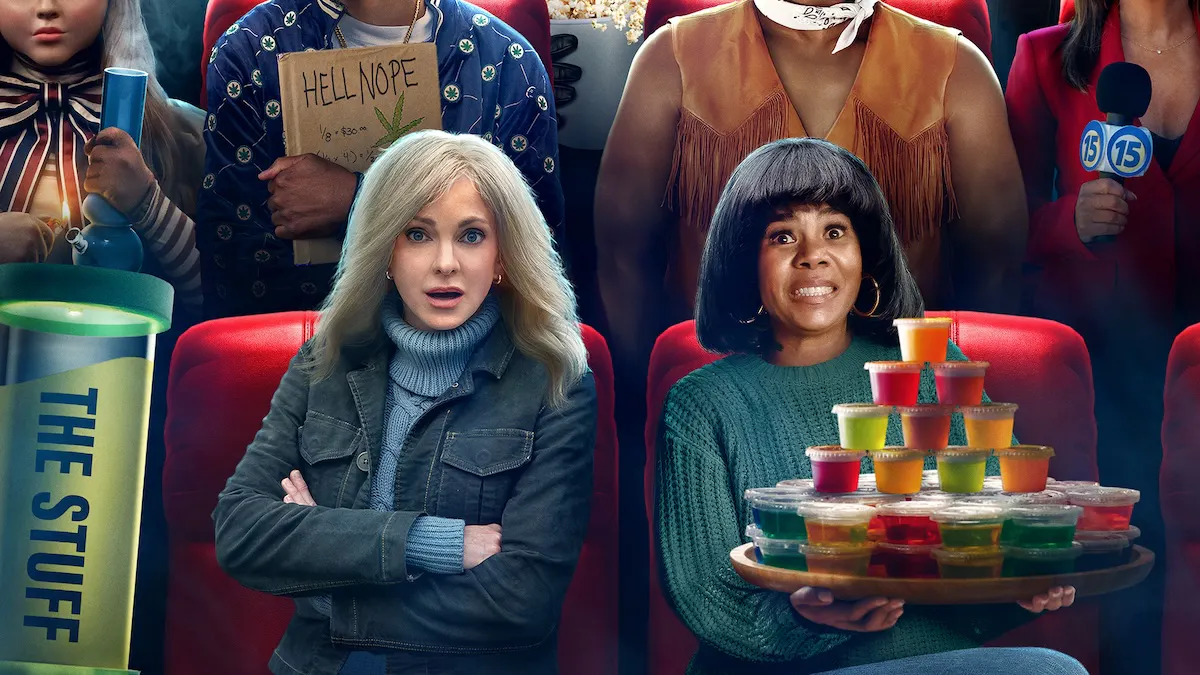
“Every line will be crossed,” promises the poster for “Scary Movie,” the sixth entry in the horror-spoof franchise and the first proper Wayans-family installment in more than two decades. What passes for edgy comedy in 2026 was, not very long ago, simply called comedy. “Scary Movie 4,” released in 2006, featured fake Japanese dialogue consisting of lines such as “Karate judo sumo samurai?” and “Mitsubishi Subaru” — the sort of flippant gag we used to chuckle at collectively.
That is the odd tension running through the new “Scary Movie.” The film arrives in a culture that pushes ideological puritanism alongside libertinism in almost every other direction. We have already seen every variation of the genitalia gag, but a mere preferred-pronoun joke in the trailer inspired the usual online indignation, even as some commenters complained that the film did not instead make fun of Charlie Kirk’s murder. For many such critics, comedy is not so much an art form as a political tool to wield against perceived adversaries.
To their credit, Shawn and Marlon Wayans try to poke that landscape. The film features jokes about transgenderism, pronouns, Black Lives Matter, ICE raids, streamers, OnlyFans, and modern race relations. Nothing is technically off the table. The problem is that putting something on the table is not the same as properly cooking it.
In one scene, a police officer argues with his daughter, who presents as a transgender boy. After asking him to treat her as “one of the boys,” she smacks him across the face. The scene abruptly ends, cutting to the father nodding in baffled acceptance. I am no Hollywood comedy writer, but surely the joke lands better if the film follows its own premise to the obvious absurd conclusion: if she wants to be treated like one of the boys, then Dad should at least be allowed to react as though she is one and throw a punch back. Instead, the film flinches precisely where the gag should escalate.
The narrative is your usual “Scary Movie” premise. Ghostface is back, this time targeting the teenage daughter of Cindy Campbell (Anna Faris). The legacy cast now has children, and the killer is after them. That is the plot, stretched across a 90-minute montage of sketches, callbacks, and horror references. The film swings from “Scream” to “Smile,” “Get Out,” “Sinners,” “Longlegs,” and even “John Wick” for an entertaining final act, cutting from one gag to another with the attention span of a TikTok addict.
In this “throw everything at the wall and see what sticks” approach to comedy, some material works well. In one skit, a grim conversation about a stabbing unfolds against the backdrop of a “Final Destination” theme park, branded as the place “where everyone dies.” As characters discuss the attack, roller coasters fly off their rails behind them, killing hundreds. There is another great gag in which Ghostface calls a teenager asking whether anyone else is home. The teen replies that his father is out, but the plumber, gardener, and pool boy are all around. Ghostface suggests he look out the window, where ICE agents are arresting them all. It is crass and sharply constructed, and the sort of thing I wish the film did more often.
The racial humor is occasionally overdone, but it also produces memorable highlights. In the opening skit, a cameo from Teyana Taylor has her standing in a ritzy bar, bellowing “I’m black” in an exaggerated Harlem accent, prompting the camera to cut to a white woman frantically trying to swallow her pearl necklace. The gag works because the film is, at its best, an equal-opportunity offender, skewering both the performance of racial identity and the vacuity of polite white liberalism.
However, some references feel forced, as if the writers wanted to include them but had no idea what to do once they got there. The film’s riff on Jordan Peele’s “Get Out” recreates the hypnosis scene with Ghostface twirling the china teacup, but it does little beyond dangle the reference in front of the audience as a cinematic “’member this movie?”
Still, there is pleasure in seeing Cindy, Brenda, Shorty, Ray, and Doofy again. Faris remains wonderfully committed to Cindy’s vacant sincerity, and the cast’s broad comic affectations transport you back to the 2000s.
The Wayanses have not made a cowardly movie. That alone distinguishes “Scary Movie” from much of modern comedy. Fearlessness, however, is not the same as excellence. The film crosses contemporary taboos, only to arrive on the other side with no sharper insight than “remember this?” before scurrying on to the next thing. Every line may be crossed, as the poster promised, but too few are crossed with any real purpose.
***
Harry Khachatrian (@Harry1T6) is a film critic for the Washington Examiner. He is a software engineer, holds a master’s degree from the University of Toronto, and writes about wine at BetweenBottles.com.








 New Posts (Home)
 ChatBox
 Popular Posts
  Game Zone
 Top PodCasts