www.dailywire.com
Millions Of Kids Could Soon Be Banned From TikTok And YouTube
U.K. Prime Minister Keir Starmer said Monday that his government plans to pursue a social media ban for children under 16, aligning Britain with Australia and other countries that have moved to tighten regulations on major technology platforms.
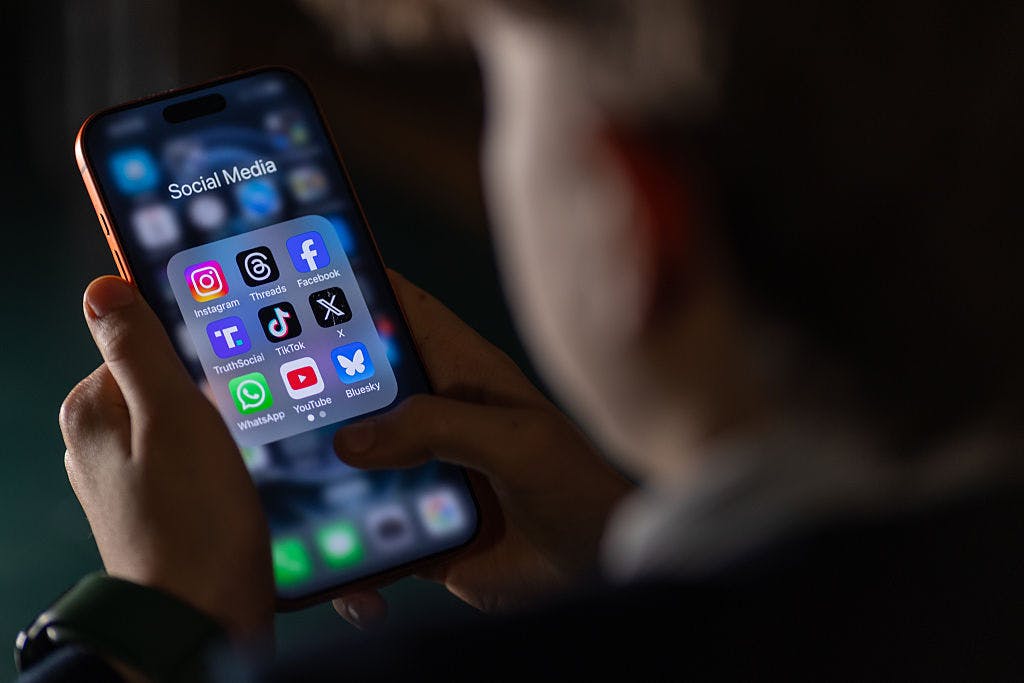
Starmer said the government plans to introduce the legislation in Parliament before Christmas, paving the way for the ban to take effect in early 2027. The restrictions would cover platforms including Snapchat, TikTok, YouTube, Facebook, Instagram, X, and other streaming and social media services.
Messaging apps such as WhatsApp and Signal will be exempt from the ban, according to the government. The restrictions also will not apply to educational services or music-streaming platforms.
In a social media video, the embattled and historically unpopular prime minister argued the ban is about improving the lives of children.
We are banning social media access for under 16s.
These days kids must find their feet in a world where technology intrudes into every area of their life.
I just can’t let that go on anymore. So we’re giving children their childhoods back. pic.twitter.com/jn7iQrcwk8
— Keir Starmer (@Keir_Starmer) June 15, 2026
“Every parent wants the best for their kids. That’s what being a parent means. And for me, for my two kids, all I’ve ever wanted is for them to be safe and for them to be happy, and the rest is up to them,” he said. “These days, kids have to find their feet in a world that changes so quickly, where technology intrudes into every area of their lives, and we know that harms them.”
Starmer admitted the proposal is a “big step” and “not an easy thing to do.”
“It’s fair to say that this decision has been resisted, and it will face resistance from some of the most powerful companies in the world, but we will take them on, and we will win, because the need for action could not be any clearer,” Starmer said. “Social media is making our children unhappy and unsafe, and as a parent, as much as a Prime Minister, I just cannot let that go on any more.”
Immediately, YouTube and Meta, the parent company of Facebook and Instagram, pushed back and warned against unintended consequences.
“Blanket bans push kids out of curated, supervised, and beneficial online experiences and toward anonymous, less-safe services,” a YouTube spokesman said, according to the Associated Press, arguing that such a ban could drive teens to platforms that lack parental controls and other safety features.
The British government cited a nationwide consultation that garnered over 116,000 submissions from parents, children, and experts, with overwhelming support for the crackdown. According to the government, nine out of ten parents said they support a social media ban for children under 16.
Nigel Farage, leader of the Right-wing Reform UK party, raised questions about whether the proposed ban would be effective.
“Whilst the social media ban is well-intentioned, it’s unlikely to work given the mass adoption of VPNs. It will also mean the introduction of Digital ID via the back door,” he said. “The real answer here is handsets for children with limited features.”
If enacted, the ban would follow similar measures adopted in Australia and reflect a growing global push to restrict minors’ access to social media. France and Norway have also moved to tighten rules for young users.
The movement is gaining traction in parts of the United States as well, with several states and school districts passing laws that restrict cellphone use in classrooms. It remains unclear whether a full-scale ban, as seen in Europe and Australia, would pass constitutional muster in the United States.
Across the pond, however, kids appear to be dreading the looming ban.
“You’re going to have a lot more time to fill. What will you do?” a reporter asked a student.
“Stare at a wall,” she replied.








 New Posts (Home)
 ChatBox
 Popular Posts
  Game Zone
 Top PodCasts