www.newsbusters.org
Katty Kay’s Iran War Conclusion: Allies Like South Korea May Develop Nukes
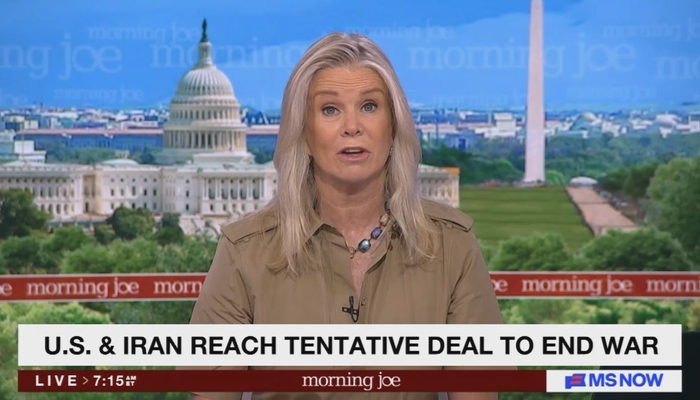
In her way of a conclusion to the Iran War, which seemed poised to end after a negotiated deal ahead of President Trump’s G7 world leader visit to France, frequent Morning Joe guest and BBC U.S. special correspondent Katty Kay said the War with Iran might push more countries to get nukes, like… South Korea.
While her thought on the United Arab Emirates and Saudi Arabia shifting towards nuclear weapons might have made sense, she decided to lump South Korea and Japan into the equation, two countries that already would be protected under the U.S. nuclear umbrella as military allies.
Saudi Arabia and the UAE were also allies, who would be protected by the US military anyway, as seen during the war of the past months.
Frequent Morning Joe guest Katty Kay's Iran War Conclusion: South Korea, Japan, and Saudi Arabia may develop nukes.
The Saudi mention makes sense, but... South Korea and Japan? pic.twitter.com/c0k6blAdNy
— Nick (@nspin310) June 15, 2026
Host Joe Scarborough asked Kay, in future history, “whether this war stopped Iran from gaining nuclear weapons or not will ultimately be how it will be measured?”
Kay framed her answer in a nuclear lens entirely, and claimed the war, in which the U.S. bombed a country, Iran, harshly for a long period of time, especially at the start of the war, would lead to more nuclear programs around the world:
Look, I think we might even take it one step further, Joe, and look, not just at Iran, but whether this war in some way contributes to making the world a less safe place because it ushers in a period of nuclear proliferation around the world.
She first started her answer with the possible thought of nuclear development in Middle East allies Saudi Arabia and the UAE, which made some sense, as their regional enemy, Iran, will seemingly remain a large threat if they do not hold their end of the new negotiated deal years down the line.
But as she expanded her answer, Kay still had not brought up any enemies of America and she instead mentioned allies of the U.S. on the coast of the Pacific Ocean:
You can look at countries like South Korea, Japan, the Kingdom of Saudi Arabia, the UAE, how many countries around the world that have been happy to pull back from having nuclear weapons up until now may look at what happened to Iran and think to themselves, you know what?
What happened to Iran did not happen to North Korea. And what's the difference? North Korea has a nuclear weapon, and Iran had not actually developed one.
As a correspondent for the BBC, maybe Kay should have been updated on reporting from the BBC on a 2023 deal for South Korea to be protected by U.S. nuclear submarines. As for Japan, they were also protected by US nuclear weapons, as said in a statement their foreign ministry released just a week ago.
So, in all, Kay believed the bombing of an enemy country, Iran, over nuclear weapons, which the BCC reported had left much damage to 50 Iranian military bases, will lead to US allies making nuclear bombs, even though they were protected by U.S. weapons?
Just a normal start of the week to a program that just saw its show cut by an hour.
The transcript is below. Click "expand":
MS NOW’s Morning Joe
June 15, 2026
7:15:18 AM Eastern
(...)
JOE SCARBOROUGH: But do you agree with John that, at the end of the day, in the grand sweep of history, if whether this war stopped Iran from gaining nuclear weapons or not will ultimately be how it will be measured?
KATTY KAY: Look, I think we might even take it one step further, Joe, and look, not just at Iran, but whether this war in some way contributes to making the world a less safe place because it ushers in a period of nuclear proliferation around the world.
I think America has done such damage to its standing as a provider of security for countries around the world. I mean, just if you were sitting in Dubai or Abu Dhabi today, you would have serious questions about whether you could rely on the United States long term, and you might have more questions about whether, actually, would I be better off having a nuclear weapon myself?
You can look at countries like South Korea, Japan, the Kingdom of Saudi Arabia, the UAE, how many countries around the world that have been happy to pull back from having nuclear weapons up until now may look at what happened to Iran and think to themselves, you know what?
What happened to Iran did not happen to North Korea. And what's the difference? North Korea has a nuclear weapon, and Iran had not actually developed one.
So, my concern about what we have just gone through for the four months is partly what it's done to the global economy, what it's done to some people in the world's poorest countries is horrifying because of the cost of gas and the cost of fertilizer in terms of real lives. But looking forward, I think there is a grim chance that this has ushered in a period of more nuclear proliferation and therefore less security for the world, even beyond the question of what happens to Iran's nuclear program.
(...)








 New Posts (Home)
 ChatBox
 Popular Posts
  Game Zone
 Top PodCasts