www.dailysignal.com
Alaska Is More Than a Theme Park With Moose and Bears
Alaska is unlike any other state in the country. And when I say that, I’m not referring to its size or its natural beauty or even its resource abundance—although all three are relevant to the discussion.
Rather, what I mean is that Alaska is different from the other states in that everybody, everywhere, thinks they get to have a say in what happens there.
People in Montana, for example, don’t spend hundreds of thousands of dollars fighting to keep the people of Massachusetts from approving new businesses or utilizing their state’s physical assets.
People in Texas don’t organize groups and found nonprofit organizations to interfere in and oppose new development in Alabama, despite never having been there or only having visited for a football game or two.
For the most part, the states have a certain amount of autonomy over their own internal affairs. Of course, the federal government is often intrusive and overweening, but beyond that, states are generally left alone to govern themselves and their activities. Except Alaska.
Now, to be fair, a big part of this is the fact that the rest of the people in the country do “own” a larger chunk of Alaska than they do of other states—at least nominally. Roughly two-thirds of the state is federally owned and managed, meaning that about one-third of all federally managed lands are in Alaska, almost four times as much land as the state with the second-largest federal plot (Nevada).
Certainly, that gives people the impression that Alaska belongs to them at least as much as it belongs to the Alaskans.
A bigger part of the issue here, though, is that people tend not to think of Alaska as a “real” place where real people live, work, start businesses, and try to experience the American dream.
Despite being larger, geographically, than the next three largest states (Texas, California, and Montana) combined, Alaska has the third-smallest population in the nation. Couple that with the fact that it’s an extremely popular vacation destination and the subject of innumerable nature documentaries and reality shows, and people tend to think of it as little more than a massive entertainment experience, a theme park with bears and moose.
They don’t really care about how Alaska’s resources or the effort that its residents put into developing them. They only care that the fishing and the hunting and the big-game watching remain undisturbed long enough for them to visit—or visit again, as the case may be.
Consider that the Pebble Mine project in the Bristol Bay region of the state is estimated to hold the second-largest deposits of copper and gold in the entire world, but its development has been halted time and again, largely because out-of-state interests worry that mining there could maybe, possibly, theoretically disturb the salmon, herring, and rainbow trout fishing nearby.
In 2020, the Trump administration killed the permits to begin development on the Pebble Mine, in part because Donald Trump, Jr. and Tucker Carlson—the former of which likes the fish there—publicly objected to the project, despite the Army Corps of Engineers having determined that it would have “no measurable effect” on fish populations.
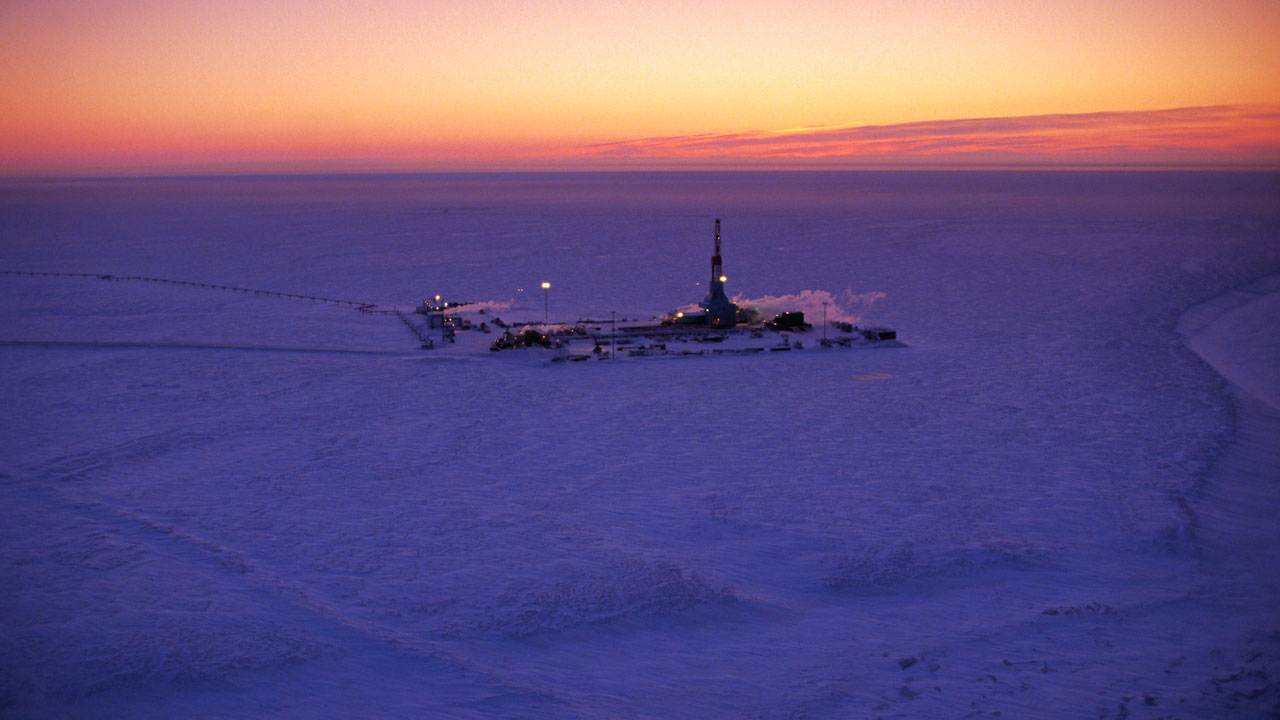
The same is true of the interminable debate over oil drilling in the coastal plain of the Arctic National Wildlife Refuge (ANWR). Although the plain is home mostly to massive swarms of mosquitoes and other insects, its development has been debated and delayed for decades by out-of-state environmental activists, most of whom have never been to Alaska and all of whom think they know better than the state’s residents and mineralogical experts.
Next week marks the first anniversary of the launch of a financial product as unique as Alaska itself, an investment fund designed specifically to do two things to alleviate the impacts of the economic neglect created by outsiders’ treatment of the state: take advantage of the underinvestment in Alaska’s immense resources and opportunities that are typically overlooked because of politically animated opposition from outside the state; and provide investment dollars for the state’s vital but otherwise under-capitalized businesses.
That fund—The Frontier Economic Fund (AKAF)—was developed by Derek Kreifels of Prospr Aligned, in conjunction with Alaska’s business interests, and is managed by ETF and portfolio experts at Vident Asset Management. It is described on its website as “An ETF designed to help support resilient growth and opportunity within the Last Frontier”—i.e., to combat the perception that Alaska is just Disneyland on steroids.
AKAF tracks the Alaska Last Frontier Index—a rules-based, tier-weighted index of roughly 150 companies selected based on the extent of their business activities connected to Alaska: operational presence, natural resource utilization, local employment, capital investment, and participation in state-sponsored initiatives. The index methodology is designed to recognize the importance of companies doing business in the state and even motivate them to expand their presence there.
Unsurprisingly, given Alaska’s resource profile, the portfolio is heavily weighted toward industrials (35%), consumer discretionary (18%), energy (17%), and materials (12%). Top holdings include ConocoPhillips, Exxon, SLB, Halliburton, Baker Hughes, Delta, Alaska Air, UPS, FedEx—companies with significant Alaskan operations. It also includes smaller Alaska-specific plays like Northern Dynasty Minerals (the aforementioned Pebble Mine), Trilogy Metals, Novagold, Pantheon Resources, and several junior miners with Alaskan exploration projects.
As I said, AKAF is distinctive. When it was launched, the state’s then-Commissioner of Revenue, Adam Crum, described it as “prioritizing our top economic sectors including energy development, mining, tourism, cargo, transportation, and retail.” The fund’s launch was also timed to take advantage of the federal government’s recent interest in enabling the development of the state, exemplified in President Donald Trump’s January 2025 executive order, “Unleashing Alaska’s Extraordinary Resource Potential.”
Additionally, the fund serves as an unofficial embodiment of the pushback against ESG (environmental, social, and governance investing), the anti-democratic use of capital markets to advance the political predilections of a small, largely leftist group of investors and financial gadflies.
Given this last bit, AKAF has frustrated ESG supporters. This only makes sense, of course. ESG interests do not align with investors’ interests. Nor, for that matter, do they align with the interests of Alaskans. For this reason, the index excludes companies that have policies or made statements hostile to development in the state or that conflict with the best interests of the state’s residents, making an implicit but undeniable statement against politicizing investments.
Opportunity abounds in Alaska, yet it has been mostly overlooked and undermined by personal and political considerations of people and organizations from outside of the state. Creating an investment product that rebalances the scales and puts the focus back on development, profit, and shareholder returns is, in many ways, the opposite of politics. With returns of roughly 33% since inception (an admittedly short timeframe), AKAF makes that case for itself.
We publish a variety of perspectives. Nothing written here is to be construed as representing the views of the Daily Signal.








 New Posts (Home)
 ChatBox
 Popular Posts
  Game Zone
 Top PodCasts