www.dailywire.com
America Turns 250. So Where Are The Patriotic Movies?
This article is part of Upstream, The Daily Wire’s new home for culture and lifestyle. Real human insight and human stories — from our featured writers to you.
***
As America celebrates its big birthday this summer — writing from across the pond to wish you “happy Semiquincentennial,” I must say you look remarkably good for your age — it is worth taking a moment to consider that such a milestone anniversary is being ignored by this summer’s crop of blockbuster movies. Aside from the “blink-and-you’ll-miss-it” three-day limited release of Hillsdale’s documentary “Revolutionary America,” and the Revolutionary War-adjacent “Young Washington,” which depicts the nation’s first president learning his soldiering as a British subject in the French and Indian War, our movie theaters this summer will be free of tricorn hats and flintlock pistols. Which is rather a shame when you think about it, given the significance of this year.
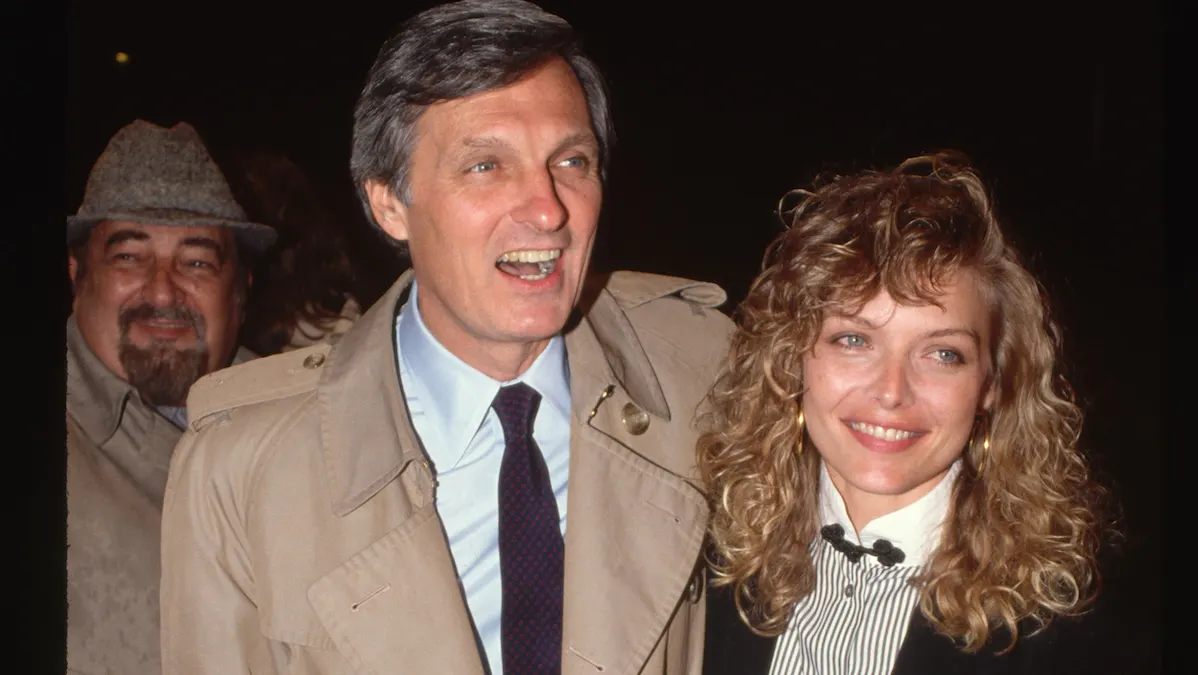
That wasn’t the case back in 1986, when to mark America’s less catchy 210th birthday, Alan Alda wrote, directed, and starred in “Sweet Liberty,” a charming little film about an idealistic history professor watching with growing dismay as a Hollywood film crew arrives in his small town and proceeds to turn his book on an obscure Revolutionary War battle into a trashy crowd-pleaser. Seeing how little the film’s director and screenwriter care about historical accuracy, Alda’s character offers to rewrite the screenplay to keep the film’s story at least a little closer to actual historical events. He ends up falling in love with the actress played by Michelle Pfeiffer, who is cast as the loyal wife of a patriotic hero off fighting elsewhere. Michael Caine stars as a philandering British movie star playing the film’s token baddie, a Redcoat general trying to seduce Pfeiffer’s character while her husband is away fighting.
The movie itself, though not a classic, is similar in tone to other movies Alda wrote and directed in the ’80s, sort of Woody Allen-lite comedies about relationships and middle-class neuroses. But Alda’s charm as an actor, along with the cast he assembled for “Sweet Liberty,” makes this film eminently watchable, especially at the moment.
The film satirizes those historians who look to the past and cannot help but idealize it, and it honors the uncompromising truthfulness we should bring to our depictions of the past. It also savagely mocks Hollywood’s self-importance and sense of reckless entitlement. Surrounded by a film crew that cares only about making a brainless popcorn movie, which the director sums up as containing three plot-points: “defying authority, the destruction of property, and people taking their clothes off,” Alda’s appalled historian finds unlikely allies in the local band of historical reenactors hired as extras to beef up the film’s battle scenes.
These reenactors are the comic relief of the movie in their earnest fussing over costumes and obsession with the 14 different firing positions on a musket, but they are also its beating heart through their reverence for the country’s past. “Sweet Liberty” ends with Alda and the reenactors rebelling against the bullying Hollywood movie machine, along with its condescending professional stuntmen, all of whom are playing Redcoats, by changing the film’s final battle scene so that it correctly retells the historical events.
Another thing the film does, though Alda could not have known it at the time, is anticipate the kind of creative environment from which Mel Gibson’s bombastic blockbuster “The Patriot” sprang. Now, as a British historian, I am sure it may appear that I am writing from a place of “unconscious bias” in my objection to “The Patriot.” But I assure you my reasons are professional and not (purely) patriotic. Scores of distinguished American historians joined British voices in crying foul over the film’s largely invented depictions of the Redcoats as murderous Nazis. It should be noted that the screenwriter, Robert Rodat, had just been Oscar-nominated for his screenplay for “Saving Private Ryan” and was essentially told to repeat the formula for the Revolutionary War. For all its stirring imagery — who can forget Mel Gibson brandishing his tomahawk — the film turned out to be exactly the kind of historically illiterate crowd-pleaser “Sweet Liberty” had parodied.
One of the most telling things about “Sweet Liberty,” however, is the snapshot it gives us of the culture scene 40 years ago, when Hollywood could laugh at itself, something that feels impossible to imagine now. Alda’s film also reminds us of a time when the Revolutionary War was such a safe topic that he could choose it as the backdrop for his frothy comedy. There is an ease and innocence in the references to the 1770s, which feels hard to picture in the ruthlessness of the post-“The 1619 Project” world. In Alda’s 1980s, the American Revolution was not yet a battleground of the culture wars but something that genuinely united Americans.
In Britain, we have historical reenactors who recreate the key battles of the English Civil War, our own struggle against tyrannical royal authority, which took place almost 150 years before the Revolutionary War. Our reenactors, called the Sealed Knot, are similarly passionate about costumes, cannonballs, and muskets, and they work to keep the knowledge of our Civil War alive. But the sad truth is that too few people care anymore this side of the Atlantic.
Our Civil War had been fought over ideals that are strikingly similar to those of the American Revolution, and much of the language used by the framers of the Declaration of Independence was inspired by legal documents written a century earlier as English Parliamentarians put King Charles I on trial for tyranny. In 1786, John Adams and Thomas Jefferson even took a week-long road trip to visit the battlegrounds of the English Civil War, rather like we may visit key sites of the American Civil War, or cemeteries in mainland Europe from the two World Wars. They wanted to pay tribute to that “holy ground” where a previous century’s soldiers had sacrificed everything in the cause of freedom. Yet Adams was shocked at how quickly the English were losing interest in their own history, writing in his diary: “Do Englishmen so soon forget the ground where liberty was fought for?” Watching Britain today going through a profound identity crisis, I think Adams may have had a point.
Maybe one reason I have always had such affection for America is that you do care about your history, even if you may not have as much of it as we Europeans do. But what you don’t have in quantity, you make up for in quality. Which is why, for all their twee silliness, I will love thinking about those faithful reenactors parading in small towns across America this summer. They are keeping alive the memory of an ideal that was worth dying for. Even if we can laugh at them for having period-correct breeches, knowing all 14 firing positions on a musket, and matching the theme-park quality of a place like Colonial Williamsburg, there is something essential to a nation’s future health in the way it cares about its past.
So happy birthday, America! I hope you have a great celebration and eat way too much cake and ice cream.
***
Bridget Riley studied modern history at Oxford and completed a Ph.D. in Medieval history at the University of Reading. She writes on history, culture, and the philosophy of religion.








 New Posts (Home)
 ChatBox
 Popular Posts
  Game Zone
 Top PodCasts