www.thegospelcoalition.org
What Do I Owe My Aging Parents?
There’s no cookie-cutter approach to honoring aging parents. Most senior citizens say they’d like to stay in their own home as they age. When family members live nearby, simply picking up groceries and cutting the lawn may be all that’s needed. But the financial and logistical challenges increase as distance grows. Furthermore, an aging parent’s desires sometimes don’t line up with his or her declining physical and mental capabilities.
Christians know we have to honor our parents, but we need help understanding what that looks like. That challenge will only grow as the average age of the U.S. population continues to rise.
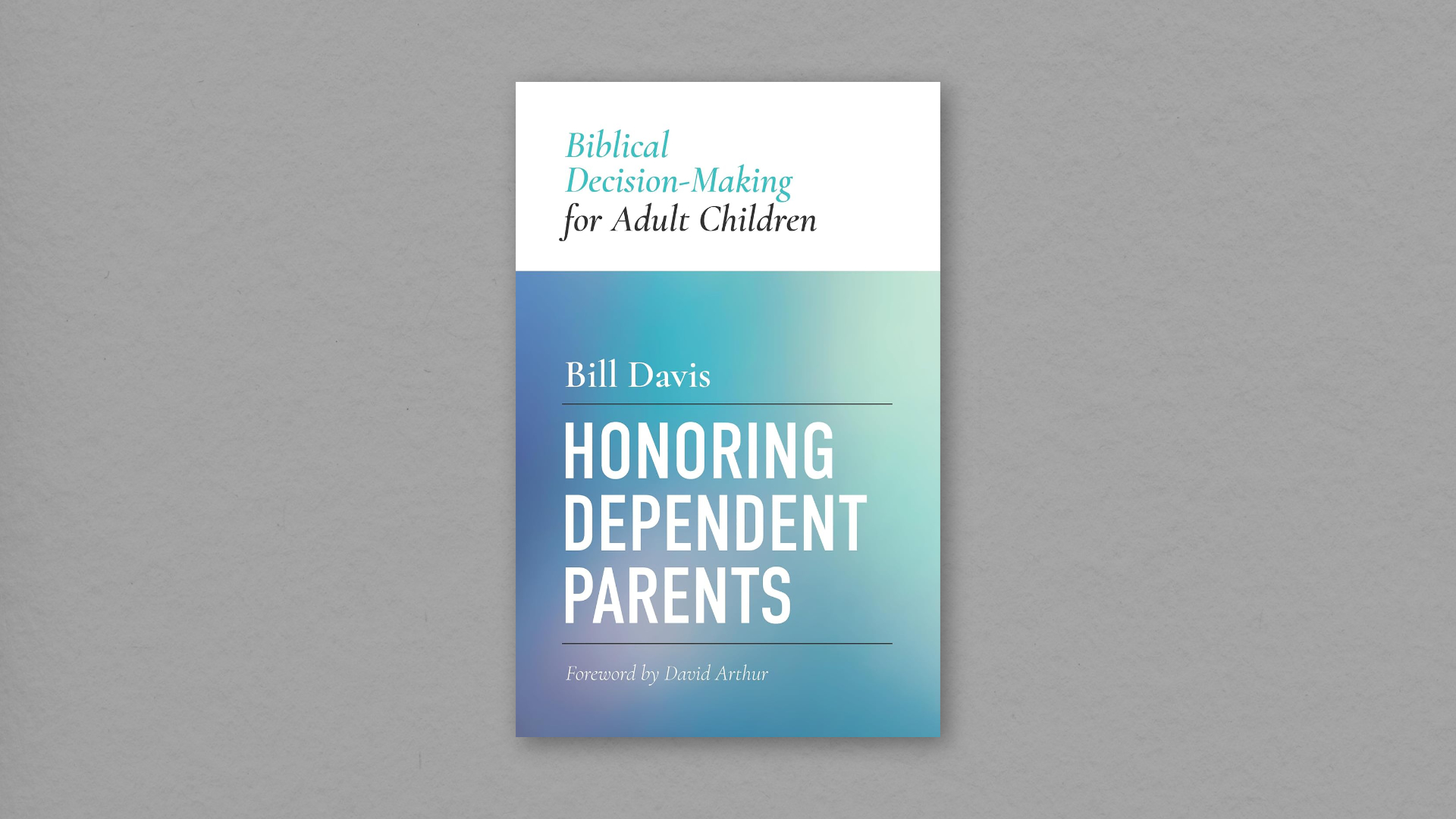
In Honoring Dependent Parents: Biblical Decision-Making for Adult Children, Bill Davis, professor of philosophy at Covenant College, offers wise advice for fulfilling the fifth commandment for aging parents in a world that doesn’t value dependency. He covers issues that range from dealing with financial challenges to coping with changing personalities to forgiving past abuse. The result is a book that provides helpful principles for navigating elder care. Davis challenges readers in many areas without binding the conscience on disputable matters.
Tell the Right Story
True obedience always begins with the heart. It’s not enough for us to go through the motions of honoring our parents; that honor needs to flow from our attitude toward them.
It’s not enough for us to go through the motions of honoring our parents; that honor needs to flow from our attitude toward them.
Davis identifies several common narratives that adult children adopt toward caring for their parents. The additional responsibility of caring for an aging relative, which often falls on adult children during the years they’re raising their own children, can make people bitter toward the circumstances or the elderly parent who needs care. But feelings of victimization won’t lead to honor for dependent parents.
Yet bitterness isn’t the only dangerous cultural narrative. It’s common in our culture for adult children to speak of “parenting their parents” as if the roles have reversed. Davis argues that the “parent-as-child” story is “tempting because it makes love the central motivation, and adult children who seek to honor their parents are typically motivated by love” (24).
However, the “parent-as-child” narrative fails to capture the true nature of the changing relationship. For example, a mother has the responsibility to discipline a toddler but not her aging father. And a son has no right to assert his preferences (however efficient or seemingly noble) above what he clearly knows his elderly mother would have chosen when she still had all her faculties.
Instead, Davis argues, adult children need to keep the gospel story in mind as they care for dependent parents. Caring for needy parents is a way of serving Jesus and should be done in an attempt to push back the effects of sin while fulfilling God’s command to honor a parent who, by our world’s standards, may not seem worthy of honor.
Honor the Best Version
Cultural expectations vary with regard to what honoring parents looks like. I went to seminary with a middle-aged man who returned to his home country halfway through the semester because his parents requested it. There was no pressing need, but in his mind, honoring his parents meant immediate obedience no matter the cost.
There’s a healthy instinct in that response, which is much more common in traditional cultures, but it doesn’t take into account the way sin can distort people’s desires.
Parents are sinful humans too. Sometimes their desires are contrary to God’s calling on their children’s lives. Jesus made it clear that gospel obedience sometimes requires leaving family obligations behind (Luke 9:59–62).
Davis makes it clear that the command to honor our parents doesn’t require children to submit to abuse. He tells one woman with a sharp-tongued mother, “Honoring your mother does not obligate you to be her punching bag” (107). But abuse isn’t the only grounds for not complying with a aging parent’s desires. For example, he argues that it’s OK to tell your aging parent that you aren’t financially able to pay for multiple streaming services so he can watch every sporting event he desires.
The command to honor our parents doesn’t require children to submit to abuse.
Sometimes the effects of sin are due not to our loved one’s desires but to the ravages of the fall. When a parent’s personality changes due to dementia or normal cognitive decline, we aren’t honoring her when we take her desires at face value. Instead, Davis argues, we should seek to honor the best version of our parents.
Should we tell a father with dementia that his wife has died, putting him through a cycle of grief again? The amount of truth we provide in that situation should depend on what we know of our parent. Davis argues, “You can honor him by reviewing what he taught you about how to use words in your relationships with others” (112). A true but incomplete answer to a persistent question may be the best way to a lonely father.
How can you make a medical decision for someone without an advance medical directive? Caregivers should seek “an outcome that he would have sought when he was thinking clearly” (129). The goal is to honor dependent parents by doing what would have most closely aligned with their desires when they were at their best.
Navigate Ambiguity
Other than affirming our obligation to honor our parents, there are no absolutes in Honoring Dependent Parents. In some cases, as with his openness to using AI companions for the elderly, I think there’s a need for further ethical consideration. However, Davis has served the church by applying biblical principles to a wide range of real case studies.
As much as we like to have black-and-white rules for faithful living, honoring dependent parents comes with a lot of ambiguity. As Davis notes, “The Bible doesn’t give a formula. Walking in a manner worthy of the gospel requires wisdom, and wisdom requires spiritual discernment” (154). He frequently reminds caregivers to seek counsel from Scripture and from the leaders in their local church as they navigate new and ever-changing responsibilities. As a pastor, I want to help members of my church make faithful decisions.
The number of adults caring for an aging relative has grown significantly in recent decades. I regularly recommend books like Ben Mitchell’s Bioethics and Medicine, Whitney Pipkin’s We Shall All Be Changed, Karen Martin’s Memorable Loss, and Kathryn Butler’s Between Life and Death for those confronting end-of-life issues. Honoring Dependent Parents should become a standard resource for Christians learning to care for the parents who can no longer take care of themselves.








 New Posts (Home)
 ChatBox
 Popular Posts
  Game Zone
 Top PodCasts