www.optimistdaily.com
The skin compound that makes some more delicious to mosquitoes than others
BY THE OPTIMIST DAILY EDITORIAL TEAM
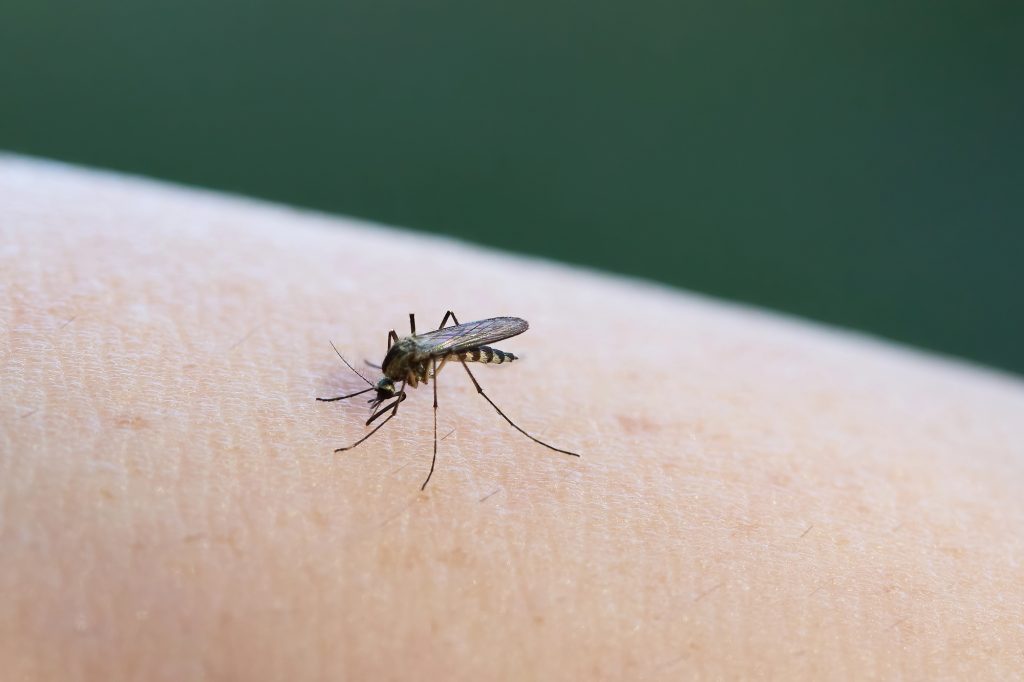
Mosquitoes don’t pick targets randomly. They run a multi-stage sensory scan, and new research is beginning to explain what that scan detects and why it favors some people over others.
“It’s not a misconception: mosquitoes are attracted to some people more than others,” said Frederic Simard of France’s Institute of Research for Development. “But we are not all magnets all the time.”
How mosquitoes home in on a target
The process works in stages. Carbon dioxide is the opening signal: female mosquitoes, which are the only ones that bite, detect exhaled CO2 from dozens of meters away, and it triggers their approach. Within about 10 meters (roughly 33 feet), odor takes over, blending with the CO2 signal to sharpen the attraction. Closer still, body heat and humidity come into the picture once the mosquito is within striking distance.
Swedish researcher Rickard Ignell, senior author of a recent study on the subject, describes CO2 as the first trigger: “We have known for over 100 years that mosquitoes are attracted by the carbon dioxide that we exhale. This is the first signal that triggers their behavior.” Within a few meters, he said, “mosquitoes will start detecting our odor, and in combination with carbon dioxide, this attracts them even more.”
The 27 compounds mosquitoes use to find you
Humans emit between 300 and 1,000 different odorous compounds. Ignell’s team set out to narrow that down. Releasing Aedes aegypti mosquitoes, the species responsible for spreading dengue and yellow fever, among 42 women in a lab, they identified 27 compounds the insects key in on.
One compound did more work than the others: 1-octen-3-ol, sometimes called mushroom alcohol, which forms during the breakdown of sebum, the oil our skin produces. The women the mosquitoes most preferred, including pregnant women in their second trimester, produced notably more of it. The degree of sensitivity surprised the researchers. “That even a small increase of this compound made a difference came as a surprise,” Ignell said.
What doesn’t determine who gets bitten
Not everything people believe about mosquito preference holds up. Blood type “has no scientific basis” as an attractant, Simard said; the few studies suggesting otherwise involved very small samples. Skin color, eye color, and hair color are also irrelevant.
What does matter beyond the odor compounds is the microbial ecosystem on the skin. “A soup of molecules produced by our microbiota is more, or less, appealing to mosquitoes,” Simard explained. The microbial communities living on skin shape each person’s odor profile, which is why two people in the same environment can have completely different experiences with mosquitoes.
Why beer makes you more attractive to mosquitoes
Drinking beer genuinely increases mosquito attraction, and the evidence is solid. Beer raises body temperature, increases exhaled CO2, and changes skin odor, three of the signals mosquitoes track. In a study in Burkina Faso where volunteers drank beer on one occasion and water on another, the Anopheles mosquito, which spreads malaria, showed a clear preference for the beer drinkers. A 2023 study in the Netherlands, with 465 volunteers, found that people who had drunk beer in the previous 24 hours were 1.35 times more attractive to female Anopheles mosquitoes.
Why this research has become more urgent
The stakes have grown as climate change pushes disease-carrying mosquito species into new geographic ranges. The tiger mosquito, a vector for the chikungunya virus, has expanded significantly northward in Europe; last year, chikungunya reached France’s Alsace region for the first time. “This risk is affecting more and more people,” Simard said.
Knowing which compounds are doing the work points toward better repellent formulations and clearer ways to identify who’s most at risk. The near-term advice is what it has always been: loose-fitting clothing, mosquito nets, repellent, lighter meals, and less alcohol when mosquitoes are active. The science behind those recommendations is now considerably more precise.
Source study: Scientific Reports— Age-dependent perception of floral emissions and the role of CO2 in regulating nectar-seeking in mosquitoes
Did this solution stand out? Share it with a friend or support our mission by becoming an Emissary.The post The skin compound that makes some more delicious to mosquitoes than others first appeared on The Optimist Daily: Making Solutions the News.








 New Posts (Home)
 ChatBox
 Popular Posts
  Game Zone
 Top PodCasts