www.dailysignal.com
Abraham Lincoln and America’s Electric Cord
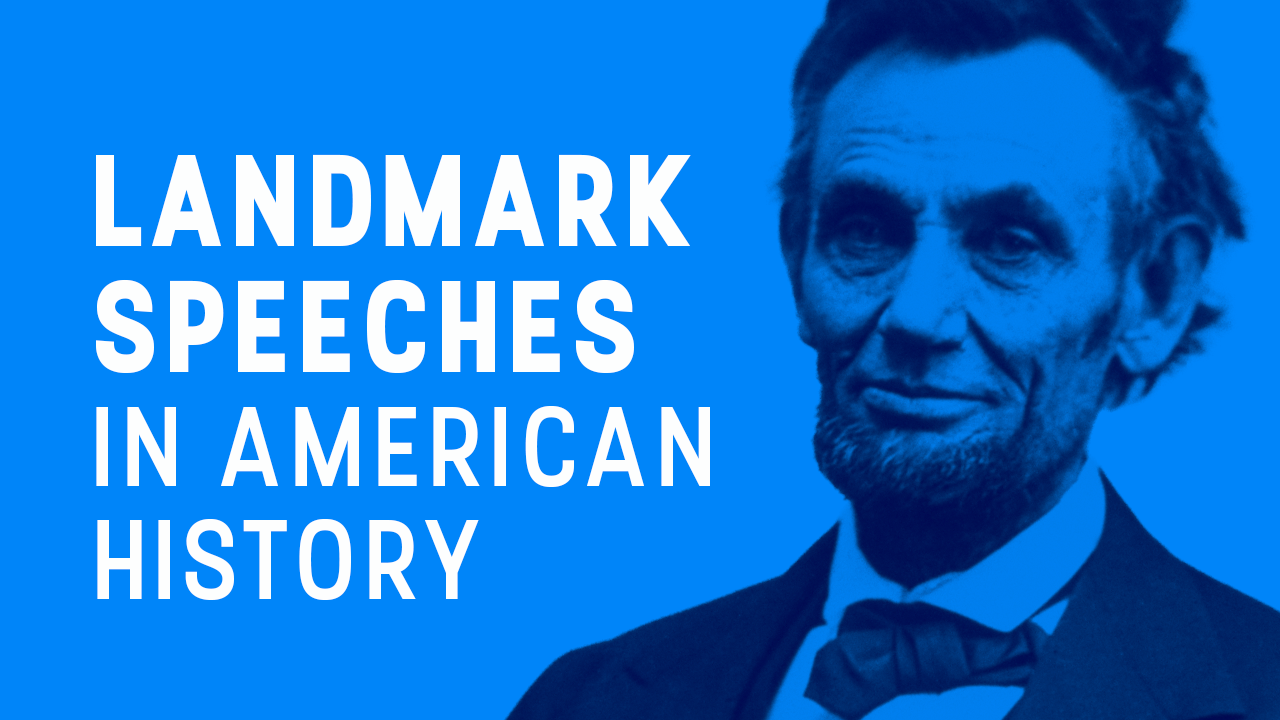
The debates between Abraham Lincoln and Sen. Stephen Douglas not only rank amongst America’s landmark speeches but could be a primer for political philosophy students. In campaigning against one another, the rising statesman and elder politician tackled some of the most essential questions of morality and politics.
What does it mean to be human? To be a citizen? Who decides? For Lincoln, the answers revolve around the logic of the Declaration of Independence.
While the Illinois representatives formally debated seven times, they also delivered rival remarks in Chicago on July 4, 1858. Lincoln’s address is now remembered as his “electric cord” speech. In it, Lincoln argued that the principle that animates and unites Americans as a people across generations is “all men are created equal.”
Denouncing the Dred Scott decision (in which the Supreme Court stated that slaves were not citizens), Lincoln explained the meaning of that maxim: “I think the authors of that notable instrument intended to include all men, but they did not intend to declare all men equal in all respects. They did not mean to say all were equal in color, size, intellect, moral developments, or social capacity.”
However, Lincoln argued, they did consider them “equal in ‘certain inalienable rights, among which are life, liberty, and the pursuit of happiness.’ This they said, and this meant.”
Lincoln’s focus on the meaning of equality made sense: it was the crucial issue of the time. New states were entering the union and could sway the country toward freedom or slavery depending on what they allowed within their own borders.
Sen. Douglas cared not whether slavery be voted up or down. For him, “popular sovereignty” meant that the people (or rather a certain segment of the people) of a territory should be able to determine if a state was a free state or a slave state. After all, the majority rules, and America boasts a federalist system. In other words, states could decide the question for themselves.
Lincoln certainly agreed that states should be able to shape local policies. He would not want to interfere with cranberry laws in Indiana or oyster laws in Virginia. But Lincoln objected to Douglas’s view, which seemed to reduce the institution of slavery “as something having no moral question in it.”
While a republic can tolerate all sorts of policy disagreements, it requires unity when it comes to first principles. America had persisted with the tension of slavery for 82 years, but it could only do so because the “public mind did rest” in the belief that slavery was on the “course of ultimate extinction.”
The growing indifference toward, or worse, active justification of slavey, began by John C. Calhoun and furthered by Stepehen Douglas, pulled Lincoln back into the political arena to renew the work of the Founding.
As many did during the beginnings of the country, Lincoln compared the tyranny of a king with slavery: “Turn in whatever way you will—whether it come from the mouth of a King, an excuse for enslaving the people of his country, or from the mouth of men of one race as a reason for enslaving the men of another race, it is all the same old serpent.”
The analogy was particularly apt for a speech delivered amidst Independence Day festivities.
According to Lincoln, those celebrations are “to remind ourselves of all the good done in th[e] process of time of how it was done and who did it, and how we are historically connected with it.”
Eliciting a peoples’ common history and origin story inculcates gratitude. Citizens reflect on how far we have come as a nation. This provides the opportunity to be thankful for all the people who have contributed to America moving towards justice and the institutions that contemporaries benefit from but did not build by themselves. Civic traditions foster goodwill and unity towards fellow citizens across generations.
By Lincoln’s time, around half of America’s populace could not trace their lineage to the “iron men” of the Founding. Still, the binding ties of the American people persisted—and would persist for many ages to come.
The American national character is sustained by custom and culture and grounded in principle. Lincoln closed his July 4th speech by reflecting on this reality, and his stirrings in Chicago rank with the Gettysburg Address and Second Inaugural.
While many have no blood ties to the Founding Fathers:
“When they look through that old Declaration of Independence they find that those old men say that ‘We hold these truths to be self-evident, that all men are created equal,’ and then they feel that that moral sentiment taught in that day evidences their relation to those men, that it is the father of all moral principle in them, and that they have a right to claim it as though they were blood of the blood, and flesh of the flesh of the men who wrote that Declaration, and so they are.
“That is the electric cord in that Declaration that links the hearts of patriotic and liberty-loving men together, that will link those patriotic hearts as long as the love of freedom exists in the minds of men throughout the world.”
Today, we celebrate America’s 250th birthday and the principles that, for us, are ever ancient, ever new. We recall them, grapple with their meaning, and hear their murmurings when we fall short of their demands. To be able to do so is a responsibility and a privilege.
So, happy birthday, America. And thank you.








 New Posts (Home)
 ChatBox
 Popular Posts
  Game Zone
 Top PodCasts