reclaimthenet.org
Labour Eyes Social Media Censorship for UK Elections
If you're tired of censorship and dystopian threats against civil liberties, subscribe to Reclaim The Net.
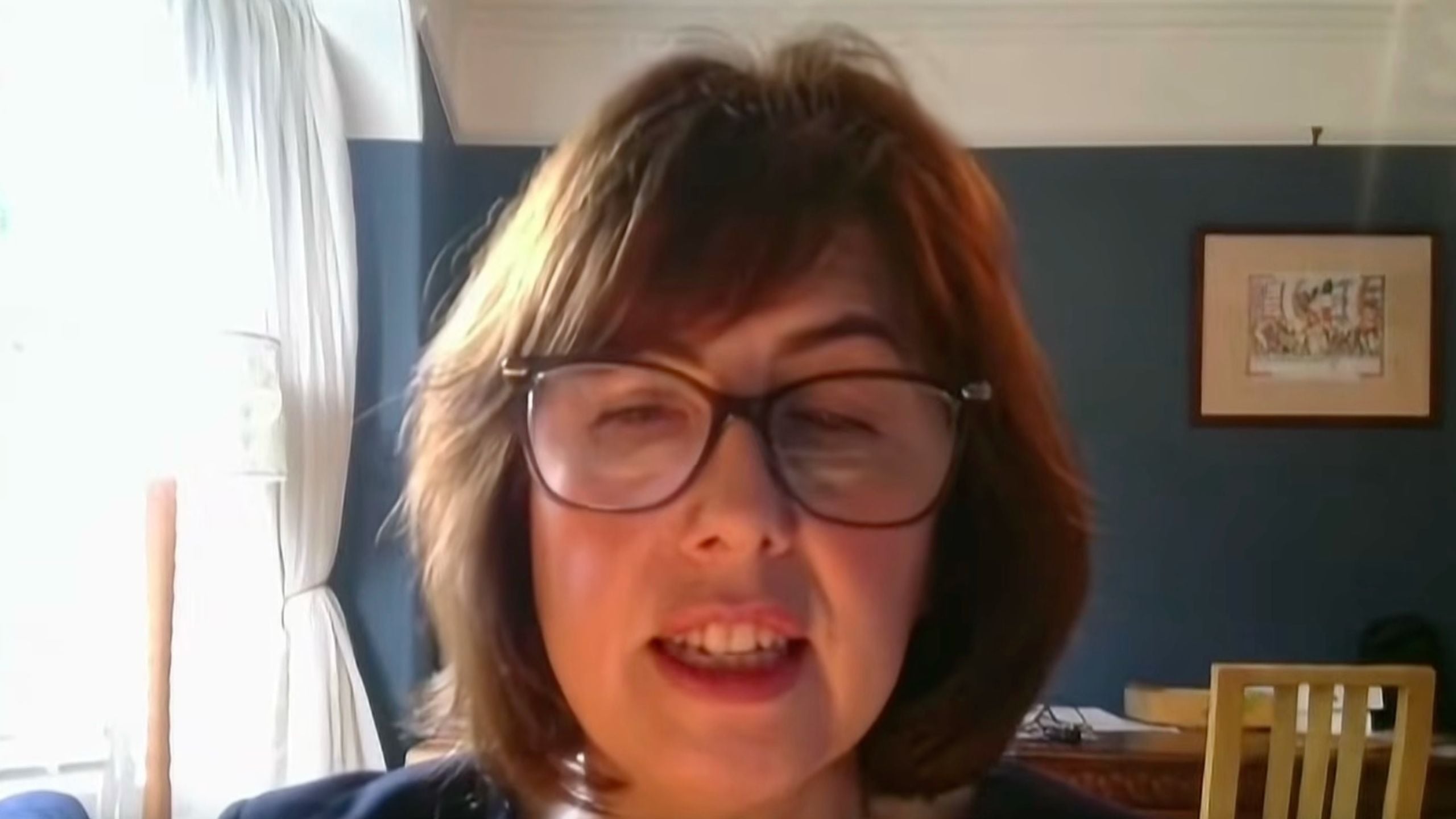
Britain’s Labour Party’s deputy leader wants your social media feed to obey the same election rules that already restrict what British broadcasters are allowed to say. Lucy Powell spent the past week making that case across UK media, and she intends to write it into law.
Her plan borrows from Section 6 of Ofcom’s Broadcasting Code, the regime that governs UK television and radio once an election period begins. Those rules tell broadcasters how much airtime each party and candidate may receive, force them to stay “impartial,” and shut down discussion of election issues entirely on polling day, from the moment polls open until they close. Opinion polls go dark too. Powell looks at that machinery and sees a template for the open internet.
“We absolutely need to strengthen regulation in the social media space,” she told LBC’s Sunday show with Lewis Goodall.
“I’ve got some proposals for doing that, especially when it comes to election time, where you know, as a broadcaster, Lewis, how much you are restricted and regulated during election periods, who you can have on your show, how you have to be impartial, how you have to share information and facts about different people standing for election and so on.”
Social media, she went on, “is where most people get their news and information and are influenced from, is out with that completely.”
Her censorship fix runs through legislation already moving through the House of Commons. “We’ve got an elections bill going through the House of Commons at the moment to strengthen that bill so that social media comes under some of the same requirements during an election period as our broadcasters do.”
The bill she means is the Representation of the People Bill. Powell wants amendments that would police, in her words to Times Radio, “what information and news they can amplify and share during election time if it’s not been checked for its accuracy or balance.”
Someone would have to check. Someone would have to decide what counts as accurate, what counts as balanced, and which posts get throttled for failing the test. Powell has not said who that someone is.
Of course, she frames all of this as protection rather than control. “Freedom of expression is fundamental to our democracy,” she told The Mirror.
“These proposals are not about policing political opinions or censoring legitimate political debate. They are about asking how we can make sure the public can make informed choices based on accurate information.”
The reassurance sits awkwardly next to the request, which is a demand that the state gain power over which political speech spreads during the exact weeks when political speech decides who governs.
Her stated reason is the usual one. “The biggest influence on what many voters see during election campaigns is not a TV news bulletin, it’s social media feeds decided by opaque algorithms, where falsehoods, deepfakes and co-ordinated mis and disinformation can spread at alarming speed, with real-world consequences,” she told The Mirror.
She added that “hostile actors, bad-faith campaigners, and bot farms can be used to distort democratic debate.” Every one of those categories requires a definition, and whoever writes the definition of “disinformation” gets to decide whose posts qualify.
You also won’t be surprised to learn that Powell also made clear she has soured on the platform she most wants to rein in. X is “a platform that increasingly I find to be quite a toxic and difficult environment,” she told Goodall, echoing Cabinet colleague Lisa Nandy’s decision to quit the platform.
A politician who finds a platform toxic while also seeking legal power over what it amplifies during elections invites an obvious question about whose speech ends up targeted.
Powell’s voice carries further than a typical deputy leader’s. She keeps the deputy leadership regardless of who succeeds Keir Starmer, and by the party’s own rules she cannot be fired from it. She is close to Andy Burnham, the frontrunner to become the next Labour leader and prime minister, which puts her in line for a senior Cabinet post. What she wants for the internet is a reasonable preview of what a future Labour government might try to pass.
The amendments themselves have not been filed yet. What already sits on the bill is a proposed requirement that ministers publish a report on foreign platforms, singling out “US-based social media companies amplifying electoral campaign material via algorithms,” along with “any recommendations considered necessary to protect the integrity of United Kingdom elections.”
The Electoral Commission has gone further, urging the government to consider “a new overarching duty on social media platforms operating in the UK.” Each of those phrasings leaves the hard question unanswered. A duty to do what, enforced by whom, measured against whose idea of the truth.
Broadcasters accepted these constraints as the price of a license to use public airwaves. The internet was never that. Extending election-period speech controls from a regulated broadcast channel to the platforms where hundreds of millions of people talk to each other changes what the rule is for.
It stops being a condition of a scarce license and becomes a standing power to decide which political arguments reach voters when the stakes are highest.
If you're tired of censorship and dystopian threats against civil liberties, subscribe to Reclaim The Net.
The post Labour Eyes Social Media Censorship for UK Elections appeared first on Reclaim The Net: Free Speech, Privacy, Digital Rights.








 New Posts (Home)
 ChatBox
 Popular Posts
  Game Zone
 Top PodCasts