www.dailywire.com
That Viral Produce-Washing Hack May Be Doing More Harm Than Good
The internet has video after video of fruit and veggie hauls being dunked in baths of specialty produce wash. What was once a simple rinse under tap water has become a complicated routine fraught with questions about food safety, organic vs. non-organic, and contamination. And after year after year of produce recall headlines, it’s no wonder we’re obsessing over clean produce.
Between pesticides, dirt, and bacteria, there’s a lot that can catch a ride on your produce, but that doesn’t mean the Instagram-chic method is the best one. If you’ve seen the aesthetic videos of rows of berries and peppers washed, diced, and tucked into the fridge, you’re not alone in wondering whether that’s truly the best way to prep produce.
For starters, washing and cutting produce before storing can introduce moisture that grows mold as the produce sits in the fridge. That’s why this method requires eating washed produce soon or ensuring it’s dry and stored with a paper towel to absorb excess water.
But even the process of washing the produce itself is muddled by mixed messaging and arguments over what method is most effective. For sturdier produce such as potatoes, carrots, or beets, a produce scrubber and tap water will clear away most of the dirt. When it comes to clearing away pesticides and bacteria, though, especially on more delicate produce like berries and lettuce, the answer is less clear.
Leafy greens and herbs can hide dirt and grime in pockets and folds, so peeling or cutting open lettuce will help expose any areas that need extra cleaning. However, many lettuce mixes are labeled as “pre-washed” or “triple washed” and do not need to be rinsed again.
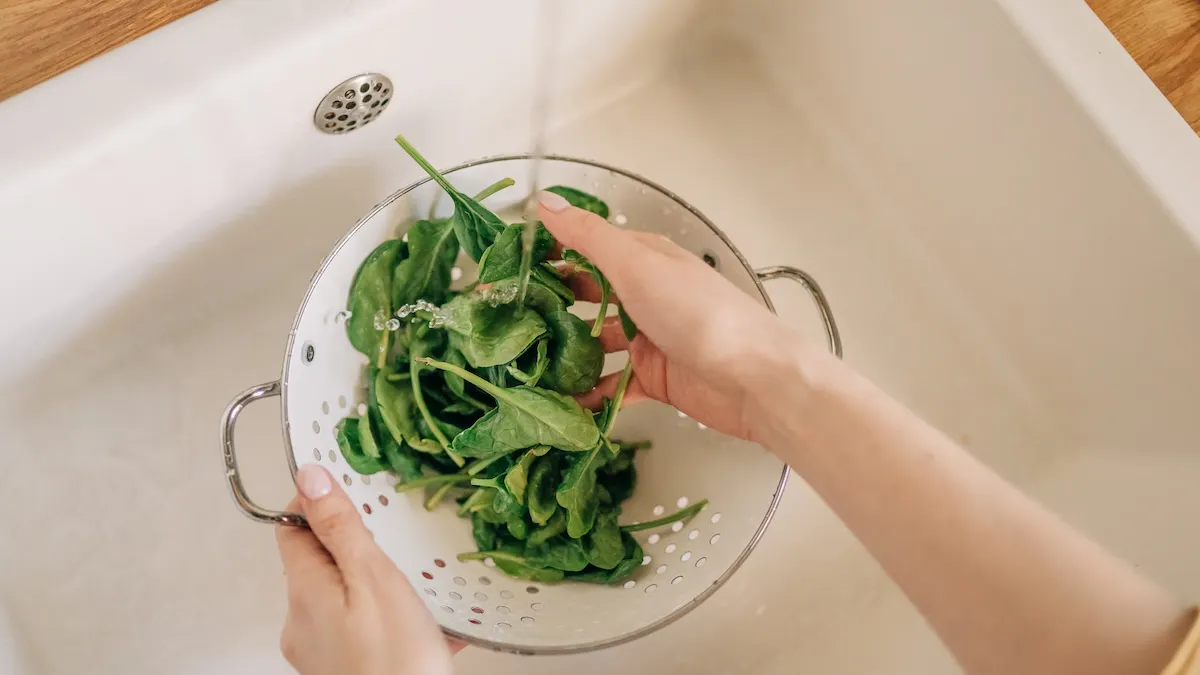
That aside, just about any produce can survive a gentle rinse. I’ve personally had luck washing delicate mushrooms — rather than just brushing them clean — and leaving them to dry longer or cooking out the extra water. Even produce with an inedible peel, such as avocado or melon, can transfer bacteria from the exterior to the interior on a knife’s blade, leading many food safety recommendations to advise washing all produce.
Across the country, produce washes are hitting grocery store shelves, but these rinses are not necessarily safe to eat and may get absorbed into produce during use. Instead, rinsing produce in white vinegar is a safe way to kill bacteria; just follow up with a quick water rinse to get rid of the vinegar flavor and residue.
Pesticides can be more stubborn to remove, but some studies suggest that a 10-minute baking soda soak (1 teaspoon per cup of water) can help remove the pesticides on the surface of produce. There is also some evidence that rinsing produce in vinegar can help remove pesticides. However, neither of these methods is foolproof.
Getty Images
The unfortunate truth is that it’s impossible to remove all dirt, bacteria, and pesticides from fruit and vegetables.
Instead, the most effective method is buying food that starts with less contamination. This means shopping from a local, trustworthy farm or looking for in-season foods. It also means sticking to foods sprayed with fewer pesticides or buying organic. Each year, the Environmental Working Group publishes the Clean Fifteen and Dirty Dozen as buyer guides. The Clean Fifteen includes foods low in pesticide residue, and the Dirty Dozen lists the foods most contaminated with pesticides, according to U.S. Department of Agriculture data. When it comes to making grocery store decisions, the Dirty Dozen are best to buy organic and skip the pesticides altogether, and while the Clean Fifteen are still best to buy organic, they likely carry fewer pesticides if you’re looking to save a few bucks and buy non-organic.
This year, pineapple, sweet corn, avocado, papaya, onion, frozen peas, asparagus, cabbage, cauliflower, watermelon, mangoes, bananas, carrots, mushrooms, and kiwi top the Clean Fifteen. Meanwhile, spinach, kale, collard greens, mustard greens, strawberries, grapes, nectarines, peaches, cherries, apples, blackberries, pears, potatoes, and blueberries landed on the Dirty Dozen.
These lists vary year-to-year. The produce that tends to carry the most pesticides is often not protected by a thick peel: The leafy greens and berries on the Dirty Dozen will carry pesticide residue straight from their thin peels into our stomachs.
In the end, though, the nutrients derived from fresh produce outweigh the risk from potential contamination that sticks on after a good scrub, wash, or soak. Aside from avoiding food on recall lists, staying away from obvious signs of mold or rot, and buying organic, there’s no way to know what produce is safe and what is contaminated. Instead, focusing on what is fresh, in-season, and nutrient-dense goes much further in the health department than any fancy produce wash. When it’s impossible to eliminate all risk, the best we can do is buy organic, rise away the dirt, and enjoy what is otherwise a healthy meal.
***
Jordan Jantz is the assistant editor at IW Features as well as a freelance writer, editor, and website designer.
This article is part of Upstream, The Daily Wire’s new home for culture and lifestyle. Real human insight and human stories — from our featured writers to you.








 New Posts (Home)
 ChatBox
 Popular Posts
  Game Zone
 Top PodCasts