www.dailysignal.com
Virginia’s State of Surveillance
If you sense that somebody’s watching you, you’re not paranoid; you’re a Virginian.
The Web site Deflock.org allows readers to zoom in on a map of Virginia. It currently shows more than 5,500 surveillance cameras operating in the state. Northern Virginia, Richmond, and Hampton Roads are so thoroughly surveilled that they disappear under a blob of overlapping cameras. The map indicates that it would be impossible to drive on most of I-95, I-81, or I-64 without your vehicle’s information being captured.
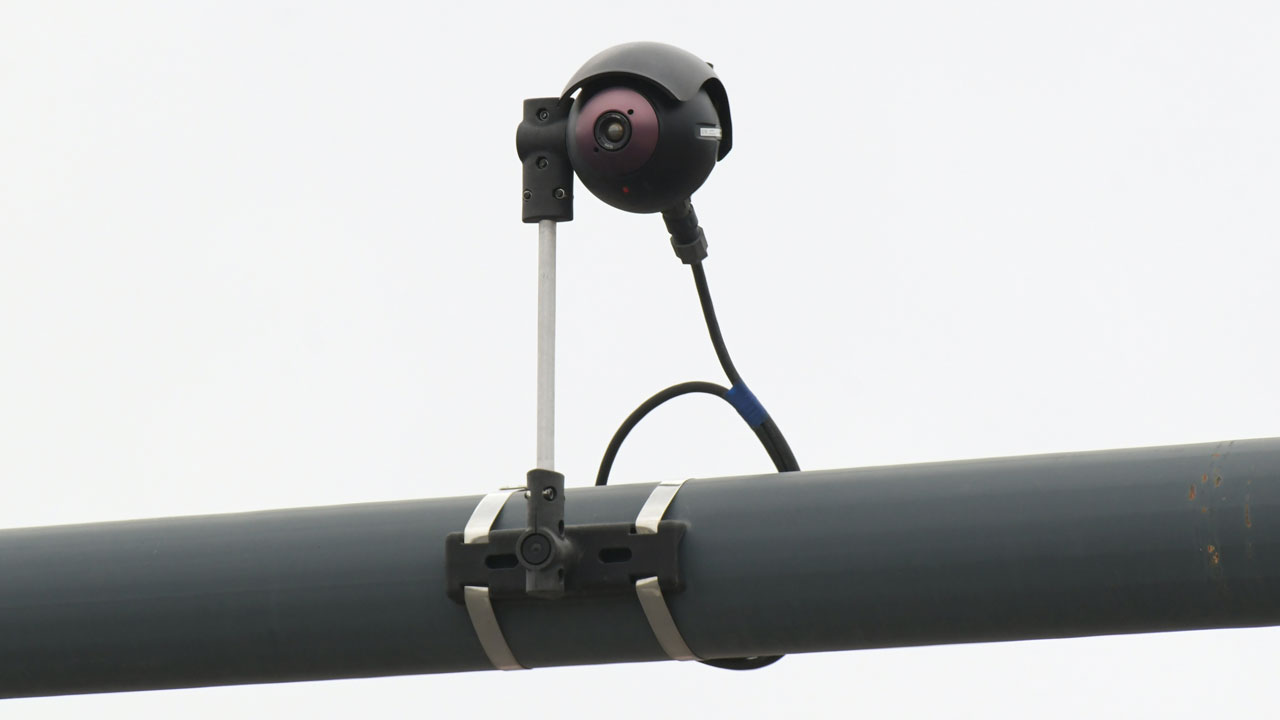
Flock cameras are automated license plate readers (ALPR). They capture images of passing vehicles and can store that information for law enforcement agencies to access.
Rich Tucker/Daily Signal
In a recent piece in the Daily Caller, Rep. Keith Self, R-Texas, warned that the cameras have been stitched together nationwide into “a privatized surveillance network operating with public authority. Congress must act to prevent the federal government from weaponizing these databases against American citizens.”
For their part, Virginia lawmakers have taken steps to limit the ways information collected by the cameras may be used. Under a state law that took effect last year, such data must be deleted after 21 days, and the information can only be used in limited circumstances.
Authorities may use data to investigate alleged criminal violations under state or local law, may use it as part of an active investigation into a missing or endangered person or a person associated with human trafficking, and may use it to help track a possible missing or endangered person, a person with an outstanding warrant, a person associated with human trafficking, or a stolen vehicle or license plate.
However, a new law that took effect this month will allow local governments to use the cameras to catch drivers who run stop signs or fail to yield to pedestrians at crosswalks.
Citizens have the right to ask police forces to release information collected by cameras. Last year, a reporter for Cardinal News set out on a 300-mile trip and tracked himself from jurisdiction to jurisdiction. Along the way, he prevailed in court when the city of Roanoke wanted to withhold its records.
The collection of this information can be controversial. Earlier this year, a federal judge set aside a lawsuit that claimed the cameras violated the Fourth Amendment prohibition against unreasonable searches and seizures. In his decision, however, Mark Davis left the door open for future challenges on privacy grounds.
“Surveillance could become too intrusive and run afoul of [constitutional privacy standards] at some point. But when?” Davis wondered in the 51-page ruling. “While a definitive answer to that question is elusive, what is readily apparent to this Court is that, at least in Norfolk, Virginia, the answer is: not today.”
All the way across the state, many residents in Floyd County tried to raise concerns about the cameras with local government officials. “There was no general announcement to the community that these were going in,” resident Jacey Clay said about the cameras during a recent meeting of the board of supervisors. “This was all done through backroom conversations and agreements and contracts that were signed with private companies without public input.”
The chairman claimed he was powerless. “The Board of Supervisors has no control whatsoever over those cameras,” said Joe Turman, insisting the devices are run by the sheriff’s office.
A cluster of cameras raised concerns in Christiansburg. “It is a little shocking, the fact that they are so common. And it’s hard to have any idea that they’re there,” Justin Whitlock told WSLS. “I don’t feel like we have that much of an issue with crime here as much as some other places,” Jonica Hocker added. “So, I don’t really know. Is it necessary? We don’t know.”
Nearby Martinsville is taking down many ALPRs, but it’s not because of citizen complaints. The city decided it was simply too expensive to operate its 80 cameras, so it will drop to nine. “They’re not going to be as effective, but we hope to keep them as long as we can,” Police Chief Chad Rhoads told WSLS.
The city of Richmond found enough money in its budget to maintain its 99 cameras through 2027. After a number of speakers criticized the surveillance network during a May city council meeting, city lawmakers voted unanimously to spend $1.2 million to maintain the program anyway.
In Roanoke, it isn’t cameras but rather gunshot detectors that have sparked controversy. City Council voted this month to remove all of the devices after lawmakers learned that many had been placed incorrectly. “Unfortunately, a preventable city process failure resulted in a rollout that fueled distrust about our use of public safety technology, and entangled the City of Roanoke in the larger, national privacy debate,” City Manager Valmarie Turner told WSET. The devices will not be relocated unless they are first approved by city council.
Some angry Virginians have taken the law into their own hands. In Suffolk, 41-year-old Jeffrey Sovern is charged with 13 felony counts of destruction of property related to the damage of Flock cameras in 2025. Arlington County police said a pair of cameras were spray painted in late May. They haven’t identified a suspect yet.
“You have every right to change the law and change the allowances, but you have no right to destroy public property,” Sean Kennedy with Virginians for Safe Families warned in an interview with WUSA.
It’s a topic that will be worth watching in the years ahead.








 New Posts (Home)
 ChatBox
 Popular Posts
  Game Zone
 Top PodCasts