www.theconservativebrief.com
TRUMP HITS BACK: Iran Warns ‘Crushing’ Reply
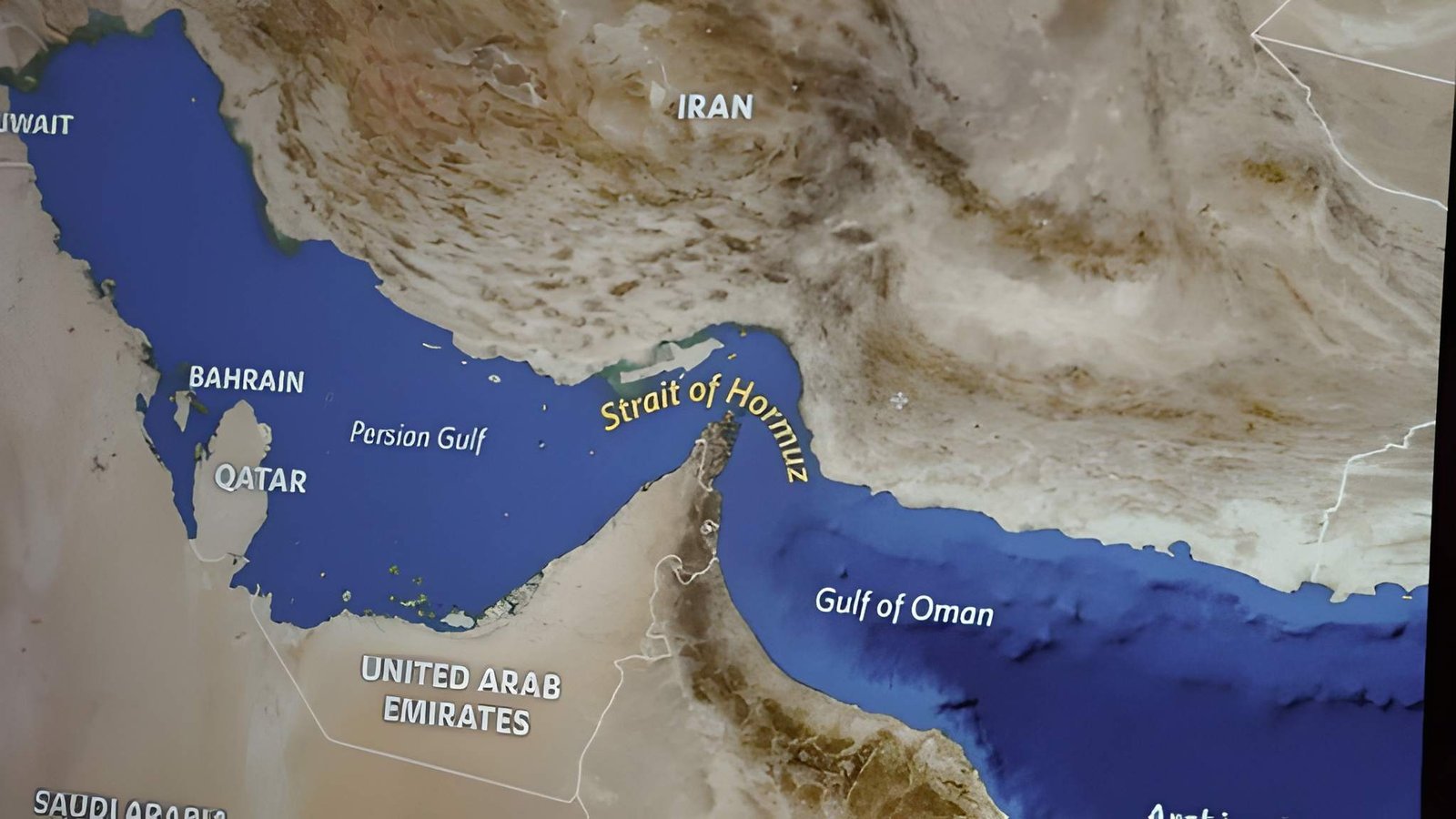
In the latest clash over the Strait of Hormuz, what matters most is not a single volley of missiles or a presidential sound bite, but how both Washington and Tehran now treat attacks on commercial shipping as instruments of leverage in a wider, unfinished war.
Key Points
The U.S. military struck roughly ninety Iranian targets after attacks on three commercial vessels in the Strait of Hormuz, framing the action as protection of “freedom of navigation.”
Iran disputes that it violated a ceasefire, calls the U.S. strikes a breach of a recent memorandum, and promises a “decisive and crushing response.”
Attribution for specific tanker attacks remains murky in public, even as U.S. officials and some regional governments directly blame the IRGC.
The confrontation fits a decades-long pattern: contested incidents at sea trigger rapid military escalation around the world’s most critical energy chokepoint.
Strikes on Iran after Ship Attacks: What We Know
U.S. Central Command (CENTCOM) has confirmed that American forces conducted large-scale strikes on Iranian military targets in response to attacks on commercial vessels transiting the Strait of Hormuz. Public statements and televised briefings describe “powerful strikes” hitting more than eighty, and in some accounts over ninety, locations along Iran’s southern coast and near key port and oil infrastructure. These targets reportedly included air defense systems, coastal radar, missile and drone storage sites, naval facilities, and approximately sixty small boats associated with the Islamic Revolutionary Guard Corps (IRGC). The explicit operational objective, as CENTCOM put it, was to “degrade [Iran’s] ability to threaten freedom of navigation in the Strait of Hormuz” after what it called unjustified aggression against civilian mariners.
The trigger, on the U.S. narrative, was a cluster of attacks against three commercial vessels over July 6–7 in or near the Strait. Reports identify at least one Qatari liquefied natural gas (LNG) tanker that caught fire after being struck, and a Saudi ultra-large crude carrier that was damaged, alongside a third vessel where details remain thinner. These attacks were described by NATO leaders and U.S. officials as a clear violation of a fragile ceasefire arrangement that had been negotiated to reopen the Strait and dial down a wider U.S.-Iran-Israel war.
President Donald Trump, speaking at a NATO summit, declared that the ceasefire with Iran was “over” and justified renewed offensive action on the basis of these ship attacks. In parallel to the strikes, his administration revoked a key waiver that had allowed limited sales of Iranian oil, tightening economic pressure alongside military punishment. From Washington’s perspective, then, the combination of physical attacks on shipping and Iran’s broader threats to treat certain flag states’ vessels as “legitimate targets” in the Strait crossed a red line.
Iran’s Counter-Claim: Ceasefire Violated by Washington
Tehran tells a markedly different story. Iranian officials do not deny that IRGC forces are actively operating in and around the Strait; state media and military spokesmen have repeatedly warned vessels and criticized what they portray as American “adventures” in dictating navigation routes. But when it comes to the specific tanker attacks that triggered U.S. retaliation, Iran has been deliberately equivocal.
In the case of the Qatari LNG vessel, Iranian statements refer to warnings issued and ignored, yet stop short of a full, formal claim of responsibility for the strike itself. For the Saudi tanker, public Iranian attribution is even less direct. That ambiguity matters: it leaves outside observers without clear, on-the-record Iranian ownership of the attacks, and no independent forensic or satellite evidence has yet been published that conclusively ties a particular IRGC unit or weapon system to those incidents.
At the political level, Iran’s deputy foreign minister has characterized the U.S. airstrikes not as justified retaliation but as a violation of a memorandum of understanding signed with Washington the month before. Iran’s armed forces have vowed a “decisive and crushing response” to what they call illegitimate foreign aggression, insisting that regional security should be managed without outside interference. Iranian health authorities report at least fourteen people killed and seventy-eight wounded in the strikes, and Iranian media highlight damage to railway bridges on the Tehran–Mashhad line, stressing disruption to civilians traveling for the funeral of the slain Supreme Leader.
This framing casts Iran as the party whose commitments were broken by U.S. actions, not by its own behavior at sea. Yet it does not square cleanly with other Iranian statements. The foreign minister has conceded, for example, that he cannot guarantee the IRGC will cease attacks on shipping, an admission that suggests limited civilian control over military actors whose operations drive the crisis. That gap between Iran’s diplomatic messaging and its hard security behavior is one reason why many outside analysts find Tehran’s purely defensive narrative unconvincing.
Ambiguous Attribution and the Limits of Public Evidence
One of the recurring features of confrontations in the Strait of Hormuz is how quickly high-stakes decisions hinge on murky facts. The current episode is no exception. On the U.S. side, officials assert that Iranian forces—implicitly IRGC units—carried out the attacks on the Qatari and Saudi vessels, and that these strikes were part of a broader campaign to harass or threaten shipping by states aligned with Washington and Jerusalem. Some regional governments, such as Kuwait, have gone further, directly accusing Iran of fresh attacks on commercial ships even after U.S. strikes, reinforcing a narrative of Iranian aggression.
However, the public record is still thin on technical detail. There are no open-source forensic reports matching missile fragments, drone remains, or radar tracks to specific IRGC platforms. No third-party maritime incident investigations have been published that definitively attribute those July attacks to particular Iranian units. CENTCOM’s own strike announcements, while specific about the categories of targets—radar sites, missile batteries, boats—do not provide geolocated coordinates or imagery that would allow independent analysts to audit the claim of ninety discrete military objectives.
This evidentiary gap does not mean the U.S. account is necessarily wrong; CENTCOM likely holds classified sensor data, communications intercepts, and operational logs that it is unwilling to release while conflict continues. It does mean that, for now, the public debate rests heavily on competing state narratives and selective disclosures. That pattern is familiar. In past Hormuz incidents, from mine attacks in the late 1980s to tanker sabotage in 2019, attribution often crystallized only months or years later, once intelligence could be declassified or corroborated by commercial satellite imagery.
A Long History of Maritime Signaling and Escalation
To understand why the United States responded so forcefully—and why Iran is unlikely to back down—one has to situate this exchange within a longer history of maritime brinkmanship in the Strait of Hormuz. This narrow channel, about twenty-one miles wide at its tightest point, carries roughly one-fifth of the world’s traded oil and natural gas. Its geography makes it a classic chokepoint: ship traffic must pass close to Iran’s coast, within range of shore-based missiles, drones, mines, and small fast boats.
Iran has spent decades developing what military analysts call asymmetric naval capabilities—cheap, proliferated systems that can impose real costs on much larger conventional navies. During the Iran–Iraq War, Tehran mined the Strait and attacked tankers, provoking Operation Praying Mantis in 1988, the largest U.S. naval battle since World War II, in which American forces destroyed multiple Iranian warships and platforms. In the years since, Iran has periodically harassed or seized commercial vessels, used proxy forces to target infrastructure, and threatened to close the Strait, each time testing how far it can go without inviting regime-threatening retaliation.
The United States, for its part, has treated “freedom of navigation” in Hormuz as a vital interest. It routinely escorts ships, runs minesweeping operations, and stages deterrent strikes when it judges that Iran has crossed a threshold—from occasional interference into systematic efforts to strangle traffic. In the current war, both sides have used the Strait not only for tactical advantage but to demonstrate resolve and inflict economic pain. A recent analysis describes the conflict as producing the largest disruption in global oil supply on record—roughly three times the shock of the 1973 Arab oil embargo.
Domestic Politics, Alliance Tensions, and Strategic Calculus
The choice to hit ninety targets in Iran is not purely a military response; it is also a political signal. President Trump has publicly embraced a disproportionate retaliation doctrine, promising to hit Iran “20 to 1” for each attack on U.S. interests or partners. That rhetoric is meant to convince Tehran that incremental harassment will yield overwhelming punishment, discouraging low-level attacks that Iran often uses to avoid outright war while still exerting pressure.
Yet this approach plays into domestic and alliance politics in complicated ways. Within NATO, Secretary-General Mark Rutte has described the strikes as “absolutely necessary,” arguing that Iran’s ship attacks effectively shredded the ceasefire. At the same time, Trump has used the crisis stage to berate allies—especially Spain—for what he views as inadequate defense spending, threatening to cut trade and aid. Those admonitions distract from the core maritime dispute and risk alienating partners whose ports and shipping companies are directly exposed to Hormuz instability.
At home, analysts such as CNN’s Stephen Collinson have criticized the administration’s strategy as marked by hubris and a shallow grasp of Iran’s political and ideological drivers. The critique is not that protecting shipping is illegitimate, but that Washington underestimates both Iran’s willingness to absorb punishment and the likelihood that tit-for-tat strikes will entrench a longer, messier conflict rather than coerce a clean climb-down.
Consequences for Energy Markets and Maritime Security
Beyond the legal and political arguments, the practical consequences of this exchange are already visible. Tanker operators face higher insurance costs, rerouting pressures, and the risk of being drawn into a conflict where attack and retaliation can come with little warning. Governments are discussing naval escort schemes reminiscent of past crises, which raise their own escalation risks as warships shadow commercial hulls through a contested corridor.
For energy markets, each attack or strike amplifies volatility. Shippers may delay voyages, cargoes may be reallocated, and producers outside the Gulf can find themselves unexpectedly advantaged or disrupted. Analysts at institutions such as the Council on Foreign Relations have warned that until a durable arrangement emerges to separate Hormuz traffic from the wider U.S.-Iran-Israel confrontation, even temporary ceasefires will be fragile.
The deeper concern for maritime security professionals is structural. As weapons become cheaper and more precise, and as commercial dependence on narrow sea lanes grows, the incentives for states and quasi-state actors to use shipping as leverage increase. The Strait of Hormuz is the most visible example of that trend today; it will not be the last.
BREAKING: America launches its biggest attack on Iran so far.
U.S. Central Command (CENTCOM) says it has carried out a third wave of strikes, hitting 140 Iranian military targets across the country — the largest U.S. operation since the conflict escalated.
According… pic.twitter.com/KbCazluD5P
— DNA GLOBAL News (@DNA_NEWS_24) July 12, 2026
Where the Dispute Actually Lies—and What Might Clarify It
On the core question—did Iran “make a poor choice” and now must “pay,” as some commentary frames it—the publicly available evidence supports a narrower, more careful judgment. The weight of reporting and official statements indicates that Iranian forces have indeed attacked multiple commercial vessels in and around the Strait as part of a broader campaign to contest U.S. and allied presence. Those actions, if fully corroborated, justify concern and, under many legal interpretations, limited defensive strikes against the capabilities used to mount them.
At the same time, the evidentiary record we can see is incomplete. Iran has not fully owned the most recent tanker strikes; independent forensic and intelligence assessments have not been declassified; CENTCOM has not provided target-by-target verification of the ninety sites it claims to have hit. That opacity makes it difficult for outsiders to assess proportionality, gauge whether civilian harm was minimized, or adjudicate competing legal claims about ceasefire violations.
Several steps could materially clarify the situation. Release of geolocated strike footage and operational logs—redacted for operational security—would allow independent analysts to verify that U.S. attacks focused on genuine military threats to shipping. Neutral maritime incident investigations by flag states and organizations like the International Maritime Bureau could match debris and sensor data to specific Iranian systems. And, over time, declassification of intelligence on IRGC orders, communications, and targeting decisions would help determine whether recent attacks were centrally directed, opportunistic, or tied to internal power struggles within Iran’s security apparatus.
Until such material surfaces, the most responsible stance is to treat the U.S. account of Iranian aggression as broadly credible but not beyond question, and to recognize that the real danger lies less in whose narrative prevails today than in how easily the next ambiguous incident could drag the world’s key energy corridor into even deeper crisis.
Sources:
mediaite.com, bbc.com, youtube.com, pbs.org, cfr.org, apnews.com, en.wikipedia.org, britannica.com, reuters.com, timesofisrael.com, abcnews.com, cnbc.com, axios.com, washingtonpost.com, wsj.com








 New Posts (Home)
 ChatBox
 Popular Posts
  Game Zone
 Top PodCasts