www.theconservativebrief.com
Inferno Exposes Thailand’s Safety Mirage
When a crowded Bangkok bar became the site of a fast‑moving inferno that killed at least 27 people and injured dozens more, it was not an unforeseeable freak event but the latest entry in a long, well‑documented pattern of preventable nightlife disasters in Thailand.
Key Points
Thailand’s prime minister confirmed 27 deaths and 63 injuries after a fire tore through a popular Bangkok pub, while the precise cause remains under formal investigation.
Early witness accounts point to an electrical fault and blocked or locked exits, echoing the lethal configuration seen in earlier Thai nightclub fires.
The tragedy fits a decades‑long pattern: major club fires in 2009 and 2022 triggered promises of stricter enforcement that did not prevent this latest disaster.
Systemic weaknesses lie less in the absence of rules than in inconsistent inspection, weak deterrence for owners, and a high tolerance for risk in the entertainment sector.
What We Know About the Bangkok Pub Fire
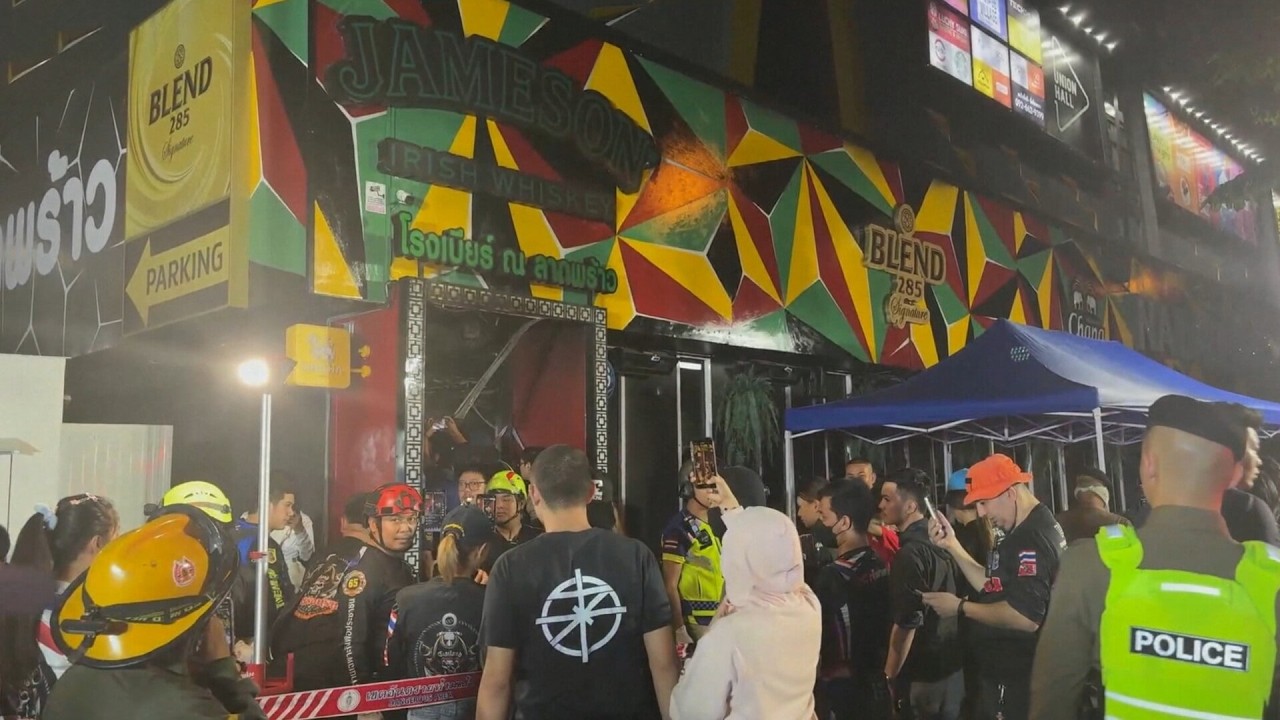
By the time firefighters brought the blaze under control, the basic contours of the disaster were clear. Thailand’s prime minister, Anutin Charnvirakul, visited the scene and stated that 27 bodies had been recovered from the bar, with many more victims transported to hospital. Officials and multiple international outlets have converged on the same core toll: 27 dead and roughly 63 injured, some critically. In a fragmented media environment where early numbers are often speculative, this degree of alignment is notable.
What is not yet clear is the definitive ignition source. Anutin has been explicit that the cause remains under investigation and that investigators were already on site once firefighting operations ended. That is a standard, and necessary, caution: modern fire scenes are complex, and distinguishing between plausible hypotheses—faulty wiring, overloaded circuits, deliberate ignition—requires forensic work that cannot be rushed if it is to stand up in court or in public memory.
How the Fire Likely Unfolded Inside the Pub
Eyewitness accounts, while not a substitute for forensic evidence, provide a coherent early narrative. Guests described the fire as starting near an electrical circuit or breaker before racing through the venue. That detail matters because electrical faults are a recurrent ignition source in Thai structure fires, particularly where older wiring, ad‑hoc extensions, or heavy audio‑lighting loads are present. Once an arc or short ignites nearby materials, the interior design determines how quickly a blaze becomes unsurvivable.
Survivors and early reports also converge on the layout and the role of exits. The bar reportedly had four exits, but several were said to be locked or unusable during the fire, with the highest concentration of bodies later found near these points of attempted escape. That pattern—crowds stacking up at a small number of accessible doors while smoke and heat intensify—is tragically familiar from other club disasters, in Thailand and abroad. If confirmed, locked or blocked exits would shift this event from “accident” toward a textbook case of negligent life‑safety management.
Inside any nightclub, survivability in a fire hinges on just a few variables: early detection; immediate warning with lights and sound; interior finishes that do not flash over in seconds; and clear, genuinely usable egress routes within a very short distance. Failure on even one of those dimensions sharply reduces the time occupants have to react. Failure on several, in a crowded venue, tends to produce body counts of the scale seen here.
A Disaster in a Long Line of Nightlife Fires
This Bangkok pub fire is not a statistical outlier; it sits squarely in a well‑documented sequence of lethal entertainment‑venue fires in Thailand. The most notorious precedent remains the Santika Pub fire in Bangkok over New Year 2009, when pyrotechnics ignited interior materials and killed 66 people, injuring more than 220. Investigations highlighted overcrowding, highly flammable decor, and inadequate exits—exactly the combination now again under scrutiny.
More recently, the 2022 fire at the Mountain B pub in Chonburi province killed at least 13 people and injured dozens. There, too, flammable acoustic foam and rapid fire spread played central roles. The blaze took hours to control, and many bodies were found near entrances and restrooms—spaces where patrons were trapped by smoke and heat. Each of these events was followed by public outcry and pledges from authorities to tighten fire safety enforcement, yet structurally similar venues continued to operate with comparable risk profiles.
This pattern is not uniquely Thai; modern history is littered with club fires in which pyrotechnics, foam insulation, and blocked exits interact with overcrowding to catastrophic effect. What makes Thailand stand out is the recurrence of such fires in a relatively short time window, often accompanied by the same post‑event narrative: expressions of official regret, announced crackdowns, and uneven follow‑through.
Regulations on Paper vs. Enforcement in Practice
Thailand does not lack fire codes. Building and licensing regulations require adequate exits, emergency lighting, maximum occupancy limits, and electrical safety measures for entertainment venues. The problem, as in many countries with vibrant nightlife sectors, lies in implementation and incentives. After earlier incidents, authorities launched large‑scale inspections; for example, following the Mountain B fire, the governor of Bangkok reported checks on more than 400 entertainment venues, with 83 failing to meet safety standards. Those numbers show both the scale of risk and the state’s capacity to identify it when it chooses to look.
The crucial question is what happens after inspectors leave. If non‑compliant venues face modest fines, delayed court cases, or politically mediated leniency, owners have little financial reason to invest in costly retrofits—upgrading wiring, replacing flammable finishes, or adding additional exits. Nightlife margins often depend on packing more people into spaces than design codes contemplate, so there is constant pressure to treat regulations as negotiable guidelines rather than binding constraints. In that environment, each announced crackdown buys a brief period of heightened compliance, followed by gradual reversion to the old equilibrium.
Why Occupancy, Exit Design, and Materials Matter So Much
To understand why these tragedies repeat, it is useful to look at the mechanics of fire growth in crowded venues. The key variables are fuel load, ventilation, and human density. Flammable acoustic foam, plastic wall panels, and synthetic fabrics provide an enormous fuel load. Once ignited, these materials can produce intense heat and toxic smoke in under two minutes—often before many patrons realize the danger, especially in a dark room with loud music.
Exit design is the second determinant. A door that exists on an architectural plan but is kept locked, blocked by furniture, or hidden behind signage is functionally not an exit. In panic, most people head for the door they entered; only a minority immediately scan for alternative routes. That behavioral reality is why codes require exits to be obvious, unlocked, and free of obstructions during operating hours. When reports describe multiple exits on paper but bodies piled near one or two doors, it is a strong signal that those requirements were not met in practice.
Finally, overcrowding amplifies every other failure. If interior conditions become unsurvivable in three minutes but it takes six minutes for a full house to clear through one or two doors, a lethal outcome is baked in from the moment the crowd size exceeds safe design capacity. In that sense, tragedies like the Bangkok pub fire are not random shocks; they are the foreseeable result of everyday operating choices made long before the first spark.
Government Response and the Limits of “Accident” Language
Prime Minister Anutin has publicly called this pub fire a “very regrettable accident” and promised an immediate investigation. The phrasing is politically conventional: it acknowledges loss while stopping short of attributing fault before the facts are formally assembled. It also sits uneasily alongside the historical pattern. When ignition is accidental but the environment is predictably deadly—locked exits, illegal modifications, flammable interiors—the line between accident and preventable negligence blurs.
Previous cases suggest what is likely to follow. After past nightclub fires, Thai authorities have typically arrested or charged owners on counts such as operating without proper licenses or negligence causing death. Insurance disputes, civil suits by victims’ families, and piecemeal compensation schemes tend to stretch over years. A handful of officials may face disciplinary scrutiny, but systemic change has been harder to sustain. Without credible, visible consequences for both owners and officials who enable unsafe operations, each investigation risks becoming one more entry in a long ledger of unlearned lessons.
What Needs to Change to Break the Cycle
Breaking this cycle requires more than another round of inspections. Three elements are particularly important if this Bangkok fire is not to be followed by an almost identical one a few years from now.
First, transparency. Publishing the full investigation report—ignition source, code violations, timeline of casualties—would allow experts and the public to see exactly how risk translated into death. Open data on inspections, including the names of non‑compliant venues and the specific deficiencies found, would let patrons make informed choices and increase reputational pressure on owners.
Second, credible deterrence. When venue owners know that operating with locked exits or illegal capacity exposes them to real prison time and substantial financial liability, the calculus shifts. That deterrent effect depends on consistent prosecution, not just post‑tragedy scapegoating. It also depends on insulating inspectors from political or financial pressure; a regime in which “tea money” can erase violations will not deliver safety, however well‑drafted the code.
Third, design‑level interventions. Retrofitting existing venues with non‑combustible interior materials, illuminated exit signage, and automatic suppression systems is expensive but tractable, particularly for establishments that cater to tourists and higher‑income clientele. Policymakers can phase in stricter requirements, tied to license renewals, and provide technical guidance so that compliance is not left to ad‑hoc improvisation.
Why This Fire Matters Beyond Bangkok
For foreign visitors, the Bangkok pub fire may register as a distant headline. For residents, it is part of a larger conversation about governance: whether the state can, or will, enforce life‑safety rules in sectors that generate significant local income. The same dynamics—aging infrastructure, informal construction, overloaded electrical systems, under‑resourced regulators—exist in many rapidly urbanizing cities far beyond Thailand. Nightlife fires have claimed hundreds of lives in Latin America, Eastern Europe, and Asia under very similar conditions.
In that sense, this tragedy is both distinctly Thai and globally instructive. The victims died in minutes, but the causal chain that led them into a lethal environment was built over years of choices by owners, inspectors, and policymakers. Whether the official investigation now under way confronts that chain directly—or once again confines itself to a narrow search for a single proximate cause—will determine whether “never again” remains a slogan, or finally becomes policy.
BREAKING: Reports are emerging of a devastating fire at a bar in Bangkok.
Videos circulating online appear to show people fleeing the blaze as thick smoke engulfs the area.
Authorities are responding, but the number of casualties has not yet been officially confirmed.…
— Kirikaar (@Kirikaar77) July 12, 2026
Where the Evidence Stands Today
At this stage, there is no serious factual dispute over the core outcomes: at least 27 dead, dozens injured, and a popular Bangkok pub left gutted. No credible counter‑narrative has emerged to challenge the prime minister’s confirmed death toll or the broad outline of events. The unanswered questions are specific and technical—exact ignition mechanism, the legal status of each exit, the venue’s licensing history—and they matter because they shape accountability. As more details emerge, the critical test will be whether Thai authorities treat this fire as a singular misfortune or as the predictable culmination of risks they have long known how to reduce but not yet chosen to eliminate.
Sources:
thegatewaypundit.com, sciencedirect.com, facebook.com, nbcnews.com, 11alive.com, wkzo.com, youtube.com, bloomberg.com, instagram.com, firstcoastnews.com, firstpost.com








 New Posts (Home)
 ChatBox
 Popular Posts
  Game Zone
 Top PodCasts