www.dailysignal.com
‘FINISH THE MISSION’: Chip Roy Pulls Back the Curtain on Intra-GOP Fight Over SAVE America Act and Border Security
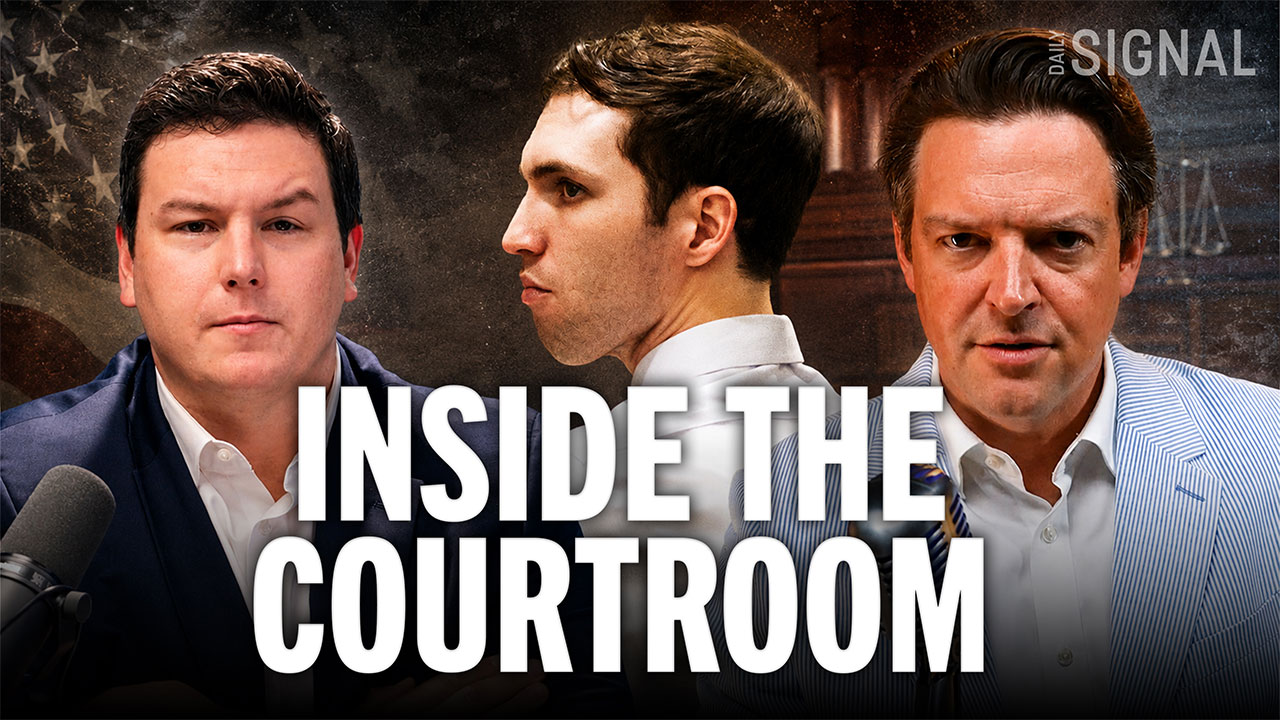
The following is an excerpt of Daily Signal Politics Editor Bradley Devlin’s interview with Rep. Chip Roy, R-Texas, for the “Signal Sitdown,” which premieres on the Daily Signal’s YouTube page at 6:30 a.m. EDT on July 23.
This transcript has been edited for clarity.
Bradley Devlin: You just came out with a letter outlining 14 different items that you want to see done before we get to the midterms. We got this majority. It was a Republican trifecta. It happens rarely in history.
Don’t waste it. And so first and foremost, I want to ask you a little bit about your background and your experience on the Hill. Why is this moment so important? What in your experience has made you feel that way?
Chip Roy: I’ve spent too many years in Washington.
That’s what you’re saying. That’s code for being here too much. But, yeah, I was a lawyer on the Senate Judiciary Committee. I was Sen. [Ted] Cruz’s chief of staff. I’ve now been in Congress for going on eight years. And so I know the town pretty well. And you have these brief moments where you have opportunity.
And it’s not just the trifecta, but even that is itself rare, as you just described historically, but it is also having a president willing to act. We have one. An administration filled with doers and people who understand the town and get a lot of stuff done, like my good friend Russ Vought at OMB and others.
That’s rare. And a Congress that has some some people who are of substance that are in the fight and know what we need to do, and we’ve got that moment. But that’s coinciding with a critical moment for the nation. And there are so many things hanging in the balance. And if we don’t act with this moment, then we risk losing the country and losing things every second that goes by.
We’re watching [Zohran] Mamdani. We’re watching the march of Islam across Texas. We’re watching the still considered efforts by illegals here to avoid the law and to stay in this country illegally, and more to keep coming.
We’re watching the continued expansion of the surveillance state and corporate America and AI advancement, and some of those things are good, and some of those things are concerning.
I could keep going down the list, but all of these things add up to a pivotal moment in history where we’ve got the right moment. Let’s take advantage of it.
We’ve done some good things in 18 months, but we haven’t done enough. And we’ve got six months left in this Congress. Let’s go finish the job, regardless of what happens in November.
I think when you do that, you win. That’s my experience, to put a finer point on it. When you lead, you win. When you play prevent defense, to use a football analogy, I think you start losing. I think we’re playing… I think we’re risking right now playing prevent defense.
I think we need to be on offense. The president’s instincts reflect that. The president’s always on offense. I think we need to be, too.
If you go back two years and you go to what worked for the president and, responding to Biden and the president was on offense and Congress was drafting in behind the president’s campaign, and we were given a mandate very clearly on the border.
And the president has honored that mandate. And that’s why one of the major things I think we need to address is codifying what the president has done on the border, which is reflected, as you pointed out, in the previous Congress’s H.R.2, which is now something we are marking up next week after a pretty extensive battle on the House floor yesterday.
We’re now going to be moving that legislation, a new form of it, slightly tweaked, but basically that legislation through Judiciary Committee next week.
To answer your question, as I mentioned before on prevent defense, the typical view in this town is you got to start thinking about everything through the electoral lens.
You can’t be stupid about that. And look, there are a lot of smart political minds in the White House and around the country that need to figure out and address different issues for our different members, and we’re aware of that. But we ran on securing the border.
We campaigned on that. Let’s go do that.
Bradley Devlin: You mentioned a prolonged fight on the House floor. This culminated yesterday. We are recording this on July 15th.
Tell us about this fight over getting a vote on H.R.2. I’m old enough to remember when I was covering Congress in the last administration, and you guys were gearing up for the 2024 election, and it was H.R.2, H.R.2, H.R.2 all day long. Everybody wanted to do it.
Explain to me, why is it so hard to get a vote on the key piece of legislation that you guys were using to counter-message the Biden administration’s migration policy? Take us inside this fight. When does it start and where is it heading?
Chip Roy: Sure. And I apologize for time stamping this thing, but you know what? This is what we do in Congress and we have a job to do to finish this. And there’s a debate that’s been underway about whether or not to go back and revisit what we did in the previous Congress, because as I said before, the president has been doing such a phenomenal job and mostly stopped the flow.
The president’s instincts are correct. Finish the mission. Do the mission the correct way, but finish the mission.
Keep on the mission. Our mission at Border Patrol and as Congress and as this government is to secure the borders of the United States, to protect the people of this country. Do it. Carry out the mission and message that to the people unapologetically. Our mission in Congress should be to codify these things.
We know that the laws were being exploited, and they were being done so purposely by the radical left in a way that was destroying the culture of this country, bringing people into our country who are dangerous.
So let’s codify that so that we… You can’t eliminate it, but you can limit and massively change the ability of a future administration to abuse asylum parole catch and release unaccompanied children, et cetera.
And we can do that, and we can do it right now. And by the way, that bill still preserves parole in a one-off situation on a case-by-case basis, still preserves asylum for people who meet credible fear, but we define it so that it can’t be abused or it can’t be abused as easily. But this is one issue, right?
This is one issue of finishing the job. SAVE America is another one I’m the lead author of the SAVE America Act.
Bradley Devlin: Parallel stories here, right? You have over and over again folks in the Republican camp promising conservatives, the conservative base, the people who voted for Trump on the immigration issue, that they will have votes on H.R.2.
And finally, we might actually get that after much wailing and gnashing of teeth. Same thing with SAVE America. The sticky wicket, of course, is the Senate. But we can’t figure out how to get Republicans to go forward with the second most important issue, which is election integrity.
Chip Roy: And this to your point about and responding to your question about the H.R.2 procedures in the House and, like, how we got this stuff done or how we’re moving forward, there was a resistance to doing it by a small quarter of the conference who I think are over-analyzing the political stuff as opposed to the larger message of doing our job and messaging it straight up to the American people.
So we forced that question. That’s just the bottom line. We held up rules. We said we’re not going to move forward on certain appropriations bills and other things that were important that we all want to figure out how to move forward unless we finish the job and address… and by the way, I had a list of things, H.R.2, birthright citizenship, sanctuary cities, all of those things we need to do.
I said, “Give us some of it, one of it, more of it.” So H.R.2, we’re going to move through committee. I hope we’ll move birthright. I hope we will move sanctuary cities, maybe some more. SAVE America, we’re trying to use the reconciliation process to break the back of the Senate to see if we can get the SAVE America Act through.
Tough sledding, right? We’ve passed it three times. The Senate is hung up on its 60-vote threshold, which is a fake threshold.
And I say that as someone who understands the Senate, as we’ve already talked about, as a former lawyer in the Senate, as someone who was the chief of staff to Ted Cruz.
I know Senate procedures better than, frankly, probably most senators because they don’t use them anymore. I’m actually being serious. We used to actually use the Senate rules and do stuff. Right now, they are the personnel arm for the White House, and effectively they pass a few appropriations bills.
That’s it. What else does the Senate do? So we need to work and try to jam that through and force it through and get the Senate to break and to acknowledge that there should be some at least exceptions, talking filibusters.
Maybe you have a 51-vote threshold when you have a shutdown on a CR. Maybe you should move something like SAVE on reconciliation at 51 votes and allow that and give some flexibility on the parliamentarian to move it.
So that’s what we’re working through right now. And then there’s the issues broadly speaking on Islam, and I introduced the PAUSE Act last fall in response to birthright citizenship. Maybe we should be pausing immigration, reforming H-1Bs, which are just rampant with fraud. So there’s a whole arc to all of this.
I haven’t told leadership or the White House it’s my way or the highway, we must do all of these things. What I’m saying is these are the kinds of things we campaigned on. Let’s deliver on SAVE America to the extent we can. Let’s move things like H.R.2 and birthright out of the House, even if the Senate won’t, because then we’ve sent a message to House, the people’s House, are fighting for them.
Bradley Devlin: Yeah, I’ve likened the Trump 2024 vote to somebody choosing crystal meth. They chose Donald Trump because they wanted the hardest core version of the MAGA movement that you could possibly think of. And that, I think, is encapsulated in a piece of legislation like H.R.2. That is encapsulated in something like the SAVE America Act. You mentioned this freeze that conservatives in the House put on the floor. It lasted for about three weeks.
Those who are critiquing the conservatives’ insistence to get H.R.2 a vote on the floor say, “You guys complain that we’re not doing anything? You guys are the ones who shut down the floor.”
Explain to me the decision to shut down the floor. Why do you think it was necessary? And, from my perspective, it’s you weren’t going to do anything else anyway.
Chip Roy: It’s the only thing that the town responds to, is what I call legislative violence.
Because otherwise they’re just going to do what they do. It’s they get in a room, they tell you all the reasons we can’t do something that’s actually transformative or newsworthy or useful. And then they go through the motions to pass some appropriations bill that spends more money or will move forward a bill like the housing bill, okay?
The housing bill has some good pieces in it. French Hill’s a friend. There’s some good stuff. There’s also a lot of lousy stuff. Section 8 expansion a whole lot of programs in there that have made Elizabeth Warren and Rashida Tlaib happy. I don’t need to even look at the bill to know if those two are happy, I probably got a concern with the bill.
Yeah. So we’ve got a bill that was moving forward that a lot of us opposed. We made clear we opposed it. We forced us to vote no on a housing bill. Now we got to go explain to our constituents and everybody why we voted no on the housing bill. They go, “Why are you trashing our bill?” I got to explain to my constituents why I voted no on this bill.
And so they’re like, “Oh, okay.”
So at some point you go through and say- “Look, guys, what we’re saying is every once in a while, put something on the floor that, yeah, some of your moderates may not love, but that we’re going to be able to use to exercise the base and get people excited and move forward.
“By the way, all stuff that we believe are well-supported by the lion’s share of the American people.”
So our view was, what are we slowing down here? You want to move an NDAA that in my opinion had some flaws in it. You want to move an appropriations bill and move appropriations bills forward without any strategy right now on how we’re going to manage a shutdown fight in September.
You want to move the housing bill, which we thought was garbage. You want to move a veterans bill, which is good, bad, has some good pieces, some bad pieces. You want to move a daylight savings time bill, which makes permanent daylight savings time, which by the way, I understand it. People don’t want to change their clocks, all that stuff, but really?
This is the priority? Okay, fine. You want to do it? At least choose Standard Time so that kids aren’t going to wake up at 8:30 in the morning on December 21st in Austin, Texas, and it’s dark. And so these are things that I think we’re going, “Guys, can we just focus on the prize? We have illegal aliens in our country.
“We have Islamists wanting to take over our nation. We have China wanting to kill us. We have the reality that we’ve got serious problems with surveillance of American people, flock cameras kill switches in automobiles. We have massive surveillance under FISA.”
Are we addressing any of those things?
Are we addressing the collection of that data? Are we addressing energy freedom? Are we addressing making America healthy again? Are we going to ban congressional stock trading? Now we pressed that this week too.
I think we’re getting movement on that, but that was a bill I was the first to introduce five years ago.
It’s look, guys, let’s just show the American people we’re serious about what we said. So we’re making some movement, and again, we try to give. We sat down trying to work through reconciliation. We’re trying to work through that right now as we speak and whether it’s paid for or not, how you move SAVE America.
Bradley Devlin: SAVE America Act. Where does it go from here?
What routes are available to those who want to see this election integrity measure passed?
Chip Roy: The route is very simple. The House keeps elevating the pressure. The president keeps elevating the pressure, and either the Senate does the right thing or it does not. The Senate can do this. There’s no limit to the Senate doing this. They simply need 50 plus JD 51 would be better who are willing to do the right thing and either force the talking filibuster, and the clock’s kind of winding down on that.
You’re running out of time to be able to do that, certainly before November. But they could stay here over August. They could do it. That’s a choice. So that’s one. Two, you can use the reconciliation process, you can make a choice that whatever the parliamentarian rules on with respect to questions involving what’s called the Byrd Bath.
And for everyone listening out there, this is something that didn’t exist prior to 50 years ago. A senator put this rule in place when you’re dealing with the reconciliation process, maybe for some good reason, maybe for some bad. But the Senate goes through and says whether this stuff is germane or whether it’s, in the right jurisdiction, all these different rules.
And look, you can make choices on that. By the way, Democrats do this stuff all the time. They look at the rules, they unite around it, and they jam Obamacare down our throats using reconciliation, which is precisely what they did 15 years ago. And so if we want to do this, it’s just a matter of John Thune and the senators having the will to do it.
In defense of John Thune, he could be playing harder ball here and doing more, in my opinion, but it’s up to the Senate. And if 51 senators will act, they can do it. Under reconciliation, they could do it. And they can modify filibuster rules. Some of us believe the filibuster’s going to get thrown out.
By the way, when I say the filibuster, the 60-vote artificial shutoff debate threshold.
I believe, and I’ve been advocating for, as Mike Lee has, the talking filibuster and changing some of the reconciliation rules, or maybe tweaking the filibuster rules to say you can have 51 votes for this and this scenario, but 60 here.
We did it with judges, for better or worse. That’s where we are. And I say if you want to protect the cooling saucer and keep the filibuster in its concept, the breaking point has to be when the will of the body and the majority of the body is sitting there long enough and they want to go a direction, eventually you have to give.
That’s my view. In other words, 60 is a slowdown, right? If you don’t have 60 to shut off debate, we’re going to be debating this for a while. Yeah. Move forward, or maybe it’s having a 51-vote threshold if you have a government shutdown, right? As I said, you can pass a CR or whatever.
But the Senate’s got to evolve to be able to say, “We got to be able to function and still be a cooling saucer, or you’re going to lose the entire cooling saucer.”
And I think this is a really important point that I hope is a takeaway here for Senate nerds or close watchers of this stuff. If you want to preserve any aspect of the Senate cooling saucer slowdown, you have got to currently reform what they’re doing, and that includes things like we’re talking about here and the talking filibuster and other things, or it will be blown out.
There will be no filibuster. There will be no slowdown. It’ll be a 51-vote, and if you’ve got the majority, you ram through anything you want with the majority vote, and lose the voice of a single senator to slow things down. And I think that would be a mistake.








 New Posts (Home)
 ChatBox
 Popular Posts
  Game Zone
 Top PodCasts