www.thegospelcoalition.org
Saved to Sin No More
Life’s sufferings and challenges are weighty. While many of the trials we experience are from circumstances outside our control, some weighty burdens we carry result from our own sin. In recognition of this, David confesses, “My guilt has overwhelmed me like a burden too heavy to bear” (Ps. 38:4, NIV).
Although there is no condemnation for those in Christ (Rom. 8:1), our remaining sin is burdensome, and our ongoing struggle with sin can disrupt our fellowship with God, bring pain to others, and deplete our spiritual life.
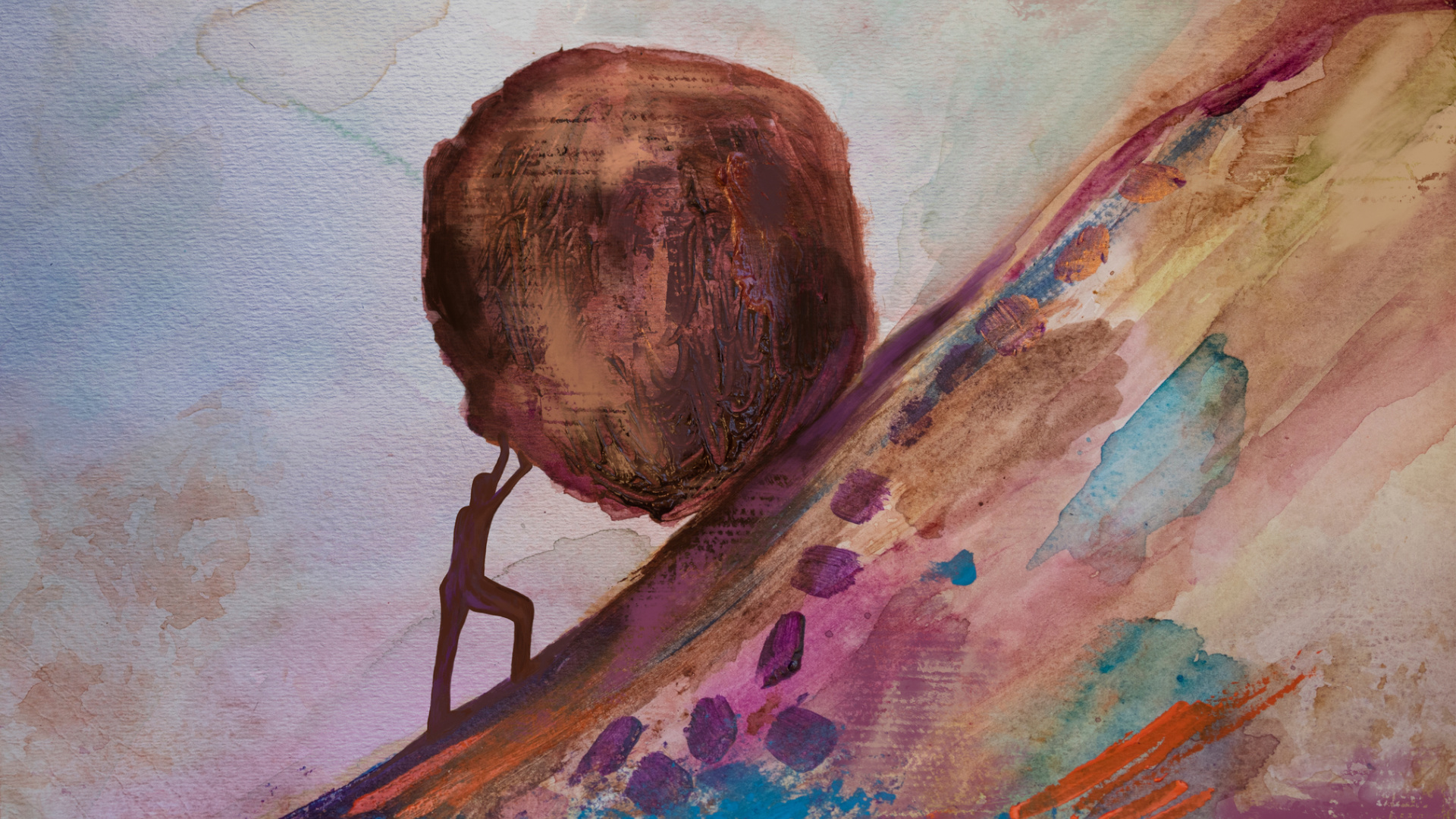
If we are honest, we can admit we struggle with pride, we are envious of others, we often too quickly lash out in anger, we can overtly or subtly put others down while propping ourselves up, and we can desire recognition from others rather than doing all things for the glory of God. In an allusion to “The Rime of the Ancient Mariner,” our sin is like an albatross around our neck, always weighing us down.
The apostle Paul wrestles with the weightiness of sin: “Wretched man that I am! Who will deliver me from this body of death?” (7:24). The answer lies in the next verse, where Paul exclaims, “Thanks be to God through Jesus Christ our Lord!” (v. 25).
When we think about this wondrous salvation, what often comes to mind are the gospel promises of eternal life, forgiveness of sin, justification, and dwelling in God’s presence. These are essential to our future inheritance, but let’s explore one aspect of salvation often overlooked or at least underappreciated: One day, we will be free from the presence of sin.
New Life Prophesied
God’s plan to bring new life to his people begins in the old covenant. In Deuteronomy 6:4–6, the Lord calls his people to relate to him with wholehearted love and devotion. Regarding his law, the Lord proclaims, “These words that I command you today shall be on your heart” (v. 6). But on account of sin and hard hearts, this fulfillment is pushed into the distant future.
Our sin is like an albatross around our neck, always weighing us down.
The Lord, through the prophet Ezekiel, declares a time when this ideal will become reality: “I will give them one heart, and a new spirit I will put within them. I will remove the heart of stone from their flesh and give them a heart of flesh, that they may walk in my statutes and keep my rules and obey them” (Ezek. 11:19–20).
Later, he says,
And I will give you a new heart, and a new spirit I will put within you. And I will remove the heart of stone from your flesh and give you a heart of flesh. And I will put my Spirit within you, and cause you to walk in my statutes and be careful to obey my rules. (36:26–27)
In a similar vein, the prophet Jeremiah describes this new-covenant reality as God’s act to place his law within his people and write it on their hearts (Jer. 31:33).
New Life Inaugurated
The old-covenant promises find initial fulfillment in the new covenant. Although the New Testament is replete with passages that describe believers’ new life in Christ, the one that most fully elucidates this eschatological reality is Romans 6:1–23. Paul highlights two salvation realities: Believers are dead to sin and alive in Christ (vv. 1–14), and no longer slaves to sin but slaves to righteousness (vv. 15–23).
The Spirit’s role is not explicitly referenced, but the larger context clarifies that these realities are dependent on the empowerment of the Spirit in the life of the believer (see 7:4–6; 8:1–27).
In 6:1–14, Paul emphasizes that our union with Christ means we have died to sin and been given new life in Christ (vv. 2–4). This new life means we have a new master and a new orientation. While we used to be slaves to sin (v. 17), we are now slaves to righteousness (v. 18).
While Paul’s focus in chapter 6 is the work of sanctification, God’s work culminates in glorification. The doctrine of glorification teaches that at Christ’s second coming, God will raise us to a glorified existence to reign with Christ forever in the new creation. But an additional crucial aspect of glorification is that God will also set us free from the presence of sin.
In the future, God will fully write his law on our hearts and minds (Jer. 31:33) and thoroughly move us to follow his decrees and keep his laws (Ezek. 11:20; 36:27). Then we will be completely dead to sin, alive to God, and slaves to righteousness (Rom. 6:1–23). The apostle John also highlights this very hope when he writes that “when [Christ] appears we shall be like him, because we shall see him as he is” (1 John 3:2).
New Life Experienced
In light of God’s plan of redemption, we should consider that forgiveness of sins is not enough. The good news is that God’s redemptive purposes are not merely to forgive but also to make us new, holy, and righteous.
God’s redemptive purposes are not merely to forgive but also to make us new, holy, and righteous.
In 2 Peter 2:19, the apostle writes that a person is a slave to whatever has mastered him. Bob Dylan sings, “You’re gonna have to serve somebody.” And Jesus teaches that “no one can serve two masters” (Matt. 6:24). Contrary to popular opinion, true freedom is not freedom from any constraint—Peter, Bob Dylan, and Jesus have told us this is impossible. True freedom, then, is being a slave to righteousness.
In the hymn “There Is a Fountain Filled with Blood,” William Cowper celebrates, “Dear dying Lamb, Thy precious blood / Shall never lose its pow’r, / Till all the ransomed Church of God / Be saved, to sin no more.” Saved to sin no more. No more sinful words and actions that hurt ourselves or others. No more sinful pride. No more angry outbursts. No more snide and insulting comments. The sinful shackles that weighed us down will be removed.
What a glorious eternal life we will experience when we are no longer weighed down by sin. Only then will we experience “the freedom of the glory of the children of God” (Rom. 8:21).








 New Posts (Home)
 ChatBox
 Popular Posts
  Game Zone
 Top PodCasts