reactormag.com
A Little Knowledge Is a Dangerous Thing: Nadia Bulkin’s “Things to Know Before You Go”
Books
Reading the Weird
A Little Knowledge Is a Dangerous Thing: Nadia Bulkin’s “Things to Know Before You Go”
This vacation carries a terrible curse…
By Ruthanna Emrys, Anne M. Pillsworth
|
Published on July 29, 2026
Comment
0
Share New
Share
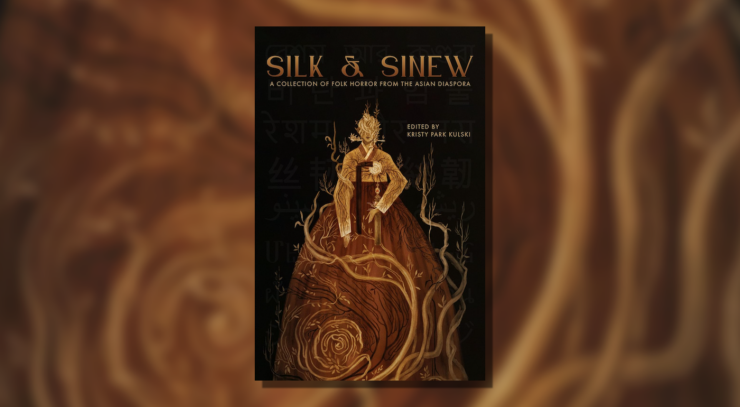
Welcome back to Reading the Weird, in which we get girl cooties all over weird fiction, cosmic horror, and Lovecraftiana—from its historical roots through its most recent branches. This week, we cover Nadia Bulkin’s “Things to Know Before You Go,” first published in Kristy Park Kulski’s Stoker-winning Silk and Sinew: A Collection of Folk Horror From the Asian Diaspora. Spoilers ahead! CW for suicidal ideation.
Della and Mary are vacationing on the Indonesian island of Java. Della was born there, but her parents immigrated to the United States when she was young; since their household mostly spoke English, Della’s now embarrassed by her rusty Indonesian. Blond-haired Mary’s Indonesian is worse, but she gets points for her “try-hard shamelessness.” The two were college friends, and the bolder Mary always took the lead.
She still does. Della chose their hotel with Mary’s preferences in mind. Now, as they lounge by the pool, Mary fidgets to get them out of it. A child’s fallen into the water, causing consternation among relatives. Della thinks how she might step into the pool, or off their third-floor balcony, or off a curb even. The critical thing: Her movement would have to be “stupid easy,” or she’d never take it, never make everything “go away.”
Mary ignores the poolside fuss. She reads from Things to Know Before You Go: Indonesia. There’s a jungle hike that sounds cool, with a “sacred” path leading to a waterfall reserved for “members of the spirit world.” She laughs “uproariously” at the notion. Della, who had a superstitious Indonesian babysitter, tries to dissuade Mary from the outing, with her usual success. After six hours on a rickety bus up the Javanese mountains, Mary commands the driver to drop them at the trailhead. An old woman grabs Della’s arm and delivers a warning in mixed Indonesian and Javanese, from which Della gathers the syllables “Tuk” and “Kutuk.” Off the bus, she’ll remember that “kutukan” means “curse.”
A wooden box demands an access fee of ten thousand rupiah for Indonesians, fifty thousand for foreigners. Della tries to deposit the foreigner’s fee. Mary talks her into the lower one. The remoteness and quiet of the trailhead disconcert Della. Where are the usual locals selling snacks or guide services? There’s not even a stray goat! Prickly vines obscure the trail. Mary pushes them apart and steps into darkness. Della follows. She reminds Mary that they have to catch the bus home by 4, earning exasperation. Can’t Della relax? Act like she wants to be here?
Della can’t. She doesn’t like the way the trail proper is meticulously well-maintained, how sunlight penetrates the jungle canopy “uncomplicated by either heat or shadow.” Mary derides her fear they’re crossing into the spirit world, and asks sarcastically about protections. But Della’s babysitter, Mbak Susi, never provided any such hints, or even a definitive way of knowing one had passed beyond, other than “You’ll know.”
Mary leads them up the path, which looks level but feels like it’s going uphill. She scolds on, about how Della doesn’t want to go to bars or clubs or even on a tame nature walk. Every time Mary suggests something, Della’s all no, no, no, but makes no suggestions herself. Della says she wishes they’d gone to Thailand. She pushes past Mary, expecting a snide remark, getting only “What is that?”
Della looks back, at an empty trail. Mary has vanished. Kutukan, Della remembers. Curse.
* * *
Mary must have fallen off the path somehow, maybe broken an ankle, but Della searches the underbrush and finds no trace. She must be “losing it,” getting dehydrated and scared. She’s “regressing” to Mbak Susi’s horror stories, which were only fables designed to obliquely teach children about real dangers. She shouldn’t have left the main trail. She should’ve gone back to the road for help. If she had to succumb to delusions of a spirit world, she should dwell on Mbak Susi’s reassurance: The spirit world isn’t evil. It just knows how to bring out the wickedness in you.
* * *
She walks on. Finally she finds an isolated police outpost. The officer inside listens to her vague description of how Mary disappeared. She’s afraid Mary might have gotten hurt. He interjects, “Wasn’t that what you wanted to happen? When you pushed her?” So easy, it would have been, Mary always walking in front, Della the Dutiful always following. She always resented Mary, didn’t she? Was jealous of her, as she is of all her friends. The officer has this direct from Mbak Susi. And he produces a folder with the babysitter’s testimony….
Della denies the insinuations. Mbak Susi never knew about Mary, hasn’t seen Della for years, and besides, what if Della were jealous? What matters is that Mary’s gone!
No, the officer says. She’s here with them. All Della has to do is look under the bushes to find Mary waiting for her. The outpost walls dissolve. Della averts her eyes from the yellow eyes, staring from the darkness. Again she insists she can’t find Mary.
The officer sighs and tells her to sign a missing-persons report. The paper he slides over doesn’t look like a missing-person’s report. Its words squirm as Della tries to read. It occurs to her how easily she understood the officer’s language, how her own words had flowed to him. “Is this a dream?” she asks. “No,” he replies, handing her a pen.
When she clicks it open, it hisses.
* * *
Locals find Mary first, evidently fallen several hundred meters below the main path. So alone, so pretty, so white. They worry her death will awaken rumors of evil. Della is found later, much deeper in the jungle. Her necrosis suggests death by pit viper, which relieves the locals’ fears of murder. The Americans’ story is a familiar one, young women gone into a remote forest without a guide and “fallen prey not to predators but to their own inexperience, their naivete, their loud and unrelenting ignorance.”
It’s a “profound unbelonging,” and the land won’t expend its energy to forgive them.
The Degenerate Dutch: In college, Della uses her Indonesian background as a “party trick.” She bites her tongue to avoid complaint about people’s reactions, which still doesn’t justify Mary mocking Indonesian beliefs and customs. Or Indonesian population density, a joke that isn’t funny at all.
Libronomicon: This week’s shelf features Things to Know Before You Go: Indonesia, a useful guidebook that, among other things, describes a cool jungle hike. Why guidebooks are pointing people at spirit-world-only waterfalls… well, why not? It’s a bit of harmless local color.
Madness Takes Its Toll: Della suggests “crazy people” as something to fear in the jungle, or perhaps the source of stories about the jungle’s dangers. The locals who find Mary’s body fear rumors “spiraling into ugly themes of madness and darkness and evil,” and are relieved to find clues to a different narrative.
Ruthanna’s Commentary
It’s a terribly pat trope: representatives of “civilization” visit someplace “exotic” as conquerors, missionaries, tourists, etc., only to discover to their detriment that the local “superstitions” are true. Done badly, as it historically is, it manages to maintain the conviction of all those scare-quoted words even as the locals turn out to know more than the newcomers. But really, doesn’t having your scary stories pan out simply go to prove how primitive you are? After all, so much of the value of civilized empire comes in making magic impossible.
Column favorite Bulkin isn’t doing the trope badly at all, nor playing it straight. She’s asking what it means to be a tourist or a local, and what it means to know a place at all.
Mary’s the more traditional visitor. She’s well-educated, white, confident in her privilege and comfortable outside her comfort zone. It earns forgiveness in a country that “doesn’t spend its fleeting energy trying to forgive.” Or perhaps it excuses her from offending in the first place. Mispronouncing her limited Indonesian, she compares well with others who look like her but insist on English.
Della, on the other hand, falls into the awkward un-belonging of the diaspora. She looks local, remembers a few people and a few stories, and yet her language has lapsed. Mary’s A-for-effort is her shameful failure. Naturally more cautious than her companion, she also knows just enough to realize that there’s real danger in the country her family left. Mary’s having an adventure, confident that she can deal with whatever little difficulties arise. Certainly, anything that shows up in the guidebook must be safe to try. Della knows “misery and malice and lack.” She knows stories about why you should be scared, and none about how to survive the scary things. You’re supposed to avoid them, after all, not seek them out.
She knows, too, that those stories are warnings, if not always accurate ones. But it’s been intellectualized: she wrote a Comparative Religions essay about “social programming through storytelling.” This is a real, common thing. Where western parents lay out blunt rules, many cultures use ghosts and monsters as a memorable way to warn kids away from misbehavior. Della’s babysitter, with her haunted bamboo, is a good example. Ghosts are more exciting than thorns, easier to remember. Ghouls and beasties out beyond well-lit streets can keep people close, safe, even compliant. But “we” the “civilized” know better. And Della knows that she’s supposed to know better—to giggle at “crazy people” and make the spirit world a joke.
In America, she’s let her origins become “the most interesting thing about her.” She has stories about Indonesia rather than stories about herself. Other friends have Lyme disease or affairs with ethics professors, which I have to imagine go over less well at Thanksgiving.
In Indonesia, then, her misery is in part the loss of that identity and the realization of how shallow it’s always been. The country is no longer hers, but neither is anywhere else. And Mary’s irritated that Della can be neither a native guide nor a full-on cheerful tourist.
What would have happened, I have to wonder, if Della had fallen into one clear category or the other? Obviously if she were a true Indonesian, she’d have insisted on avoiding the jungle to begin with, or at least understood and heeded the elder’s warning on the bus. But if she knew nothing of the spirit world, could it have touched her at all? Could Mary have traipsed the vine-draped path solo, with no worse worries than snakes? Per the traditional trope, civilized visitors must either be entirely vulnerable, or protected by their imperial limits on reality. Here, I suspect, it’s Della’s own liminal nature that makes her vulnerable to the liminal threat.
But then, the local story has her and Mary as two undifferentiated “young American women” full of “loud and unrelenting ignorance” and “profound unbelonging.” So Della loses her identity once again in death. It’s a warning not against exploring the darkness, but against doing so without being very clear about who you are, and where you do and don’t belong. Claim yourself, or something else will claim you.
Anne’s Commentary
Among Della’s memories of her early life in Indonesia loom large Mbak Susi’s stories about Jagad Lelembut, or the spirit world. This paper in Javanologi: The International Journal of Javanese Studies describes the concept:
“Javanese society holds a profound and enduring belief in the supernatural world, a system deeply interwoven with daily life and transmitted across generations. At its core lies the conviction that all elements of nature possess a spirit or soul (animism) and supernatural powers (dynamism). Trees, rivers, mountains, and even inanimate objects are imbued with spiritual significance… This stems from a core Javanese understanding of the intimate connection between the spiritual and the material realms.”
The entities one might encounter in Jagad Lelembut range from local guardian spirits and ancestral forces, to the shapeshifting trickster Genderuwo, to vengeful human ghosts and sentient floating fireballs (banaspati.) My choice of most terrifying would be the Kuyang, a living witch who transforms at night into a vampiric disembodied head trailing its own viscera behind. Maybe Della meets one of these during her deep jungle wanderings. Maybe the necrotic state of her corpse was the result of a Kuyang battening onto her.
Instead of the pit viper that authorities blame. In my obsessive zeal for identifying the unnamed snakes of weird fiction, I looked up the chief Javanese suspects. In addition to the Flat-nosed Pit Viper (Craspedocephalus puniceus) and Malayan Pit Viper (Calloselasma rhodostoma), there are three Trimeresurus species: the White-lipped Pit Viper (T. albolabris), the Mangrove Pit Viper (T. purpureomaculatus), and recent cartoon superstar, the Indonesian or Sunda Island Pit Viper (T. insularis).
And now, back to our regularly scheduled nonherpetological programming.
Bulkin’s story combines two highly compatible horror sub-sub-genres: The Vacation from Hell and the Clash of the Frenemies. How could two people as dissimilar as Mary and Della have ever gotten together? Okay, there was the crucible of the neighboring college dorm rooms, but why did they stay enough in touch after graduation to go on a major vacation together? Actually, it may be only too credible a bad bromance. Della gives Alpha-Blonde Mary someone she can always pick on and look good beside, a noncompetitor for Number One status. Mary gives Della an In-Crowd friend to simultaneously relieve and feed her sense of Not Fitting In. Not Fitting In isn’t a great self-image, but it’s better than no self-image at all.
Better, that is, until they’re together in the one place where Della should be the one fitting in, and Mary is still showing her up.
And picking. Picking and pecking away. But—
The truth is that Mary is the outsider in Java. Incredulous of the spirit world and its “intimate connection” with the mundane sphere, she drags Della into a jungle where the barrier between planes is no sturdier than a thin veil of vines, and now Della has the advantage. At least she’s imbibed Mbak Susi’s tales of Jagad Lelembut and been told she need not be afraid. Mbak Susi assured her:
The spirit world isn’t evil. It just knows how to bring out the wickedness in you.
And at this point, Della’s primed to be wicked. Wicked enough to push Mary back, off the path and down a long drop.
Problem. Jagad Lelembut hosts many spirits. Wronged ghosts, maybe, like the figure of Mary that floats through the trees, head too big, eyes out of place. Ancestral forces that take on the shapes of a police outpost and a policeman who knows what Della has done and who gets her to sign… what? Not a missing-person report but a confession? An acceptance of the terms of kutukan, curse?
It’s harsh, but maybe the locals are right in their contention that the “two young American women” were done in not by mundane predators, animal or human, but by the curse of “profound unbelonging in a land that did not spend its fleeting energy trying to forgive.”
Next week, we kick off our new longread with Chapters 1-3 of H.G. Wells’s The Island of Doctor Moreau.[end-mark]
The post A Little Knowledge Is a Dangerous Thing: Nadia Bulkin’s “Things to Know Before You Go” appeared first on Reactor.








 New Posts (Home)
 ChatBox
 Popular Posts
  Game Zone
 Top PodCasts