www.dailysignal.com
Voter ID Advocates Take California AG to Court Over Ballot Description
Advocates for voter ID in California have sued the state over altered ballot language for the November initiative.
The ballot initiative Proposition 39, which would amend the state constitution to require that voters provide government-issued identification to vote, originally included the description, “Establishes additional voter identification and citizenship verification requirements.”
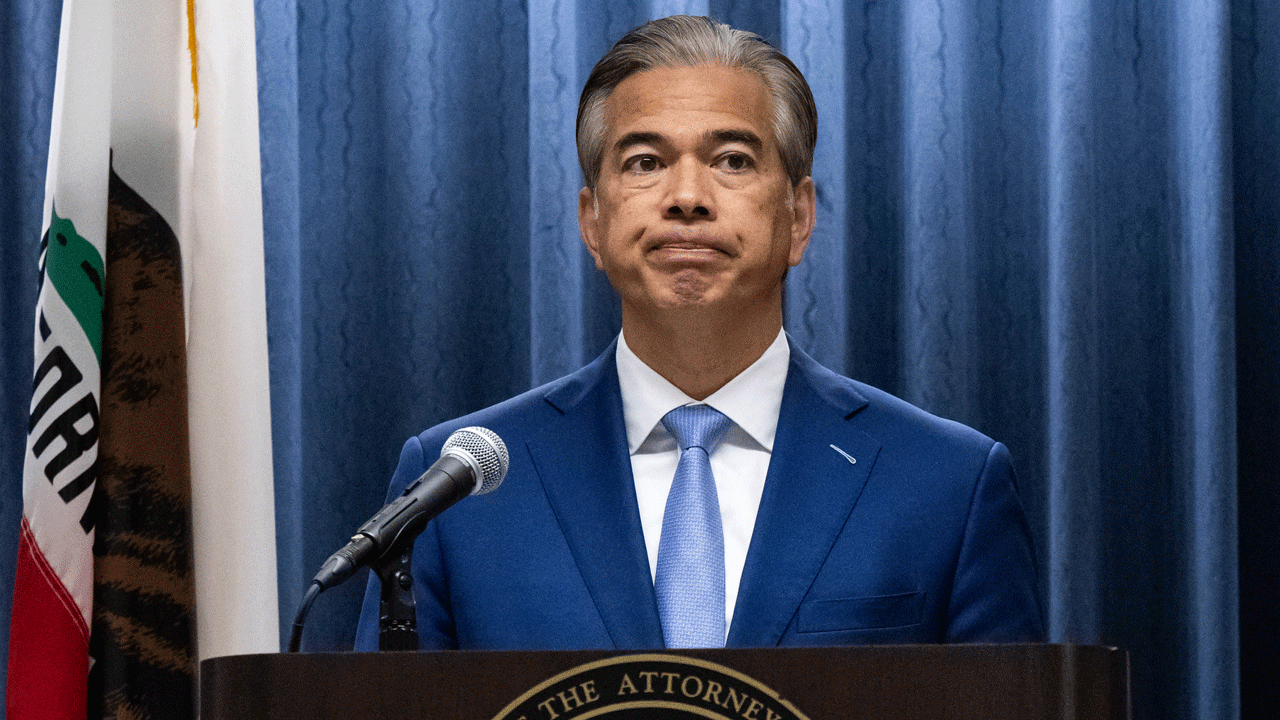
However, last week, California Attorney General Rob Bonta, a Democrat, changed the language to say: “Prohibits citizens from voting unless they present government-issued identification.”
Plaintiffs supporting the passage of Proposition 39 say it would not “prohibit” any votes. Under federal law—the Help America Vote Act—voters can cast provisional ballots if there is a question about their eligibility.
Further, supporters of the ballot initiative contend that state law requires state officials to “give a true and impartial statement of the purpose of the measure” in developing ballot language, KCRA Channel 3 Sacramento reported. The lawsuit calls the state’s updated description “not a true and impartial statement of the measure’s purpose.”
The lawsuit names both Bonta and California Secretary of State Shirley Weber as defendants.
A Weber spokesman told the Daily Signal in an email that the office doesn’t comment on pending litigation.
Last week, before the lawsuit was filed, a Bonta spokesman told the Daily Signal that all nine voter-proposed ballot initiatives had language changes this year.
“When a measure qualifies for the ballot, the Attorney General’s office is required to issue a ballot title and summary and a condensed ballot title and summary,” Bonta’s spokesman told the Daily Signal in an email. The spokesman added, “Our office properly exercised its discretion to provide further clarity to voters about Prop. 39’s chief purpose and points for the ballot stage.”
Plaintiffs are seeking an expedited decision from the court, as the review period for ballot language questions runs from July 21 through Aug. 10 before materials go to the printer, Courthouse News Service reported.
“The lead characterization in the title, summary, and label, that the measure ‘prohibits citizens from voting,’ is affirmatively inaccurate,” the complaint says. “By its terms the measure regulates which ballots are counted, not whether a citizen may cast one.”








 New Posts (Home)
 ChatBox
 Popular Posts
  Game Zone
 Top PodCasts