www.dailysignal.com
Celebrating David McCullough: A Historian’s Love for America
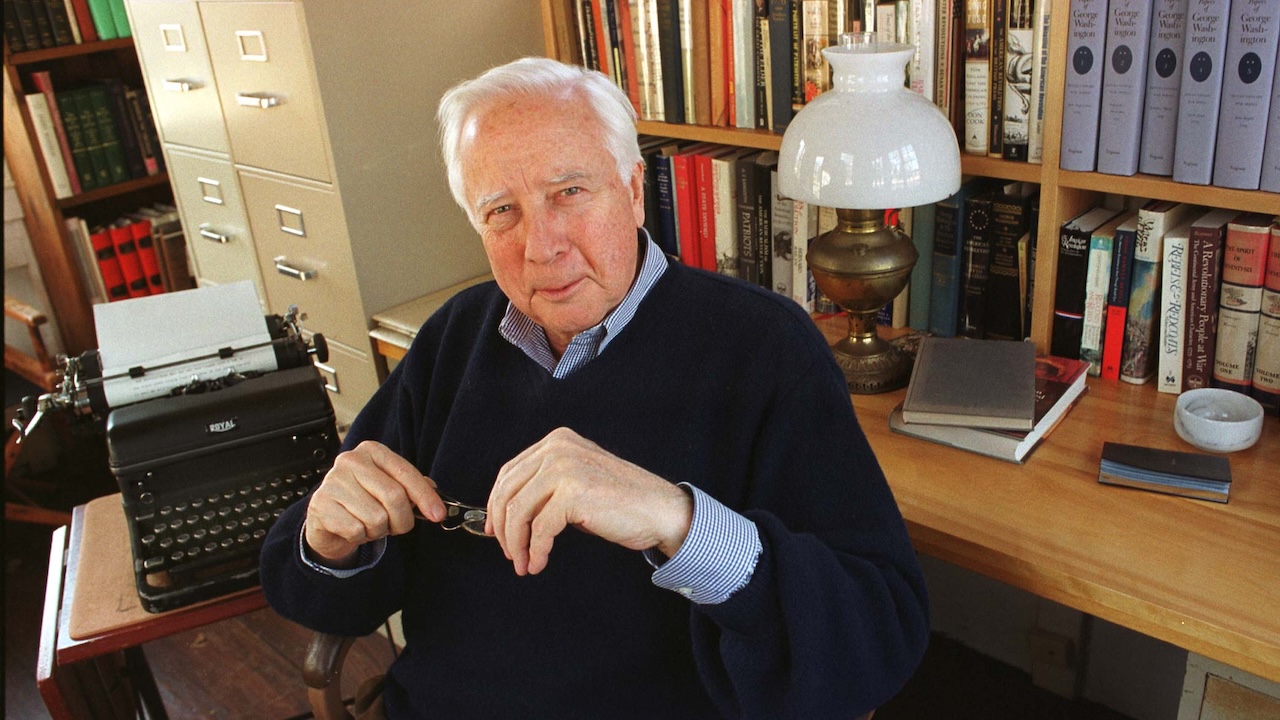
Award-winning historian and author David McCullough was a man of his time and a man for all time. He passed away four years ago this month at the age of 89, leaving behind a rich catalogue of writing about the United States and our shared history as Americans. He wrote biographies of John Adams and Harry Truman and other books about American history from colonial times through the 20th century.
He also assembled a slim volume, “The American Spirit,” featuring a number of speeches he gave from 1989 to early 2019. Many were commencement addresses, but he also spoke to a joint session of Congress and at the White House on its 200th anniversary. “These beautiful grounds did not exist” in 1800, McCullough told the group that day. “It was a different setting, it was a different country, and it was a different time.”
McCullough’s superpower shines throughout the book: He is respectful of the past and recognizes that modern Americans have much to thank our ancestors for. “Let us not look down on anyone from the past for not having the benefit of what we know, or allow ourselves to feel superior,” he writes in an essay about Dr. Benjamin Rush, a lesser-known Founding Father. “The more we learn of that founding generation of Americans—and I mean the real flesh-and-blood human beings, not the myths—the larger they become.”
In another essay, McCullough writes that members of the founding generation were different from us. “We have to take into consideration, for example, all they had to contend with that we don’t even have to think about—all the inconveniences, discomforts, and fears. And the hard, hard work.”
McCullough studied history because he was a humble man. Throughout this book he advises university graduating classes to read for pleasure, for learning history, and “to learn from the lives of others.” He realized that the more he learned, the more he needed to learn. “A sense of history is an antidote to self-pity and self-importance, of which there is too much in our time,” he said in 1998. “To a large degree, history is a lesson in proportion.”
He advises historians to give their subjects the benefit of the doubt. “It’s all too easy to stand on the mountaintop as a historian or biographer and find fault with people for why they did this or didn’t do that, because we’re not involved in it, we’re not there inside it, we’re not confronting what we don’t know—as those who preceded us were.”
The Founding Father McCullough knew the most about is John Adams, the first president to move into the White House, which was then known as the Executive Mansion. “I pray heaven,” Adams wrote on his first full day in the home, “to bestow the best of blessings on this house, and all that shall hereafter inhabit it. May none but honest and wise men ever rule under this roof.”
That inscription remains, inscribed in marble, at the White House today, where it may serve to inspire future residents.
The book features plenty of advice for college graduates. “We have to value what our forebears—and not just in the 18th century, but our parents and grandparents—did for us,” McCullough said at Hillsdale College.
At Ohio University, he counseled optimism. “When bad news is riding high and despair in fashion, when loud mouths and corruption seem to own center stage, when some keep crying that the country is going to the dogs, remember it’s always going to the dogs in the eyes of some, and that 90 percent or more of the people are good people—generous-hearted, law-abiding, good citizens.”
Finally, McCullough left us with words that are especially meaningful in this semiquincentennial year: “Few nations in the world know when they were born. We know exactly when we began and why we began and who did it.”
We know a lot about the founders of America because of David McCullough’s work over the years. His writing should be read widely this year and for centuries to come.








 New Posts (Home)
 ChatBox
 Popular Posts
  Game Zone
 Top PodCasts