www.dailywire.com
Senate Race In Solid Red State Remains Too Close For GOP Comfort
Texas has long been one of the Republican Party’s strongest states, particularly in the Trump era. But with just three months until Election Day, the GOP is confronting an uncomfortable reality: one of its safest Senate seats is suddenly looking competitive.
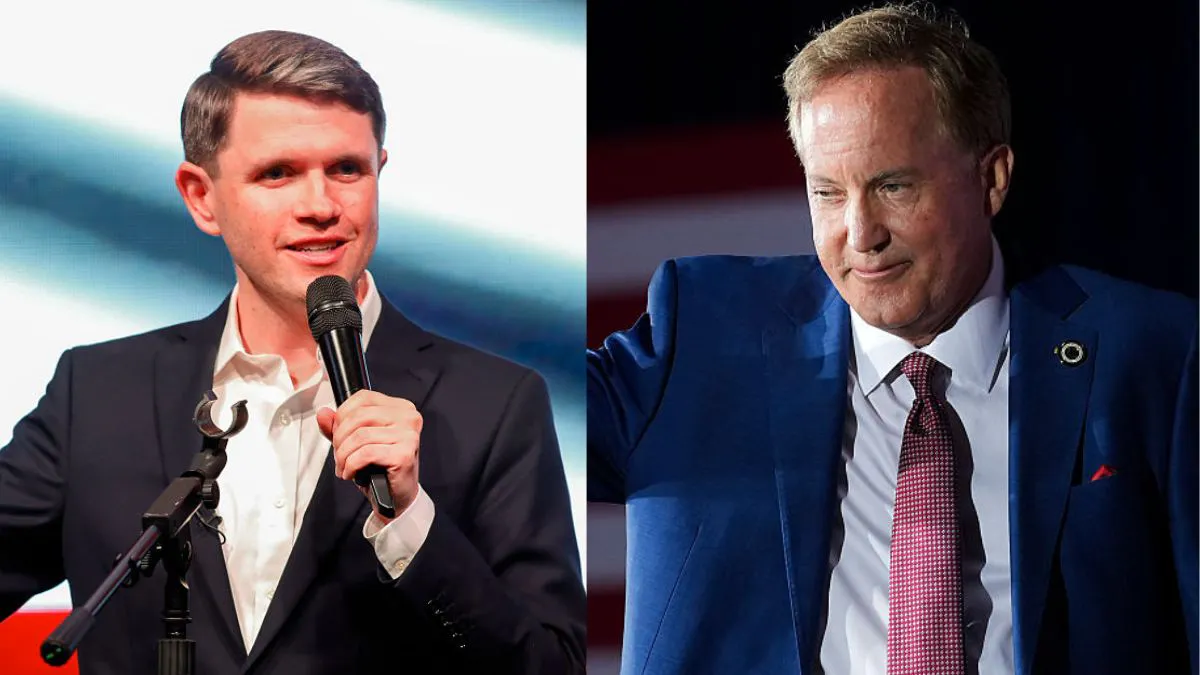
Three public polls released in the last week show Democratic state Rep. James Talarico narrowly leading Republican Attorney General Ken Paxton, raising concerns that a bruising Republican primary and lingering questions about Paxton’s personal controversies may have left the GOP nominee vulnerable in November.
A Fox News poll released last week found Talarico leading Paxton 51% to 48% among registered voters. A Texas Public Opinion Research (TPOR) survey of likely voters found Talarico ahead 45% to 40%, while the latest survey from the Barbara Jordan Public Policy Research and Survey Center showed Talarico leading 47% to 45%.
While all three results fall within or near the polls’ margins of error, the consistency of the findings has forced Republicans to confront a difficult reality: Paxton is not beginning the general election with the overwhelming advantage traditionally enjoyed by Republican nominees in Texas.
President Donald Trump carried Texas by nearly 14 percentage points in 2024, but Paxton has struggled to replicate the strength of the broader Republican coalition, particularly among independents and some factions of the GOP electorate. The central challenge for Paxton is not simply convincing undecided voters to choose him, it is repairing the fractures created during a bitter Republican primary against longtime Sen. John Cornyn.
Paxton defeated Cornyn after receiving Trump’s endorsement, but the contest exposed a deep divide inside the Texas Republican Party. Cornyn, a longtime Senate leader with strong support among establishment Republicans and major donors, was defeated despite millions of dollars in outside spending aimed at stopping Paxton.
That division has carried into the general election. Several prominent Republican donors who supported Cornyn have been slow to fully embrace Paxton’s campaign, creating concerns among Republicans that their nominee may lack the financial resources necessary to define Talarico before Democrats can define him first. Talarico, meanwhile, has built a significant fundraising operation, raising tens of millions of dollars as he attempts to become the first Democrat in more than three decades to win statewide office in Texas.
The polling suggests that Paxton’s personal image remains one of his biggest liabilities. The Fox News survey found 59% of Texas voters are concerned Paxton lacks the character necessary to serve in the Senate, compared with 47% who believe Talarico is too extreme. Even among Republicans, 36% expressed concerns about Paxton’s character. The TPOR poll found Paxton with the worst favorability rating of any major figure tested, with 33% viewing him favorably and 46% unfavorably. Talarico, meanwhile, held a net positive rating, with 43% favorable and 31% unfavorable.
The Barbara Jordan survey showed a similar dynamic, with 39% of likely voters viewing Paxton favorably compared with 57% who viewed him negatively. Talarico was more evenly rated, with 46% favorable and 47% unfavorable.
Still, Paxton’s supporters argue his personal numbers are less important than the ideological contrast between the two candidates. The Fox News poll found roughly eight in 10 supporters of both candidates said their vote was primarily about where the candidates stand on issues rather than their personal qualities.
Republicans have already begun attacking Talarico over his past statements and positions on issues including transgender policy, immigration, religion, and healthcare.
The challenge, however, is that Talarico enters the general election with some advantages of his own. The TPOR poll found voters trusted Talarico more than Paxton on the issue dominating many voters’ concerns: affordability. 44% of respondents said the cost of living was among their top priorities heading into 2026, and voters trusted Talarico over Paxton by nine points when asked who they trusted more to lower costs and improve Texans’ financial situations.
The Democratic candidate has also performed strongly among independents. The TPOR survey found Talarico leading Paxton among independent voters 43% to 23%, while the Barbara Jordan poll showed Talarico ahead among independents 63% to 23%. The Fox News poll also found signs of an enthusiasm advantage for Democrats, with Democratic voters more likely than Republicans to describe themselves as highly motivated and highly interested in the midterms.
The demographic breakdowns have similarly raised concerns for Republicans. Texas Republicans have historically relied on overwhelming margins among rural white voters to offset Democratic strength in urban areas and minority communities. But the latest surveys suggest Paxton’s advantage among white voters is significantly smaller than recent Republican nominees.
The Barbara Jordan poll found Paxton leading among white voters by 14 points, 53% to 39%. That compares with Trump’s 33-point advantage among white voters in Texas in the 2024 election.
The same survey found Talarico leading among Hispanic voters by 19 points, 57% to 38%, while Fox News found Talarico ahead among Hispanic voters by 18 points. The shift among Hispanic voters is particularly significant because Texas Republicans had hopes that gains could be made with the demographic after Trump won Hispanic voters in Texas narrowly in 2024.
Despite the warning signs, Republicans remain confident the race can be stabilized. Republicans have controlled every statewide office for more than three decades, and the Fox News poll found the Republican Party holding a higher favorability rating than the Democratic Party statewide.
For Republicans, the path forward is clear but difficult: unite the party, rebuild donor support, and convince voters that Talarico represents a Democratic agenda they do not want in Washington.
For Democrats, the challenge is equally clear: overcome decades of Republican dominance and prove that Texas has become competitive enough for a statewide breakthrough.
Texas is still a Republican state. But for the first time in years, Republicans are entering a Senate race there facing a question that once seemed impossible: whether their hold on the Lone Star State is beginning to weaken.








 New Posts (Home)
 ChatBox
 Popular Posts
  Game Zone
 Top PodCasts