YubNub Social YubNub Social
    #jesuschrist #liberals #christ #jesus #americafirst #socialists #easter #resurrection #resurrectionsunday #heisrisen #christisrisen #happyeaster #recruitment #rebirth #nokings
    Advanced Search
  • Login
  • Register

  • Day mode
  • © 2026 YubNub Social
    About • Directory • Contact Us • Developers • Privacy Policy • Terms of Use • shareasale • FB Webview Detected • Android • Apple iOS • Get Our App

    Select Language

  • English
Night mode toggle
Featured Content
Community
New Posts (Home) ChatBox Popular Posts Reels Game Zone Top PodCasts
Explore
Explore
© 2026 YubNub Social
  • English
About • Directory • Contact Us • Developers • Privacy Policy • Terms of Use • shareasale • FB Webview Detected • Android • Apple iOS • Get Our App
Advertisement
Stop Seeing These Ads

Discover posts

Posts

Users

Pages

Blog

Market

Events

Games

Forum

History Traveler
History Traveler
3 w

Monumental Roman apse discovered beneath Cologne’s town hall square
Favicon 
www.heritagedaily.com

Monumental Roman apse discovered beneath Cologne’s town hall square

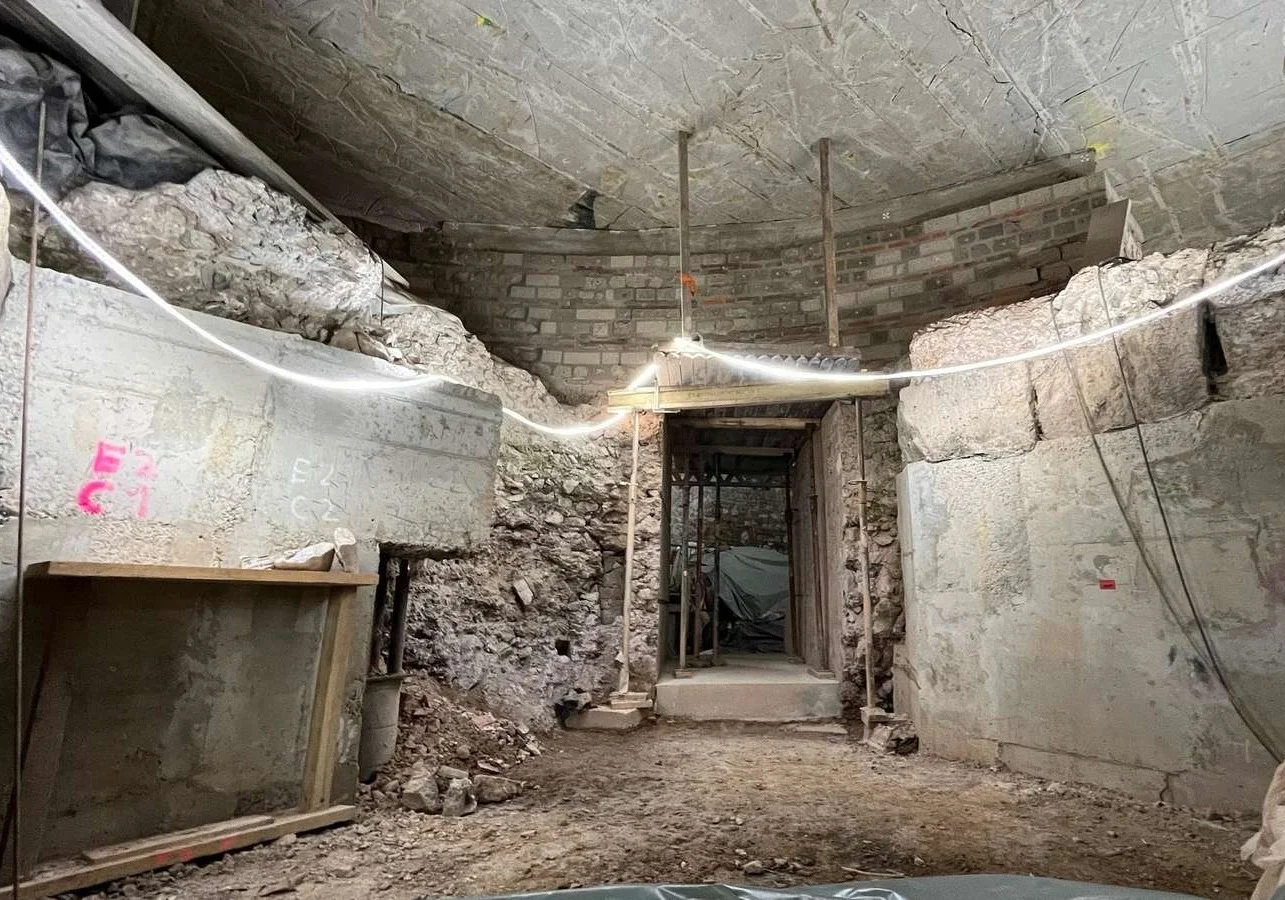
Archaeologists working in the heart of Cologne have uncovered spectacular Roman-era remains directly beneath the city’s town hall square. The discoveries were made during construction of the underground exhibition spaces at the MiQua – LVR Jewish Museum and are already being described as among the most significant archaeological finds in the region in decades. Among the most striking discoveries is the foundation of a monumental apse – a semicircular architectural extension typically associated with basilicas. In Roman Cologne, the structure formed part of a large administrative basilica used for official functions and judicial proceedings. The apse foundation measures up to four meters in thickness. Contrary to initial assumptions, it was not built with Roman concrete but with carefully layered tuff, basalt, and limestone bonded by exceptionally durable mortar. The survival of these structures is considered extraordinary. Located on the ancient Rhine slope, parts of the Roman buildings were already covered with earth in antiquity. Subsequent construction never reached these depths, preserving walls, staircases, and even fragments of wall paintings. In most urban excavations, only foundations remain; here, entire structural elements have endured. Another exceptional find is a Roman staircase dating to the late 1st century AD. The staircase once led from a lower-lying district up toward the Rhine and the Praetorium, the governor’s palace. Such staircases are rarely preserved in Cologne, making this discovery particularly valuable for understanding the city’s Roman topography. Perhaps the most remarkable discovery is a lararium, a household shrine from the 2nd century located within the Praetorium complex. These small altars, otherwise best known from sites such as Pompeii, were dedicated to the Lares, guardian deities of the home. The Cologne example is unique north of the Alps. Archaeologists identified nail holes for garlands, traces of wall paintings, and evidence of offerings once placed in the niche. Together, the finds provide an unprecedented glimpse into both the public and private dimensions of Roman life in ancient Cologne—hidden for nearly two millennia beneath the modern city. Sources : City of Cologne
Like
Comment
Share
History Traveler
History Traveler
3 w

Drone survey reveals Roman forum and theatre at Fioccaglia
Favicon 
www.heritagedaily.com

Drone survey reveals Roman forum and theatre at Fioccaglia

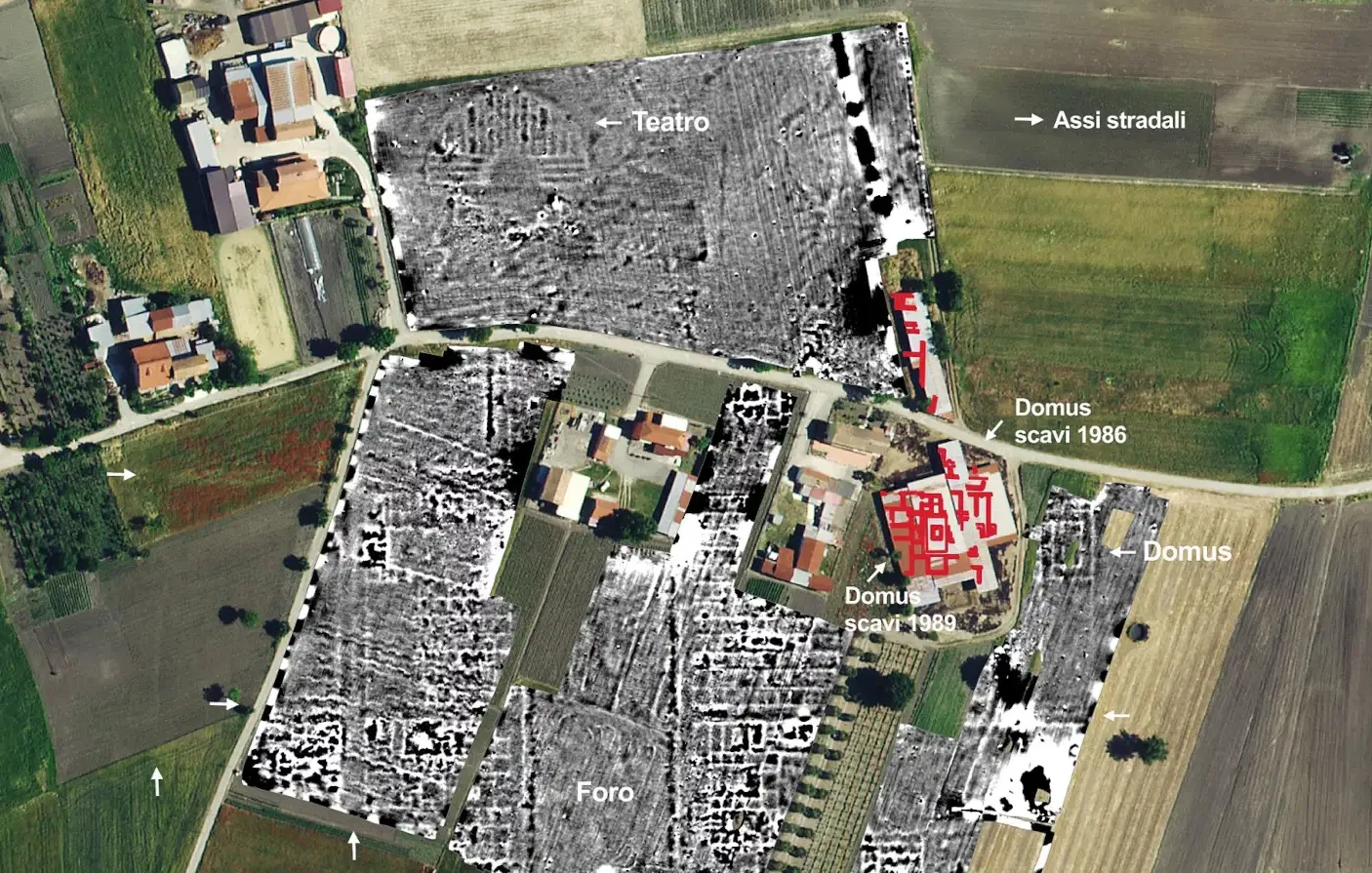
Aerial drone surveys have revealed a forum and a previously unknown theatre at the Roman site of Fioccaglia in Flumeri, along the legendary Appian Way. The findings significantly reshape understanding of the settlement’s urban scale and confirm its strategic and cultural importance within the Roman road network. The latest archaeological campaign in the province of Avellino has produced decisive evidence about the layout of the ancient city. The site, which some scholars identify as the ancient Forum Aemilii dating to the 2nd–1st century BC, is considered central to reconstructing the process of Romanisation in Irpinia. Its importance is closely tied to its position along the Appian Way—known in antiquity as the Regina Viarum—and to the origin of the Via Aemilia commissioned in 126 BC by the consul Marcus Aemilius Lepidus. Although excavations in the 1980s had already revealed a paved decumanus and a luxurious domus decorated in the early Pompeian style—evidence of elite presence in the town centre—the new campaign has dramatically expanded the picture. Directed by Professor Giuseppe Ceraudo of the University of Salento, and conducted in collaboration with regional heritage authorities and the Municipality of Flumeri, the investigation employed drone-based remote sensing to map buried structures with precision. The surveys clearly identified an orthogonal street grid, with regularly spaced axes characteristic of newly founded Roman cities. Most striking is the identification of the forum—the civic and commercial heart of the settlement—featuring a vast central square bordered by public buildings. Adjacent to it, researchers detected the remains of a monumental theatre, previously unknown and now interpreted as clear evidence of the town’s social and cultural vitality. The scale and organisation of the newly documented structures confirm that Fioccaglia was not a minor roadside stop but a fully developed urban centre equipped with representative public architecture. The discoveries reinforce the settlement’s historical and strategic role within Rome’s transportation infrastructure and underscore its significance along one of antiquity’s most important arteries. Sources : Ministero Della Cultura
Like
Comment
Share
History Traveler
History Traveler
3 w

Ancient antler headdress proves contact between hunter-gatherers and the earliest farmers
Favicon 
www.heritagedaily.com

Ancient antler headdress proves contact between hunter-gatherers and the earliest farmers

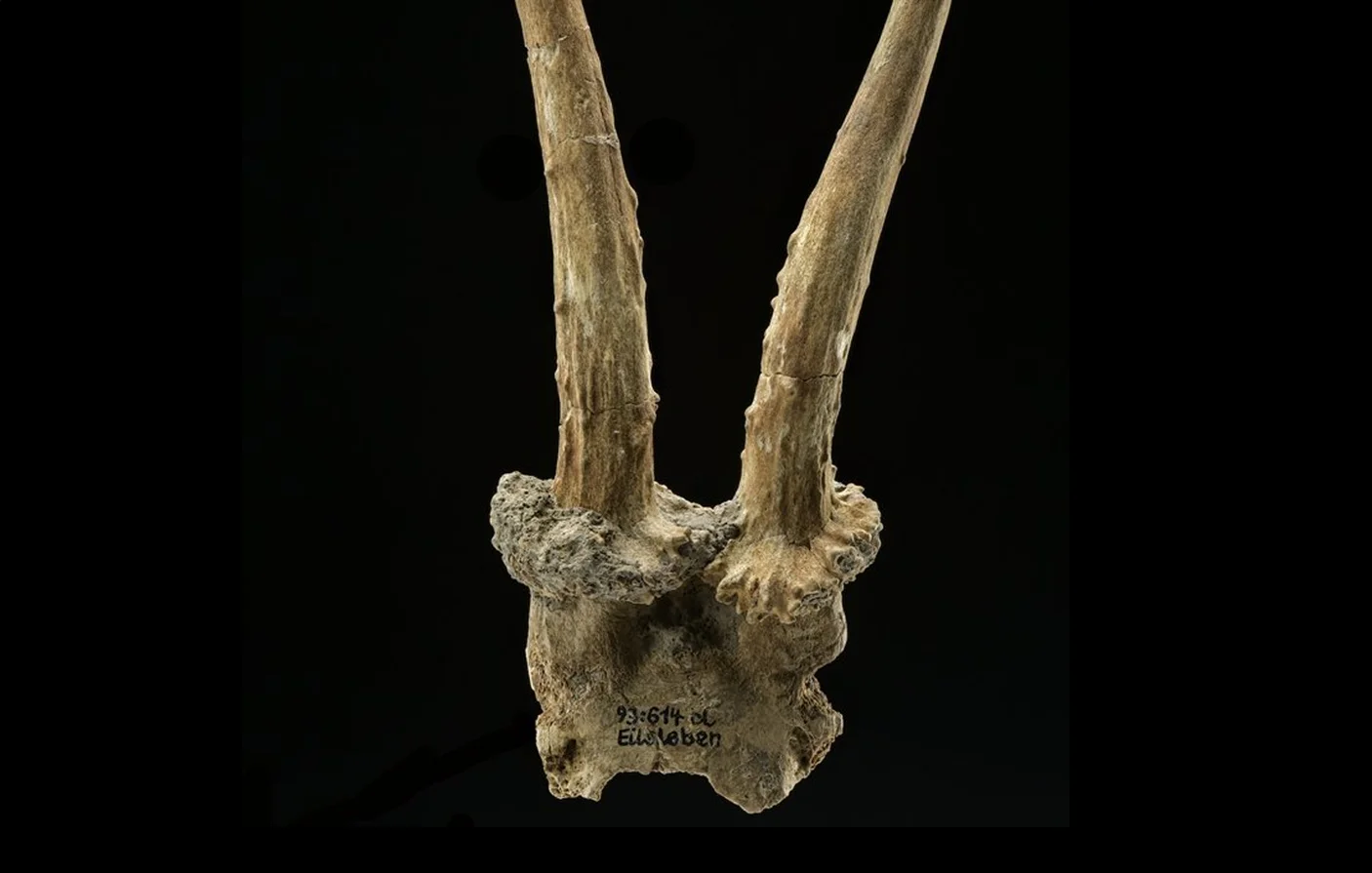
A new examination of a 7,000-year-old roe deer antler headdress from Eilsleben provides compelling evidence of contact between Central Europe’s last hunter-gatherers and its earliest farming communities. The State Office for Heritage Management and Archaeology (LDA) of Saxony-Anhalt has reanalysed material from the Neolithic settlement of Eilsleben-Vosswelle in the Börde district, a key site for understanding the transition from foraging to farming. A recently published study focuses on an older discovery from the site: a worked roe deer antler interpreted as part of a headdress. Strikingly, its closest parallel is found not within Neolithic contexts, but in the much older Mesolithic grave of the so-called “shaman” from Bad Dürrenberg. This correspondence underscores the intensity of interaction between early farmers and the remaining hunter-gatherer groups. The larger historical context starts around 9600 BC when the climate in Central Europe improved considerably after the last Ice Age, marking the onset of the Mesolithic period. Communities of this era continued the hunter-gatherer lifeways of the Palaeolithic, adapting to more forested landscapes. In Central Germany, they hunted roe deer, red deer, European bison, and wild boar with bows, and fishing and the gathering of plant foods took ever more prominent places in subsistence. The grave of the “shaman” from Bad Dürrenberg, dating to this period, is one of the most remarkable finds in Central European archaeology. Approximately 9,000 years ago, a woman aged between 30 and 40 was buried in an elaborate grave alongside a six-month-old infant. Grave goods, including a headdress made of deer antler and pendants fashioned from animal teeth, indicate her exceptional status as a spiritual leader within her community. By the mid-6th millennium BC, the first farming populations—genetically descended from groups originating in Anatolia and the Aegean—had spread into Central Europe. Archaeologically identified as the Linear Pottery culture, these early farmers settled the fertile loess soils of Central Germany. In the process, Mesolithic hunter-gatherers were displaced northward into less fertile regions such as the outwash plains and inland dunes of the Altmark. Yet displacement did not preclude interaction. Evidence suggests that exchange between farmers and hunter-gatherers began soon after the newcomers’ arrival, although material traces of these contacts are rare. The Eilsleben-Vosswelle settlement is of particular importance here. Situated on the northernmost edge of the loess zone, about 2.5 kilometres southeast of Eilsleben, on a gentle slope toward the Aller River, the site was discovered in the 1920s through surface finds. Extensive investigations during 1974-1989, based on a series of trial excavations conducted in 1973, revealed a multi-phase settlement of the Linear Pottery culture. The site appears to have been fortified with a rampart, ditch, and fence—an unusual feature for early Linear Pottery settlements and likely related to its exposed position along a cultural frontier. Evidence in Eilsleben suggests intensive contact with neighbouring hunter-gatherers. Stone and antler tools utilised in the settlement show clear affinities with Mesolithic production methods and forms. The most notable is the worked roe deer antler headdress fragment, which closely resembles Mesolithic mask styles, including the one from Bad Dürrenberg. Taken together, these findings show that the boundary between early farmers and hunter-gatherers was not fixed but permeable, characterised by technological exchange and shared symbolic practices during this transformative period of European prehistory. Sources : State Office for Heritage Management and Archaeology Saxony-Anhalt
Like
Comment
Share
History Traveler
History Traveler
3 w

Petroglyphs found in Monagas are 8,000 years old
Favicon 
www.heritagedaily.com

Petroglyphs found in Monagas are 8,000 years old

A newly discovered petroglyph in the municipality of Cedeño Municipality is being hailed as one of the oldest known rock art records in Venezuela, with experts estimating the engravings to be between 4,000 and 8,000 years old. The find was announced by Mayor Daniel Monteverde, who, together with a commission from the National Land Institute, confirmed the discovery on January 30. The engraved stone features spirals, concentric circles, and anthropomorphic figures believed to reflect the cosmology of the region’s ancestral inhabitants. The petroglyph was located in the highlands of the Quebrada Seca community, 3.5 kilometres from the town of San Félix, at an elevation of 647 meters above sea level. Authorities describe the discovery as a significant contribution to both national heritage and global archaeological research. Cultural Legacy of the Chaima and Kariña Cedeño, whose municipal capital is Caicara de Maturín, is widely regarded as the “petroglyph capital” of Monagas state due to the extensive legacy of the Chaima and Kariña peoples. The newly uncovered engravings are thought to symbolise connections to the sun, the water cycle, and ancestral spirits—core elements of indigenous worldviews. Historian Luis Peñalver described the discovery as a milestone for Monagas. He emphasised that the petroglyph not only confirms the presence of prehistoric rock art in the municipality but may also represent one of the oldest archaeological records in eastern Venezuela. “These engravings demonstrate that Cedeño was a crucial transit and settlement corridor in the region,” Peñalver stated. Venezuela’s Rock Art Tradition According to Peñalver, Venezuela’s indigenous artistic expressions include petroglyphs (rock engravings), cave paintings, megalithic complexes, mythical stones or hills, carved depressions known as troughs, lithic grinders, micropetroglyphs, and geoglyphs. Based on stylistic and relative chronological analysis, many of these artistic manifestations are believed to date between 6000 and 1700 BC, spanning the Paleoindian and Mesoindian periods. Engraving Techniques Identified Archaeologists recognise four principal techniques in Venezuelan petroglyphs: Linear low relief, characterised by shallow grooves averaging 1.24 cm in depth and 1.71 cm in width. Planar low relief, where figures are fully excavated with varying depths. Linear high relief, achieved by carving away the surrounding stone to elevate the line. Planar high relief, in which the entire figure stands raised above the stone surface. The Quebrada Seca petroglyph is an example of the linear low-relief technique. Tools likely included abrasive stones combined with sand and water, as well as stone chisels and hammers. In some cases, pigments have been detected within the grooves. Experts note that stylistic patterns help identify cultural areas and trace migratory routes and settlement patterns of early inhabitants. Preservation and Sustainable Tourism Authorities warn that rock art sites are vulnerable to both natural erosion and human interference. Evidence of deterioration has already been observed in other archaeological locations across the state. Local officials have begun coordinating with the Institute of Cultural Heritage to conduct scientific studies and accurately date the engravings. The Tourism Directorate has also initiated geolocation and safeguarding protocols as part of a broader plan to develop an archaeological route that promotes sustainable tourism while preserving the monument’s integrity. “The Quebrada Seca petroglyph will eventually tell its story,” Peñalver remarked, underscoring the urgency of systematic fieldwork to protect this irreplaceable cultural legacy. The discovery further strengthens Monagas’ reputation as a key archaeological region in Venezuela and opens new avenues for research into the ancient societies that once inhabited its landscapes. Sources : National Land Institute
Like
Comment
Share
History Traveler
History Traveler
3 w

Bass Rock: Scotland’s Alcatraz
Favicon 
www.heritagedaily.com

Bass Rock: Scotland’s Alcatraz

From the beaches of North Berwick, Scotland, Bass Rock is a sheer-sided mass of stone rising abruptly from the steel-grey waters of the Firth of Forth. On clear days, it dominates the horizon; on misty ones, it appears like a ghostly fortress adrift at sea. The island is the hardened core of an ancient volcano, its near-vertical cliffs soaring 107 metres above the water. The rock was first recognised as an igneous intrusion by James Hutton, a Scottish geologist, during the 18th century, and was later visited by Hugh Miller, who wrote about the rock’s geology in his book: “Edinburgh and its Neighbourhood, Geological and Historical: with The Geology of the Bass Rock”. The earliest known settler was the Christian saint, Baldred, “the Apostle of the Lothians”. Baldred, also known as Balthere of Tyninghame, was a Northumbrian abbot in East Lothian in the 8th century, who founded a monastery at Tyninghame and a hermitage on Bass Rock. In the late Middle Ages, a castle of uncertain origin was built on the island, taking advantage of its natural defences. By the 15th century, it had become a prison, most notoriously in the 1600s when Covenanters — Scottish Presbyterians who resisted royal control of the Church — were confined there. Image Credit : David Lauder – CC BY-SA 3.0 To be sent to Bass Rock was to be cut off from the mainland, from family and from any real prospect of escape. Isolation was as much a punishment as imprisonment itself. Accounts from the time describe the harsh realities. Alexander Shields the Covenanting preacher, imprisoned on the island, later described the Bass as “a dry and cold rock in the sea, where they had no fresh water nor any provision but what they had brought many miles from the country, and when they got it, it would not keep unspoiled” Prisoners endured relentless sea winds, damp quarters and an environment that offered no refuge from the elements. Supplies had to be ferried across unpredictable waters. Escape was nearly unimaginable: even if a prisoner managed to evade the guards, the surrounding currents presented a deadly barrier. Like Alcatraz centuries later, the island’s reputation became part of its power. The threat of being sent there was, in itself, formidable. An extraordinary chapter in the Bass Rock’s history was its seizure by four Jacobites imprisoned in its castle, which they then held against government forces for nearly three years, 1691–1694. Today, however, Bass Rock tells a very different story. Visit by boat in summer and the first impression is not silence but sound — tens of thousands of northern gannets wheeling high overhead, their cries carried on the wind. The island is home to one of the largest colonies of gannets on Earth, with some 150,000 birds crowding its ledges during the breeding season. Conservation safeguards ensure that gannets remain the rock’s dominant residents, transforming what was once a place of confinement into a refuge of global ecological importance.

Like
Comment
Share
History Traveler
History Traveler
3 w

Medieval panels shed light on Toledo’s storied past
Favicon 
www.heritagedaily.com

Medieval panels shed light on Toledo’s storied past

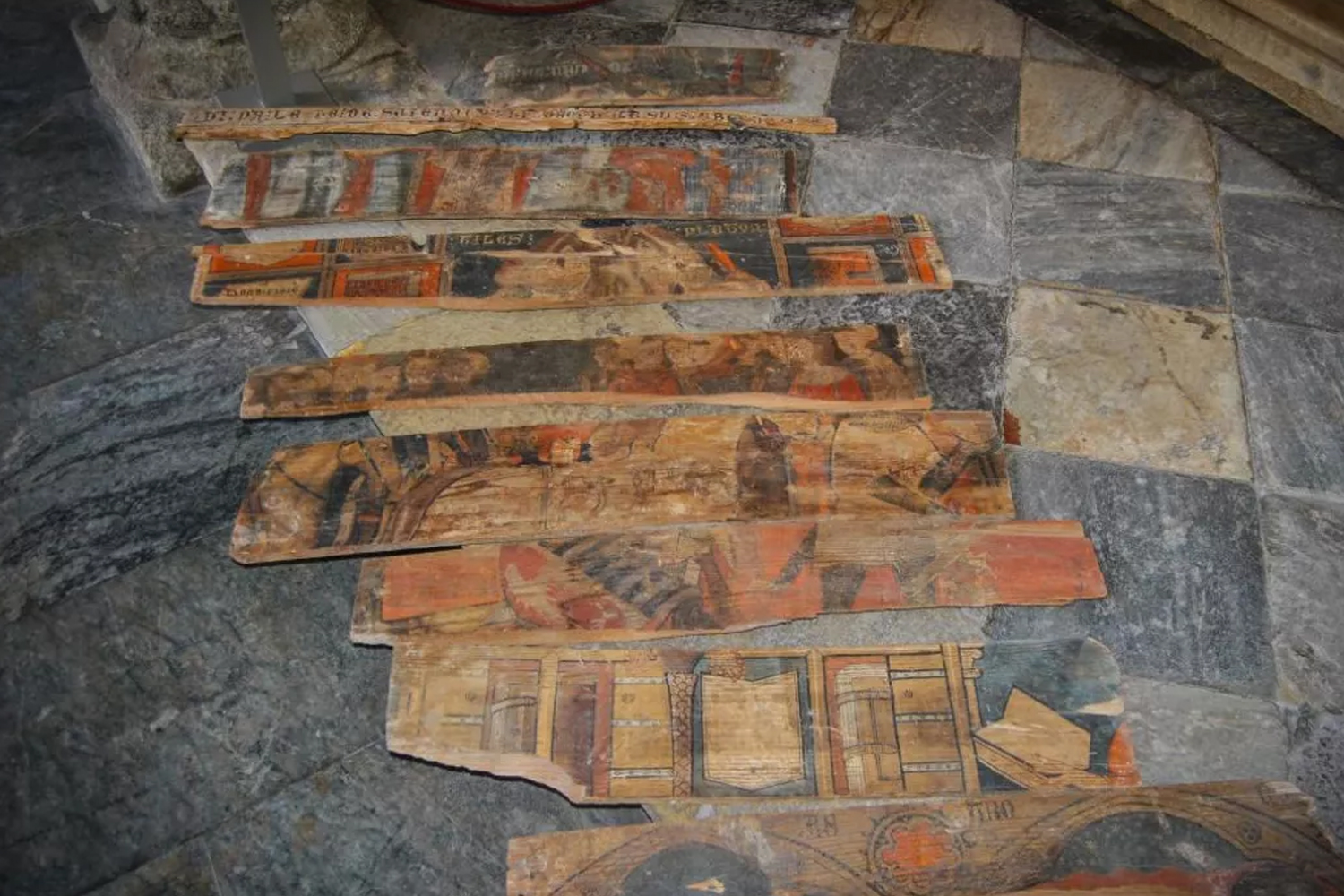
A remarkable medieval discovery hidden beneath a private home in Toledo has shed new light on the city’s storied past. The find, uncovered during renovation work at Bajada del Pozo Amargo in Toledo’s historic Canónigos quarter, consists of 35 polychrome wooden panels dating to the 13th and 14th centuries. The private home is located near the Cathedral of Toledo and was undergoing restoration under archaeological supervision when workers discovered that the panels had been reused as structural flooring. Regional officials announced the discovery during the opening of the exhibition “What the City Hides: Images of the Medieval Court of Toledo,” now on view at the National Archaeological Museum. Dating from the reigns of Alfonso X, Sancho IV, and Fernando IV, the panels depict scenes of wisdom, courtly life, and warfare. Representations of philosophers, nobles, monarchs, knights, and scholars are among the figures depicted, thereby contributing to understanding the intellectual and political culture of the city of Toledo in the medieval period. The pieces are now in the collection at the Santa Cruz Museum in Toledo and have been preserved and analysed as part of the city’s efforts to incorporate new archaeological discoveries into public cultural programming. The exhibition coincides with local educational and scientific activities that aim to place the panels in the context of the city’s medieval past. The finding comes on the heels of an intense investment by the Government of Castilla-La Mancha to preserve and maintain Toledo’s cultural landscape, including archaeological digs, the restoration of historic buildings and artworks, improvements to museums, and the purchase of materials and local objects of historical value. Sources : EL DEBATE
Like
Comment
Share
History Traveler
History Traveler
3 w

Guano fuelled the rise of Pre-Inca powerhouse in Peru
Favicon 
www.heritagedaily.com

Guano fuelled the rise of Pre-Inca powerhouse in Peru

A multidisciplinary study reveals that nutrient-rich seabird guano was a key driver of agricultural productivity and sociopolitical expansion in ancient coastal Peru – long before the rise of the Inca Empire. Published in PLOS ONE, the study presents some of the strongest archaeological and biochemical evidence that the accumulated droppings of marine birds played a defining role in the development of the Chincha Kingdom, one of the most powerful pre-Hispanic societies on Peru’s southern Pacific coast, which emerged in the Chincha Valley. Situated in one of the driest regions on Earth, the Chincha Valley posed a significant problem for sustainable agriculture. Irrigation from the valley’s river systems enabled crop cultivation, but the sandy, nutrient-poor soils lost fertility quickly. The answer, according to archaeologist Dr. Jacob L. Bongers and colleagues, was a chain of islands colonised by seabirds known as the Chincha Islands, some 25 km from the coast. The Chincha Islands are home to enormous colonies of seabirds — including guanay cormorants, Peruvian boobies and Peruvian pelicans — whose guano deposits have long been treasured as a potent organic fertiliser. Researchers conducted isotope analyses on 35 maize (corn) cobs dating from AD 1150 to 1675, as well as on seabird remains recovered from nearby sites. The study found that the N isotope ratios (δ¹⁵N) in the maize samples were elevated, consistent with marine enrichment, far beyond what would be expected from natural soil conditions alone. These patterns clearly support the intentional application of seabird guano as fertiliser, supplementing irrigation and greatly enhancing maize yields. “The isotopic evidence suggests that Indigenous farmers were deliberately importing and applying marine fertiliser to enhance agricultural production at least by AD 1250 and likely earlier,” the paper states. This practice mirrors earlier findings of guano use in northern Chile but represents the strongest evidence yet of its role in Peru’s southern coast. These findings are confirmed in historical sources from the colonial period. Chroniclers describe coastal communities sailing to offshore islands in rafts to collect seabird droppings, and colonial administrators acknowledged the value of guano as both a commodity and a strategic resource. Some early colonial accounts even record that the Inca Empire imposed strict laws governing the collection of guano, underscoring its importance in pre-Hispanic and early colonial agronomy and trade. These increased agricultural outputs, the study’s authors contend, did more than feed a greater proportion of people — they facilitated economic diversification, population growth and the expansion of the Chincha Kingdom’s political power. Their abundant maize helped the Chincha bolster merchant relationships, specialised production, and long-distance trade along the Pacific coast, thereby reinforcing their role as a regional force. This finding not only reshapes our understanding of pre-Inca agriculture but also highlights the broader impact of environmental resources on the development of social complexity in ancient societies. By linking a seemingly mundane biological by-product to the rise of a major prehistoric polity, the study serves as a starting point for rethinking the nature of interactions between natural ecosystems, human innovation, and social and political development in the Andean world. Header Image Credit : iStock Sources : PLOS ONE – https://doi.org/10.1371/journal.pone.0341263
Like
Comment
Share
History Traveler
History Traveler
3 w

Study reveals how early humans developed new technologies 400,000 years ago
Favicon 
www.heritagedaily.com

Study reveals how early humans developed new technologies 400,000 years ago

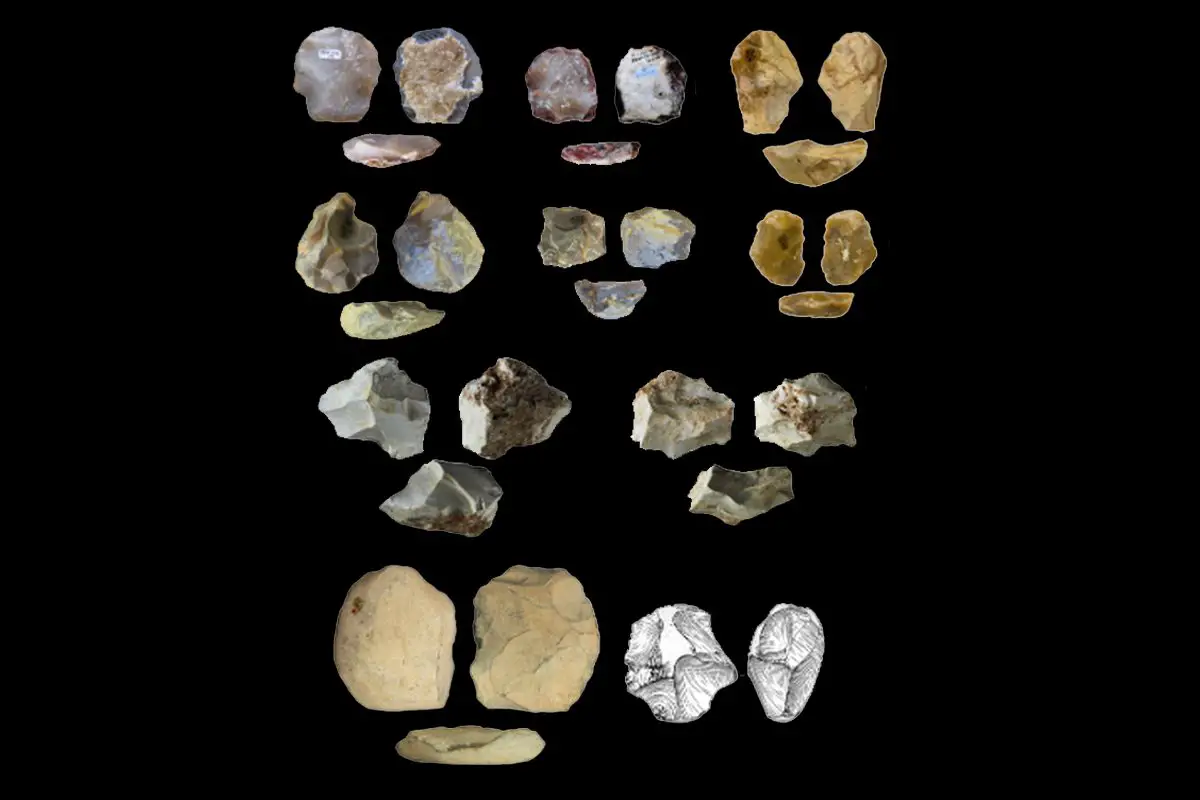
A sweeping international study of European Stone Age sites is reshaping understanding of how early humans developed new technologies roughly 400,000 years ago. Rather than emerging suddenly, hallmark Middle Palaeolithic techniques—including the sophisticated Levallois stone-knapping method—appear to have developed gradually during a period of favourable climate and expanding populations. The study, published in Quaternary Science Advances, investigates the technological traditions across Western Europe during Marine Isotope Stage 11 (MIS 11), a warm interglacial period between approximately 424,000 and 374,000 years ago. This phase was the decisive transition between the Lower and Middle Palaeolithic and marked the onset of early Neanderthal traits. Researchers investigated 47 archaeological strata from 42 sites around France, Italy, the Iberian Peninsula, Great Britain, and parts of Central and Eastern Europe. The focus was on lithic (stone-tool) technology: core reduction techniques such as Levallois flaking, the production of large cutting tools such as bifaces and cleavers, and little retouched implements. To compare assemblages systematically, the authors used the three-item analysis (3IA), a procedure more widely studied in evolutionary biology. Each lithic structure was perceived as a single cultural unit. By charting common technological innovations and then organising them into a hierarchy, researchers pieced together patterns of inheritance and diversification across regions. This strategy enabled them to trace how specific techniques emerged, merged, and evolved over time. The findings describe a structured yet interrelated technology landscape. British sites appear to differ from continental ones, but little evidence exists for strictly regional isolation across Western Europe. In contrast, the data indicates continued contact and exchange between northern and southern populations during MIS 11, facilitated by steadying and moderate climatic conditions allowing for territorial extension. “One of the most relevant results is that Levallois technology probably existed before MIS 12, survived the glacial episode and diversified during MIS 11, rather than being a completely new invention of this period. There is also an intensification of complex carving methods, such as centripetal and hierarchical discoid systems, which coexisted with Acheulean traditions such as biface production,” said the study authors. The results reveal a hierarchical structure among European sites, with a clear division between predominantly British and continental assemblages. Overall, the research questions conventional models that attribute technological transformation to sudden cultural shifts or population replacement. Sources : IPHES
Like
Comment
Share
History Traveler
History Traveler
3 w

LiDAR study reveals previously unknown fortress
Favicon 
www.heritagedaily.com

LiDAR study reveals previously unknown fortress

A previously unknown fortification has been identified in Chełm County, eastern Poland, following a study using airborne laser scanning and other remote sensing techniques. According to experts, the finding significantly contributes to understanding the area’s defensive history during the turbulent 17th and 18th centuries, which sits adjacent to the Bug River on the site of a historic manor and park complex. While the structure was evident in the terrain, it had never been confirmed from archaeological and conservation documents. Previous interpretations were mistaken, as they believed the remains were part of a horseshoe-shaped structure. An analysis using LiDAR has now confirmed that the features are part of a bastion fortification, or fortalicium, characteristic of early modern military infrastructure. There is only a portion of the northwestern section that survives, but traces of the earthworks indicate that its original configuration is probably rectangular with bastion projections at four corners. Image Credit : Lublin Voivodeship Conservator of Monuments Such arrangements are characteristic of permanent or semi-permanent bastion systems and correspond with themes of the French school of fortification engineering, most notably those associated with Sébastien Le Prestre de Vauban. Today, the surviving earthwork rises to about 2 metres and covers 0.4 hectares. The researchers speculate that the initial complex may have covered roughly 1.5 hectares with a perimeter of 120 by 140 metres. The archaeological findings are backed by historical cartography. The fortification is shown on the Austrian military map “West Galizien” from 1801–1804 as a ruin. This indicates that its protective role was over by the end of the 18th century. Later 19th-century maps show progressive degradation, believed to have resulted from both agriculture and landscape reshaping. The southern portion of the fortification was eventually completely obliterated, perhaps during the construction of the Church of the Holy Apostles Peter and Paul in the 19th century. Archival references further support the identification. A 1694 record describes a “trench” near the Bug River, and an 18th-century note mentions the arable land referred to locally as “the shaft”, probably retaining the testimony of the lost earthworks. Researchers only tentatively date the fortification to the 17th or 18th century, a time of Cossack incursions, the Swedish Deluge, and Polish-Russian conflicts. “The finding provides a new perspective on the regional defensive actions taken up along the Bug River frontier, at one of the most tumultuous episodes in the Polish-Lithuanian Commonwealth’s history,” said archaeologists from the Lublin Voivodeship Conservator of Monuments. Sources : Lublin Voivodeship Conservator of Monuments
Like
Comment
Share
History Traveler
History Traveler
3 w

Archaeologists excavate lost royal palace
Favicon 
www.heritagedaily.com

Archaeologists excavate lost royal palace

Between 2021 and 2023, the long-lost royal palace of Helfta near Lutherstadt Eisleben (Mansfeld-Südharz district) was systematically investigated by the State Office for Heritage Management and Archaeology (LDA) of Saxony-Anhalt. The excavations led to the rediscovery of St. Radegund’s Church, founded by Otto the Great before AD 968, and to the identification of the imposing palace complex in which the Ottonian rulers resided during their stays in Helfta—findings of exceptional historical significance. The investigations focused on the hill known as “Kleine Klaus,” located just outside Lutherstadt Eisleben. Earlier local historical and archaeological research—including geophysical surveys conducted by the LDA—had already demonstrated that the Ottonian royal court documented in written sources and the Carolingian Helphideburg mentioned in the Hersfeld tithe register were situated on the neighbouring elevations of “Große Klaus” and “Kleine Klaus.” Building on these preliminary findings, the excavations produced remarkable results. In 2021, archaeologists uncovered the remains of the Radegundis Church on the Kleine Klaus. Established by Otto the Great and dedicated to the Thuringian princess and saint Radegundis, the church underwent multiple construction phases. In its final form, it was a cruciform, three-aisled basilica measuring over 30 metres in length. Between the 10th and the 12th/13th centuries, more than 250 burials were interred within the church interior and in the adjoining cemeteries to the north and south. Image Credit : Robert Prust Equally significant was the discovery in the following year of the Palatium—the representative principal building of the imperial palace complex. Located immediately northwest of St. Radegund’s Church, this elongated rectangular structure was constructed of mortared and plastered sandstone masonry and dates to the reign of Otto the Great. Measuring 21.5 by 7 metres, it originally included an upper floor and was equipped with an advanced and efficient warm-air heating system. At a time when most residential buildings were simple post-built structures or sunken-featured houses, such a monumental and comparatively luxurious stone building can only be interpreted as a palace. It likely accommodated the royal household during their stays in Helfta and also served as a prestigious hall for official functions. Further fortifications and a rectangular tower can be attributed to a High and Late Medieval castle, which is also mentioned in writing between the 12th and 15th centuries. “The archaeological investigations, which are expected to begin in late summer 2026, will focus on further structures of the Ottonian palatinate and the Carolingian castle, the early to late medieval fortifications, further Carolingian and Ottonian graves, and the extensive outer baileys where the common people lived and worked,” said the LDA. Sources : State Office for Heritage Management and Archaeology of Saxony-Anhalt
Like
Comment
Share
Showing 3108 out of 117432
  • 3104
  • 3105
  • 3106
  • 3107
  • 3108
  • 3109
  • 3110
  • 3111
  • 3112
  • 3113
  • 3114
  • 3115
  • 3116
  • 3117
  • 3118
  • 3119
  • 3120
  • 3121
  • 3122
  • 3123
Advertisement
Stop Seeing These Ads

Edit Offer

Add tier


Select an image
Delete your tier
Are you sure you want to delete this tier?

Reviews

In order to sell your content and posts, start by creating a few packages. Monetization

Pay By Wallet

Payment Alert

You are about to purchase the items, do you want to proceed?

Request a Refund